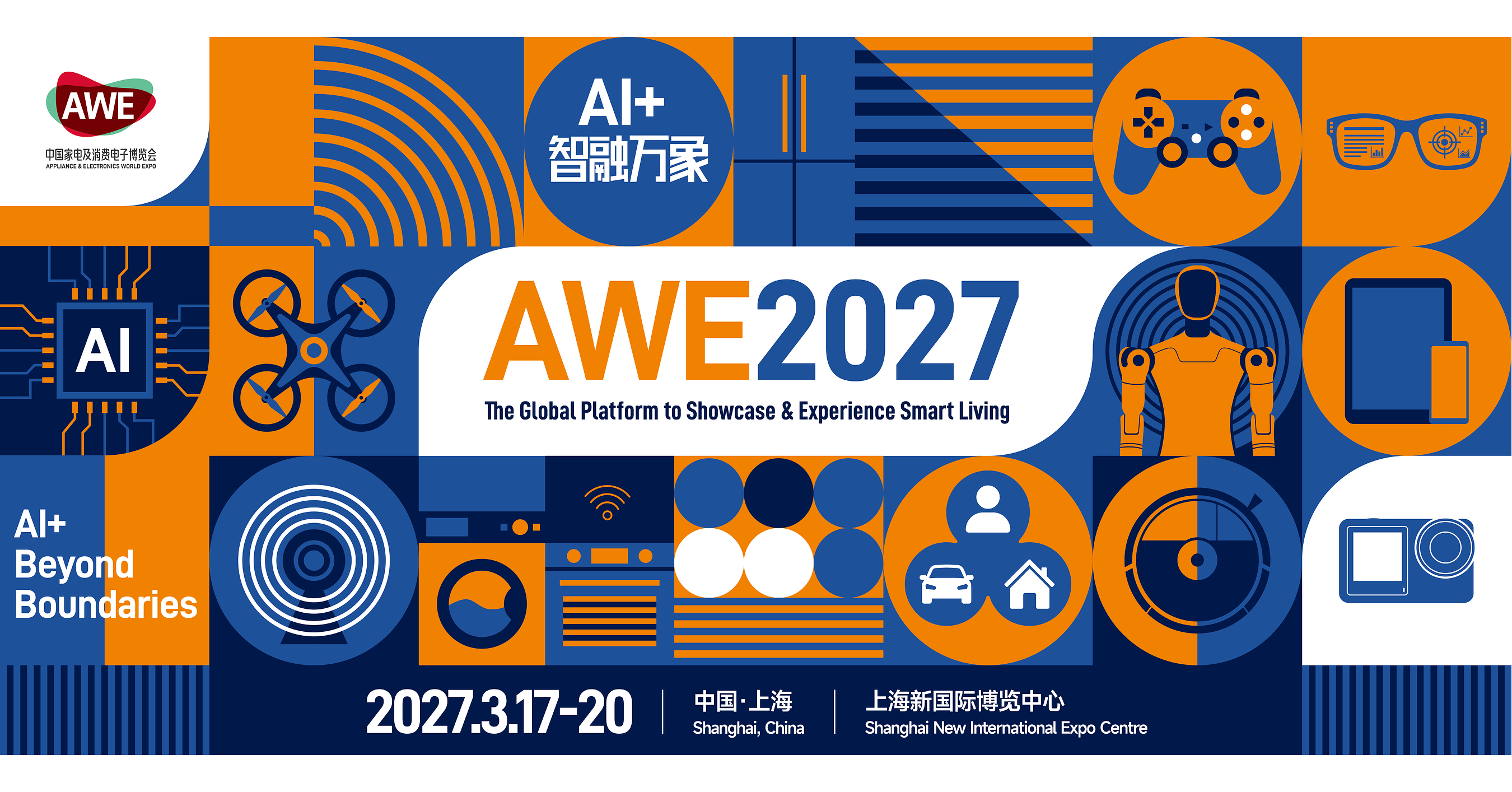
AWE2027 is officially under way (March 17–20, 2027 in Shanghai), with the expo spanning 150,000 sqm and targeting 1,200+ exhibitors and 280,000 visitors under the theme “AI+ • Beyond Boundaries.” The organizers cite strong prior momentum from AWE2026—140,000 sqm, 1,000+ exhibitors, and 250,000 visitors—with attendance up 30% and international visitors up 50%. The 2027 agenda emphasizes AI hardware, smart-home ecosystems (plus a new startup zone), and energy transition solutions such as solar+storage and AI-driven home energy efficiency.
This reads more like an ecosystem signaling event than a near-term earnings catalyst. The investable takeaway is not “more gadgets,” but a possible shift in bargaining power toward component vendors that sell picks-and-shovels for AI-enabled consumer hardware: edge compute, sensors, power management, memory, and display supply chains. For branded appliance makers, adding AI typically raises BOM complexity faster than pricing power, so the first-order benefit may accrue to upstream suppliers while downstream OEM margins stay under pressure unless they can lock in recurring software/service revenue.
The market usually overweights expo narratives in the next 1-3 months and underweights the 12-18 month commercialization hurdle. A lot of this pipeline will never make it into normalized revenue because channel partners will demand proof of sell-through before committing inventory, and consumers will only pay up if the feature set clearly reduces labor or energy bills. That means the most vulnerable cohort is legacy white-goods names with weak brand moat; they face feature creep, higher support costs, and slower SKU turns if they chase “AI” without a real premium.
Contrarian view: the consensus may be missing that AI appliances can be deflationary for returns on capital even when they are strategically necessary. More chips, more software, more certification, more after-sales service — but not necessarily more margin. The thesis breaks if launch data in 2026-27 shows low attach rates, weak channel reorder rates, or if China consumer demand remains soft enough that retailers refuse higher ASPs.
AI-powered research, real-time alerts, and portfolio analytics for institutional investors.
Request DemoOverall Sentiment
mildly positive
Sentiment Score
0.15
