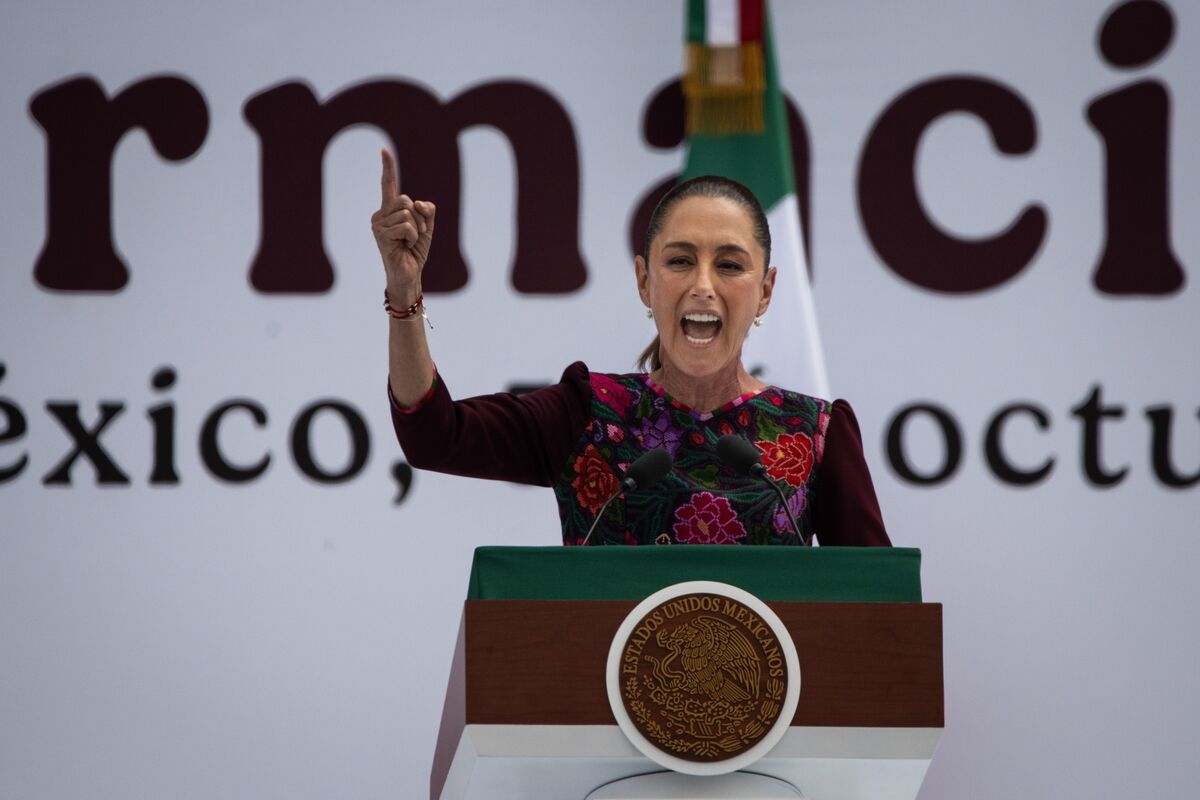
Mexican President Claudia Sheinbaum's proposed plan to impose steep tariffs on Chinese imports has been delayed until at least December, facing significant backlash from Mexico's private sector and members of the ruling party. Manufacturers warn that such tariffs would sharply increase production costs due to their heavy reliance on Chinese machinery, components, and raw materials, underscoring the domestic economic challenges of this trade policy.
President Claudia Sheinbaum's proposed steep tariffs on Chinese imports have been delayed until at least December, facing significant domestic opposition. This delay stems from strong backlash within Mexico's private sector and the ruling party, highlighting internal political and economic divisions. The moderately negative sentiment and uncertain tone reflect the market's apprehension regarding trade policy shifts.
Mexican manufacturers are vocalizing concerns that these tariffs would sharply increase production costs. Their heavy reliance on Chinese imports for essential machinery, components, and raw materials underscores the potential for supply chain disruptions and inflationary pressures within the domestic economy, directly impacting cost structures across various industries.
The policy's classification under "Tax & Tariffs," "Trade Policy & Supply Chain," and "Commodities & Raw Materials" indicates widespread economic ramifications beyond individual sectors. A market impact score of 0.45 suggests a notable, albeit not extreme, influence on investor sentiment, particularly regarding companies with significant Mexican manufacturing operations or supply chain exposure to the region, with the delay itself introducing policy uncertainty.
AI-powered research, real-time alerts, and portfolio analytics for institutional investors.
Overall Sentiment
moderately negative
Sentiment Score
-0.50
