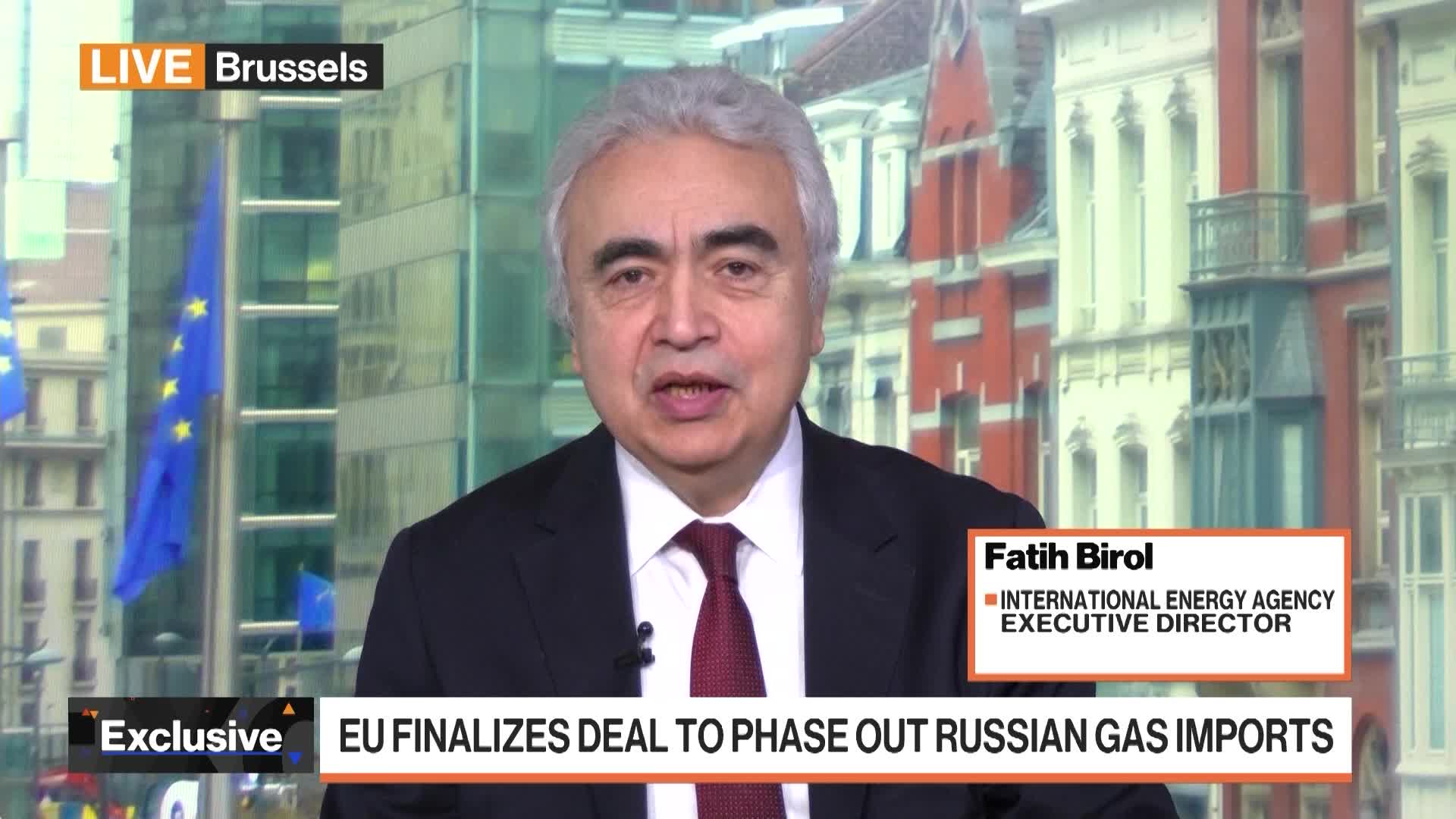
European governments have effectively committed to stop buying Russian natural gas by 2027, ending roughly half a century of heavy Russian supply (historically meeting about 50% of European gas demand). The speaker argues this is a structural shift toward diversification—more LNG (US, Canada, Qatar, Australia) and Norwegian pipeline supply—supported by a rapid renewable build (renewables up ~40% in three years) and renewed interest in nuclear; abundant LNG inflows expected from 2026–2027 should exert downward pressure on European gas prices while keeping a premium vs. U.S. prices, but risks and political uncertainty remain around potential reversion or new single-country dependencies.
Market structure: Europe’s formal pivot away from Russian gas crystallizes winners—LNG exporters (US, Qatar, Australia), LNG shipping and regas terminals, and fast-growing renewables / nuclear equipment suppliers—and losers—Russian pipeline players, European pipeline/utility incumbents and energy‑intensive industries facing near‑term price volatility. Expect pricing power to shift from a Russia‑centric oligopoly to a more fragmented supplier base; forecast downward pressure on European hub gas (TTF) into 2026–2028 as ~new LNG capacity comes online, narrowing Asia‑Europe price spreads and compressing merchant margins.
Risk assessment: Tail risks include a diplomatic détente that restores Russian volumes within 6–36 months, constrained EU regas capacity causing episodic price spikes, or FID cancellations that reduce expected LNG supply and tighten markets. Immediate (days) reaction will be headline‑driven volatility; short term (6–18 months) is dominated by shipping/regas bottlenecks and contract roll‑overs; long term (3–7 years) is structural diversification towards LNG/renewables/nuclear and lower hub prices.
Trade implications: Tactical winners are Cheniere (LNG), Sempra (SRE), GasLog (GLOG), Equinor (EQNR), renewables exposure (ICLN, NEE) and nuclear/uranium (URA, CCJ), while shorts include exposed European utilities (RWE.DE, EOAN.DE) and cyclicals tied to high European power/input costs. Use option structures to buy time (12–24 month call spreads on LNG names) and hedge tail outcomes by shorting Dec‑2025 TTF futures or buying puts; expect EU bond yields to moderate as energy inflation eases, supporting Euro and NOK relative strength vs. RUB.
Contrarian angles: Consensus underprices near‑term regas and shipping constraints that can cause transient gas price spikes—buy terminal/shipping optionality on dips—but may be overenthusiastic on LNG equities if market assumes flawless capacity growth; historical 2014–16 oversupply then underinvestment shows capex cycles can flip scarcity quickly. Maintain conviction but size positions with 12–36 month stop/trailing rules and keep cash to buy a forced correction if LNG supply underdelivers.
AI-powered research, real-time alerts, and portfolio analytics for institutional investors.
Request DemoOverall Sentiment
mildly positive
Sentiment Score
0.30
