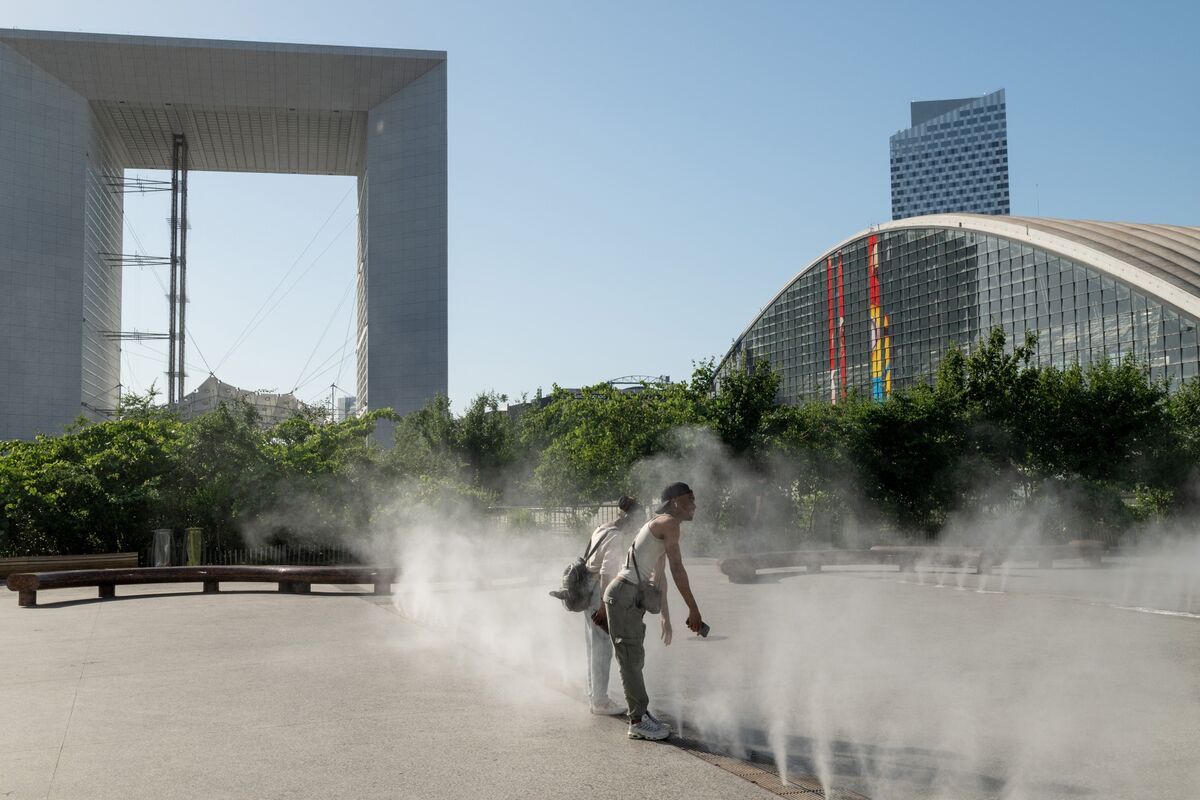
Europe’s first major heat wave of the season is driving record temperatures, including the UK’s earliest ever tropical night and London’s hottest May day at 35.1C, while France saw regional May records and forecasts up to 39C. The extreme heat is boosting power demand and is likely to lift short-term sales of fans and cooling products, but also creates weather-related disruption risk across major European capitals. The article is primarily a macro weather event with modest but broad consumer and energy-market implications.
The first-order trade is obvious, but the second-order winner is the air-conditioning and cooling ecosystem rather than generic discretionary retail. Fan demand is a short-duration spike, yet the real margin lever is for wholesalers, HVAC installers, refrigerant suppliers, and grid-equipment vendors that see follow-on demand when households discover existing cooling capacity is inadequate. The risk is that consumer “heat panic” purchases are front-loaded into a few days, so retailers can look strong on unit volume while gross margin gets diluted by promo activity and expedited freight.
Power markets are the more durable read-through. Peak-load stress during a multi-day heat event tends to push wholesale power prices disproportionately higher than headline temperatures imply, especially where gas-fired marginal units set price and reserve margins are thin. That creates a clean relative-value expression: utilities with thermal generation and merchant exposure can outperform pure wires/regulatory plays, while energy-intensive end markets — food retail, logistics, data-light industrials — absorb cost pressure with limited ability to pass through within the week.
The contrarian point is that this looks like a demand pull-forward rather than a structural consumption shift unless the heat persists into July/August. If temperatures normalize, the sector winners from fans and portable cooling can mean-revert quickly, while utilities and power traders keep any gains from volatility. The bigger medium-term catalyst is whether repeated heat waves force governments to revisit grid reliability and building-cooling standards; that would be a multi-quarter capex story, not a single-news-cycle trade.
AI-powered research, real-time alerts, and portfolio analytics for institutional investors.
Request DemoOverall Sentiment
mildly negative
Sentiment Score
-0.10
