
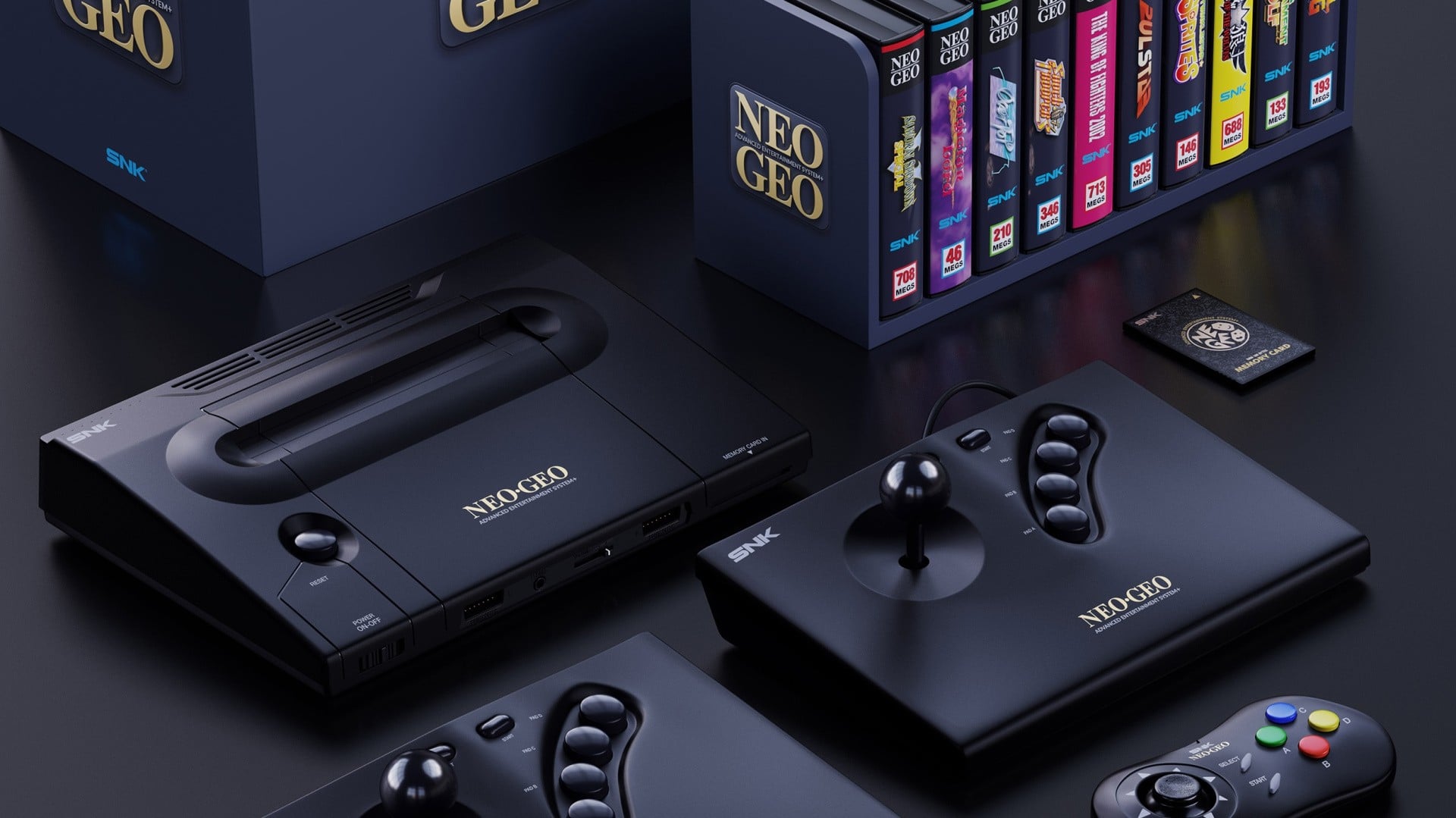
Plaion Replai and SNK announced the Neo Geo+ AES, launching 12 November 2026 at £179.99 / €199.99 / $249.99 / ¥32,800, with pre-orders opening today. The system supports original Neo Geo AES cartridges, adds modern features like 1080p HDMI, and will be sold alongside 10 launch games priced at £69.99 / €79.99 each. The announcement is positive for retro gaming demand and Plaion’s hardware strategy, but the likely market impact is limited.
This is a niche but meaningful proof point for SNK’s IP monetization curve: the economics are no longer about unit volume, but about extracting premium margin from a long-tail nostalgia audience that is willing to pay collector pricing for hardware-adjacent experiences. The real second-order winner is the licensing ecosystem around retro IP: once a platform holder proves that original-cart compatibility plus limited-run hardware can clear at these price points, it raises the floor for future rereleases, accessories, and premium bundle economics across the retro console market.
The competitive effect is asymmetric. Low-price emulation-based access remains the volume solution, but this product targets a different buyer: affluent collectors, completionists, and resale/speculation demand. That means the biggest pressure is not on mainstream gaming spend, but on the scarcity premium embedded in original AES hardware and cartridges; expect some softening in secondary-market prices if supply expands even modestly, though the ceiling on true grail items likely holds. Supply-chain risk is concentrated in low-volume manufacturing quality control: if the hardware misses on authenticity, latency, or cartridge reliability, the thesis breaks quickly because the buyer base is unusually intolerant of compromise.
Catalyst timing is front-loaded into pre-orders and the first reviews, then back-loaded into whether the announced software/accessory pipeline actually broadens beyond the launch set. The key question over the next 3-6 months is not demand at launch but attach rate and repeat purchases, because that determines whether this becomes a one-off collector event or a durable accessory/software annuity. The contrarian view is that the market may overestimate the total addressable market for premium retro hardware while underestimating how much the product could cannibalize hardware resale scarcity rather than create net-new demand.
For tradable implications, the cleanest expression is not a directional bet on console sales, but a relative-value basket around retro/IP monetization and collector demand. If execution is strong, the upside is in high-margin accessory and software follow-through; if execution slips, the stock/partner tied to the project likely loses the narrative premium faster than broad retro demand fades.
AI-powered research, real-time alerts, and portfolio analytics for institutional investors.
Request TrialOverall Sentiment
moderately positive
Sentiment Score
0.60
Ticker Sentiment
