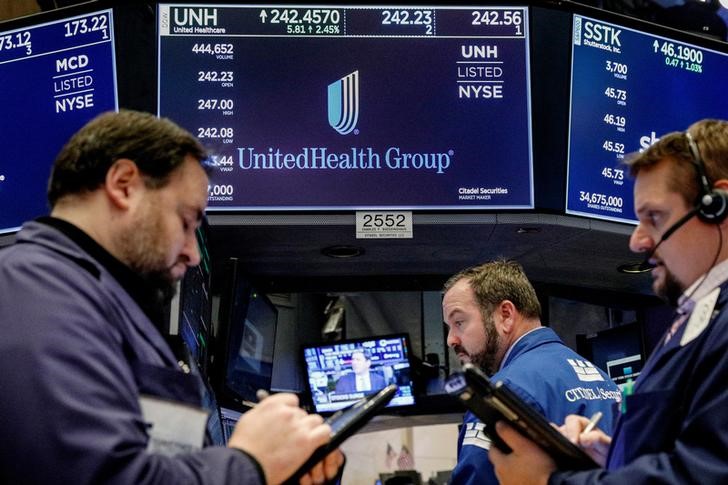
UnitedHealth beat first-quarter expectations with adjusted EPS of $7.23 versus $6.59 consensus on revenue of $111.7 billion, ahead of the $109.44 billion estimate. The company also raised its 2026 outlook to at least $18.25 per share versus $17.87 expected and plans to repurchase at least $2 billion of stock by end-Q2. Shares rose more than 6.8% in premarket trading, though Optum Health revenue fell 3% and net margin slipped to 5.6%.
This is less a simple beat than a reset of the earnings dispersion inside managed care. The market has been treating the sector as a regulatory overhang story, but a clean guide-up from the largest bellwether forces a reconsideration of who is actually insulated from medical-cost pressure and who is merely de-rated. The most important second-order effect is that a stronger UNH makes the rest of the group look comparatively vulnerable: if the best-in-class operator can still show only modest margin expansion, weaker peers with more exposure to utilization and membership churn may struggle to earn a rerating.
The mix matters more than the headline beat. A stronger pharmacy/benefit engine alongside softer value-based care implies the profit pool is still migrating toward scale, data, and dispensing control rather than asset-heavy care coordination. That is structurally bullish for vertically integrated distribution economics and negative for pure-play value-based models that depend on member density and favorable risk coding to defend returns. The buyback authorization is also a signal of balance-sheet confidence, which tends to support downside on pullbacks over the next 1-2 quarters as the market leans into EPS floor support.
The contrarian read is that the rally may be too mechanical if investors extrapolate this print into a sector-wide demand recovery. The underlying issue is not demand, but pricing power versus utilization; if medical trend re-accelerates into the summer, today’s guide-up could look backward-looking within one or two quarters. The key reversal trigger is not the next headline earnings beat, but a shift in reimbursement, membership mix, or utilization that compresses operating leverage faster than buybacks can offset.
From a trading perspective, this is attractive as a relative-value expression rather than a naked long if the sector has already re-rated on easing political fears. The highest-conviction setup is to own the leader against structurally weaker managed-care or value-based names, capturing both earnings resilience and multiple divergence while avoiding broad beta risk. Near term, the stock can keep grinding higher over the next several weeks, but the cleaner risk/reward is to use any post-print consolidation to build a spread rather than chase strength into the open.
AI-powered research, real-time alerts, and portfolio analytics for institutional investors.
Request TrialOverall Sentiment
moderately positive
Sentiment Score
0.70
Ticker Sentiment
