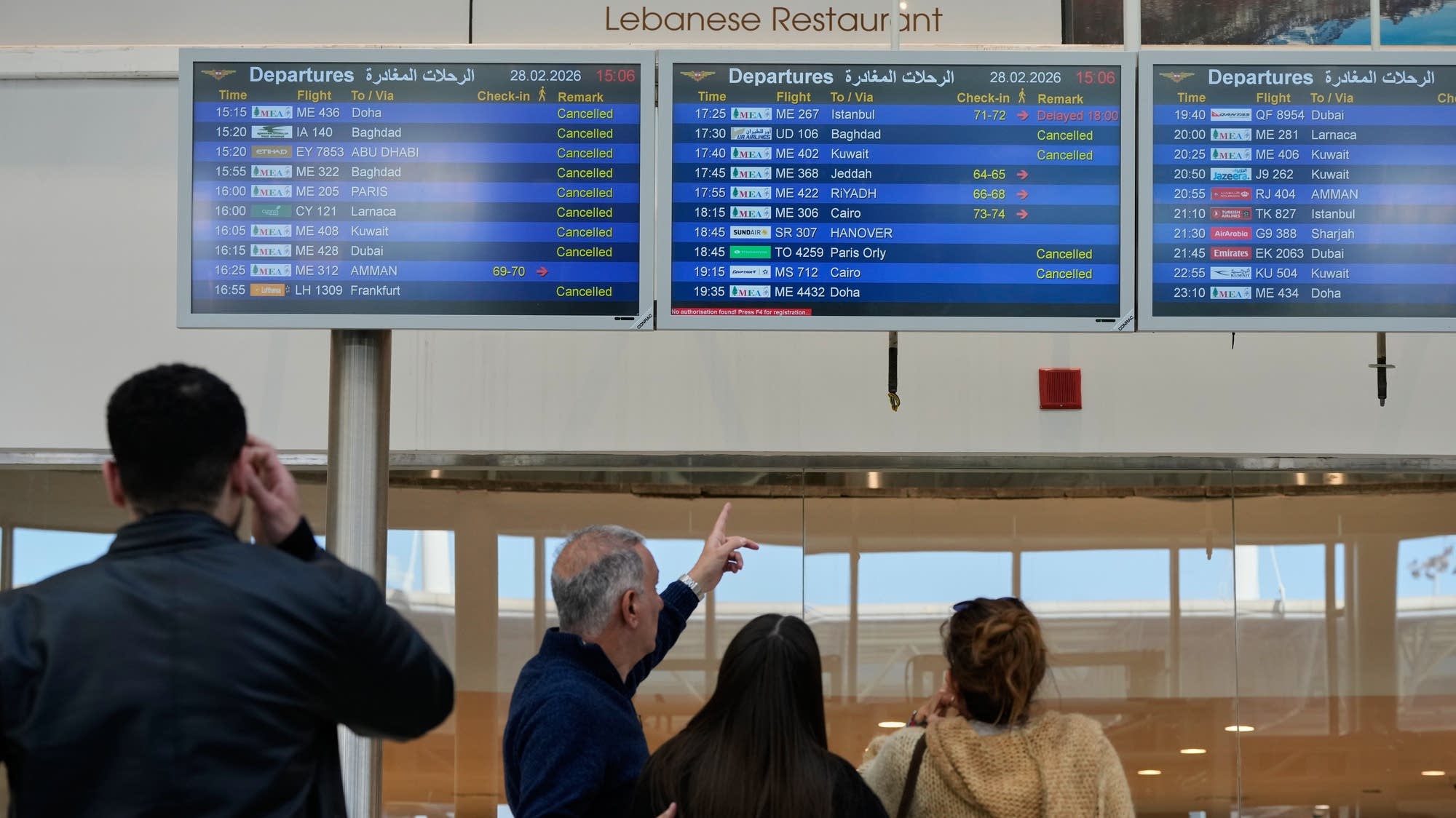
An attack on Iran has led to widespread flight disruptions leaving hundreds of thousands of travelers stranded, disrupting airline operations and airport schedules. The immediate impact is operational and consumer-facing — elevated cancellations, rerouting and logistical strain on carriers and airports — with potential knock-on effects for travel demand and short-term operational costs for airlines.
Market structure: Immediate winners are defense contractors (LMT/NOC/RTX) and upstream energy producers (XOM/CVX/XLE) due to a geopolitical risk premium; losers are airlines (UAL/DAL/AAL/JETS ETF), airports and travel/leisure (CCL/RCL) from cancellations and reroutes that shave revenue by an estimated mid-single-digit percentage over days-to-weeks. Pricing power shifts to fuel suppliers and cargo carriers able to reroute; airlines face both higher unit fuel costs and lower ASK utilization, pressuring margins by 3–8 percentage points if disruptions persist >2 weeks.
Risk assessment: Tail risk includes a broader regional escalation or Strait of Hormuz closure causing >1.0 mb/d crude disruption and a Brent spike of $20–50 within days; that would lift energy stocks and inflation expectations and tighten credit spreads for travel credits. Time horizons: days = booking/capacity shock and vol spike, weeks = Q1 revenue/earnings impact, quarters = defense budget/contract timing and insurer/reinsurer repricing. Hidden dependencies include carrier fuel hedges, aircraft lessor covenant exposure, and reinsurance retentions that can amplify balance-sheet stress.
Trade implications: Expect equity and options volatility to remain elevated 2–6 weeks; tactical moves favor long-defense and energy, short airlines and travel leisure, and buying downside protection on exposed names. Cross-asset: safe‑haven bids (USD, Treasuries, gold) may strengthen initially; commodities (crude, jet fuel) will lead; airline credit spreads widen—consider credit hedges if exposures exceed 1–2% portfolio risk.
Contrarian/second-order: The market may over-discount medium-term demand resilience—airlines often pass on higher fares after capacity cuts and many have fuel hedges that blunt immediate margin hits, so a transient 2–6 week short may be optimal versus multi-quarter shorts. Defense names may already price some premium; if headlines cool in 4–8 weeks expect mean reversion. Watch for unintended monetary impacts: sustained oil up >$15 could force central banks to re-price tightening, pressuring rate-sensitive sectors.
AI-powered research, real-time alerts, and portfolio analytics for institutional investors.
Request TrialOverall Sentiment
moderately negative
Sentiment Score
-0.35
