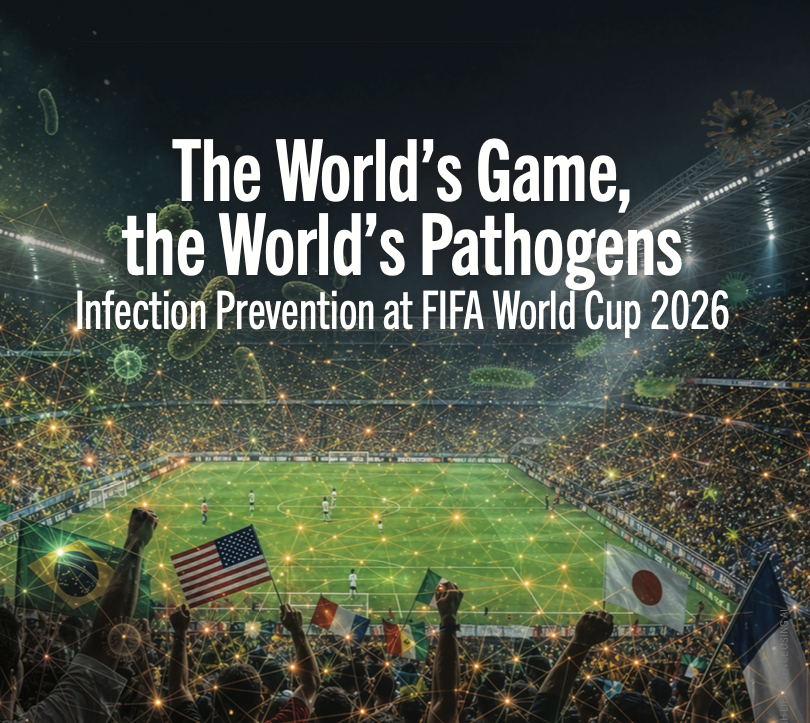
The 2026 FIFA World Cup is framed as a major infectious-disease surveillance challenge across 3 countries, 16 host cities, 39 days, and an expected 3 to 5 million visitors. Key risks highlighted include respiratory infections, foodborne illness, STIs, vector-borne diseases, and rare high-consequence pathogens, with surveillance likely needed for months after the event. The piece is advisory rather than market-moving, but it underscores elevated public-health preparedness needs for hospitals, public health agencies, and travel-related care.
The investable takeaway is not "more infections," but a concentrated burst of utilization volatility across a handful of systems that are already operating near peak summer load. The first-order beneficiaries are not vaccine makers; it’s the testing, diagnostics, and hospital operations stack that gets pulled forward for several months as clinicians work through differential diagnoses they rarely see. That creates a short-duration revenue lift in molecular panels, rapid antigen assays, syndromic surveillance, and specialty lab workflows, with the biggest surprise likely coming from outpatient and urgent-care channels rather than EDs.
The second-order risk sits in labor and throughput. Even modest increases in isolation precautions, specimen handling, and travel-history screening can slow emergency departments and raise avoidable admission rates, which is margin-negative for hospital operators already facing seasonal staffing pressure. The more asymmetric exposure is in cities with overlapping large events and heat/alcohol-driven crowding, where dehydration, GI illness, and respiratory complaints can inflate low-acuity volumes while simultaneously increasing the cost per case.
Contrarianly, the market may be overestimating the durability of the "event tail" for headline pathogens and underestimating the persistence of administrative drag. The acute spike should clear quickly if no high-consequence case appears, but the long tail from surveillance, public health coordination, and post-travel screening can keep diagnostic demand elevated for 6-10 weeks. That argues for a time-spread trade: own beneficiaries of testing and biosurveillance into late summer, while fading hospital names that face the volume without pricing power.
The tail-risk is a single imported special-pathogen case, which would not matter for epidemiology alone but could trigger multi-week operational disruption, contact tracing, and transfer bottlenecks. That is an option-like risk with low probability and high convexity: if it happens, hospitals near host cities and air hubs absorb the cost; if it does not, the trade should mean-revert as quickly as it appeared.
AI-powered research, real-time alerts, and portfolio analytics for institutional investors.
Request DemoOverall Sentiment
mildly negative
Sentiment Score
-0.15
