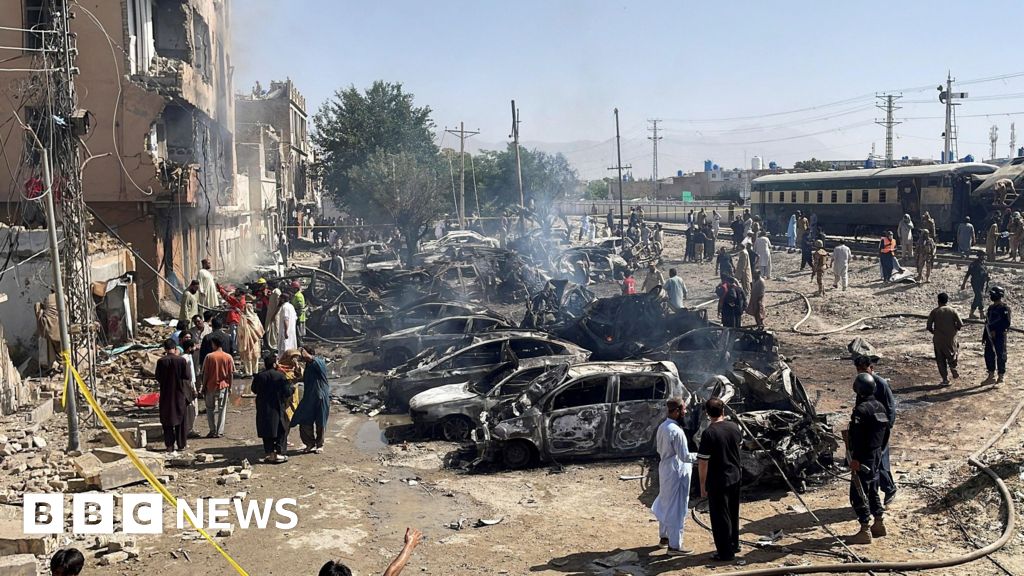
At least 20 people were killed and 70 injured in a blast targeting a passenger train carrying military personnel in Quetta, Pakistan, with three coaches and the engine derailed and two coaches overturned. The Balochistan Liberation Army claimed responsibility, and Pakistani officials declared an emergency in hospitals treating victims. The attack underscores escalating security risks in Balochistan and could heighten regional geopolitical and transport disruption concerns.
This is less a one-off security event than a reminder that the Balochistan risk premium is becoming an operating cost for Pakistan, not just a headline risk. The second-order impact is on logistical reliability: repeated attacks on rail corridors force higher convoying, rerouting, and insurance friction across the broader western transport network, raising transaction costs for any domestic freight that depends on time-sensitive inland movement. That tends to hit smaller industrial users first, but over months it can leak into utility load management, food distribution, and military mobility.
The market implication is not just “Pakistan risk off”; it is that sovereign stress and security deterioration reinforce each other. The state absorbs more fiscal pressure through emergency response, policing, and infrastructure repair while foreign capital sees weaker rule-of-law visibility, which can widen local funding spreads and keep USD liquidity tight. In an EM context, the cleaner read is that frontier allocators may further discriminate against Pakistan versus peers with less internal fragmentation, especially for projects tied to transport, mining, or provincial infrastructure.
The contrarian point is that the direct macro shock is likely too small to justify a broad panic trade in Pakistan risk assets absent escalation beyond Balochistan. The more durable catalyst would be a shift from episodic attacks to persistent disruption of rail, road, or port-linked corridors over several weeks, which would begin to matter for trade flows and capex timing. If authorities respond with visible operational improvements, the security discount can fade quickly; if not, the premium becomes embedded and rerating down in local risk assets can persist for months.
AI-powered research, real-time alerts, and portfolio analytics for institutional investors.
Request DemoOverall Sentiment
extremely negative
Sentiment Score
-0.95
