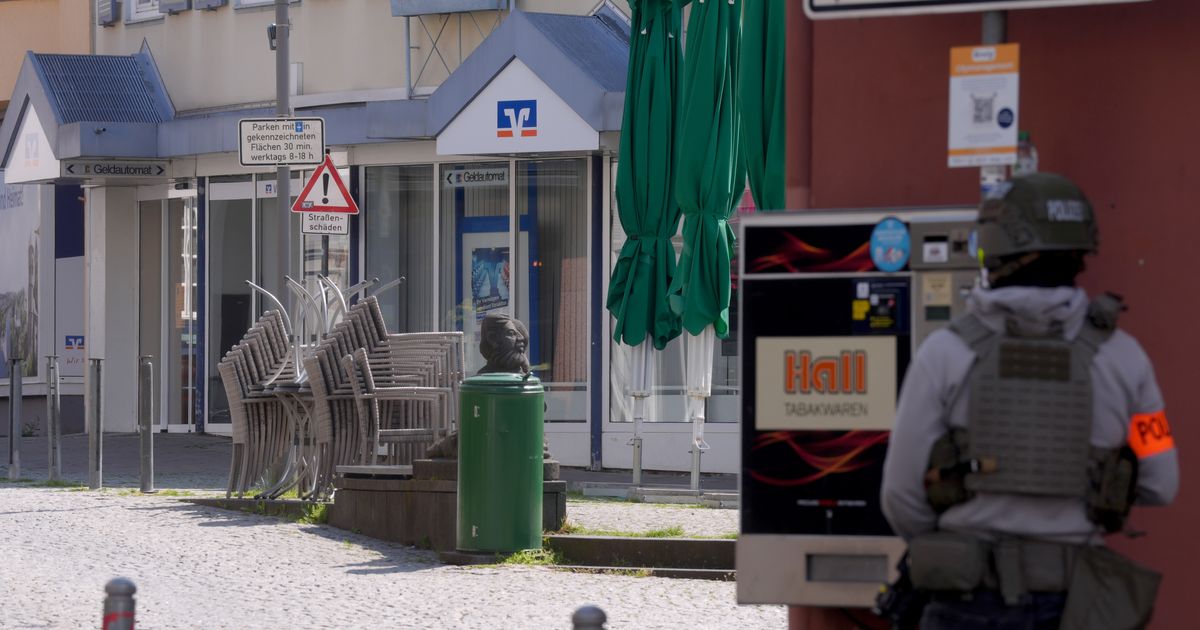
Police entered a Volksbank branch in Sinzig, Germany, and freed two people unhurt after a hostage scare that began around 9 a.m. local time and ended shortly before 3 p.m. Authorities said they found no hostage-takers and did not indicate whether any cash or valuables were taken. The incident appears operationally isolated and is unlikely to have material market impact.
This is not a bank-credit event; it is a localized operational/security incident with negligible direct financial damage unless there is evidence of actual theft or staff injury. The immediate market impact should be near zero, but the second-order read-through is that physical security risk at cash-handling points remains a real cost center for retail banks, armored carriers, and ATM/network operators even in low-crime jurisdictions. Any uptick in such incidents tends to show up first as higher insurance premiums, more cash logistics spend, and incremental capex for branch hardening rather than headline loss provisions.
The more interesting implication is defensive rather than offensive: banks with heavier branch rationalization and lower cash intensity are structurally better insulated from this class of disruption. If management teams start referencing branch security or armored transport incidents more frequently, that can be a marginal positive for digital-first banks and payment rails, because it reinforces the economic case for reducing physical cash points. Conversely, any entity exposed to armored transport, cash vaulting, or branch staffing could see a small but persistent operating-cost creep over the next 1-4 quarters.
The contrarian view is that investors may overreact to any isolated security headline by extrapolating systemic European banking stress; that would be a mistake unless there is follow-on evidence of organized crime, insider collusion, or recurring incidents across multiple branches. The key catalyst is not the event itself, but whether local regulators or bank risk teams respond with broader security mandates. If that happens, the winners are vendors of surveillance, access control, and secure logistics; the losers are cash-heavy incumbents with large branch footprints and thin fee margins.
AI-powered research, real-time alerts, and portfolio analytics for institutional investors.
Request DemoOverall Sentiment
neutral
Sentiment Score
-0.10
