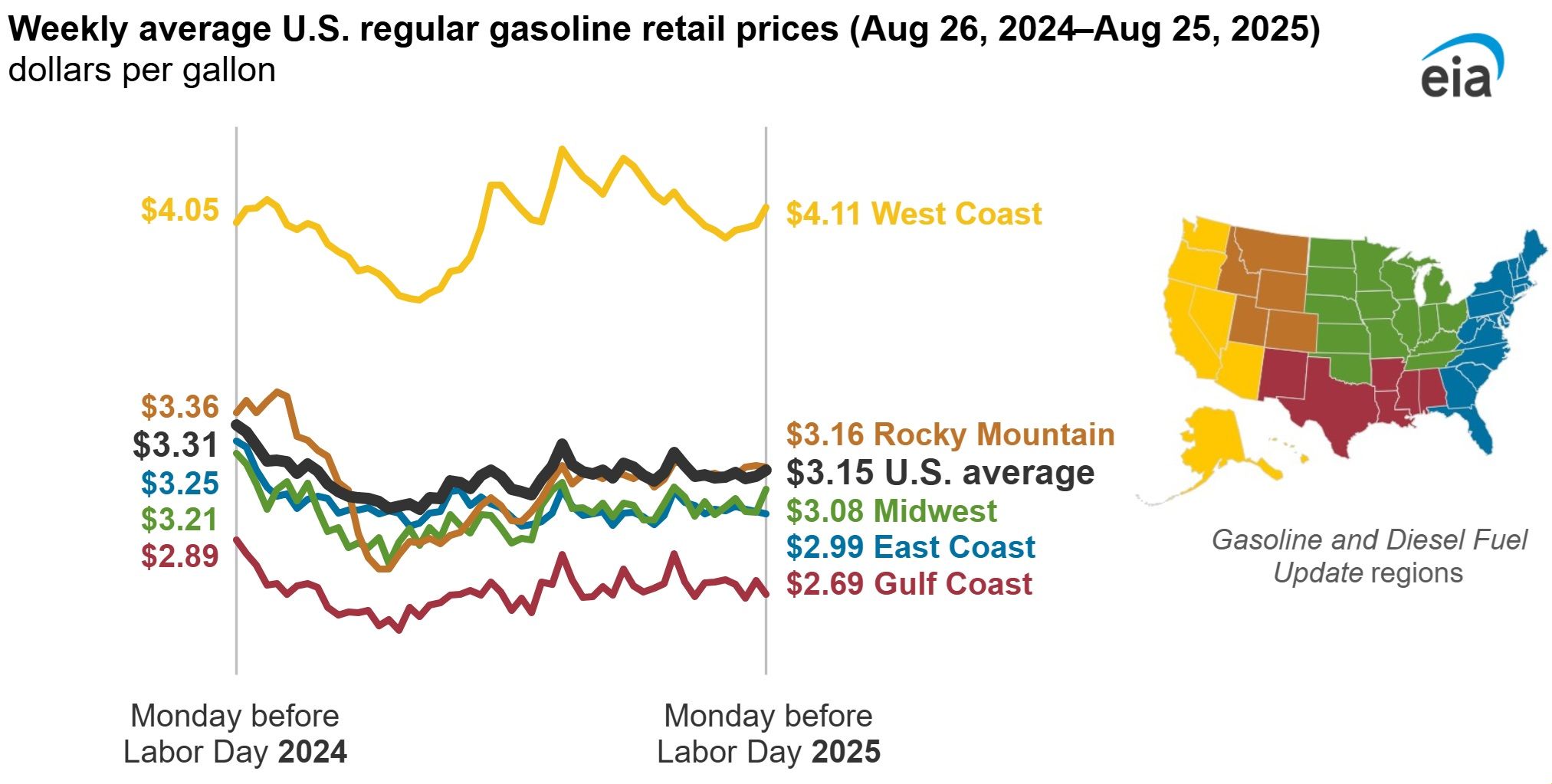
U.S. demand for gasoline, distillate, and jet fuel remains below pre-pandemic averages five years after the COVID-19 national emergency, according to the EIA, signaling a potentially lasting shift in consumption patterns. While U.S. fuel ethanol production showed mixed weekly trends in August, Brazil's ethanol sector is seeing continued investment, with the Brazilian Development Bank approving R$625 million ($113.64 million) in financing for a new 71.33 MMgy corn ethanol plant by São Martinho S/A. This highlights a divergence in regional and fuel-type dynamics within the broader energy market, with significant capital flowing into Brazilian corn ethanol despite broader U.S. fuel demand stagnation.
Data from the U.S. Energy Information Administration indicates a persistent structural weakness in U.S. fuel markets, with demand for gasoline, distillate, and jet fuel remaining below pre-pandemic averages five years after the initial shock. This suggests a potentially permanent shift in consumption patterns rather than a temporary disruption. The U.S. fuel ethanol market reflects short-term instability, evidenced by conflicting weekly data in August where production fell consecutively while exports exhibited extreme volatility, dropping 30% in one week and expanding nearly 40% in another. In stark contrast, the Brazilian ethanol sector, particularly corn-based production, is signaling strong growth. Despite a reported dip in sugarcane ethanol output, the Brazilian Development Bank's approval of R$625 million ($113.64 million) for São Martinho S/A's new 71.33 MMgy corn ethanol plant represents a significant capital injection. This highlights a clear divergence: while the broad U.S. fuel market stagnates, substantial investment is flowing into expanding Brazilian corn ethanol capacity, indicating strong investor confidence in that specific segment's outlook.
AI-powered research, real-time alerts, and portfolio analytics for institutional investors.
Overall Sentiment
mixed
Sentiment Score
-0.15
