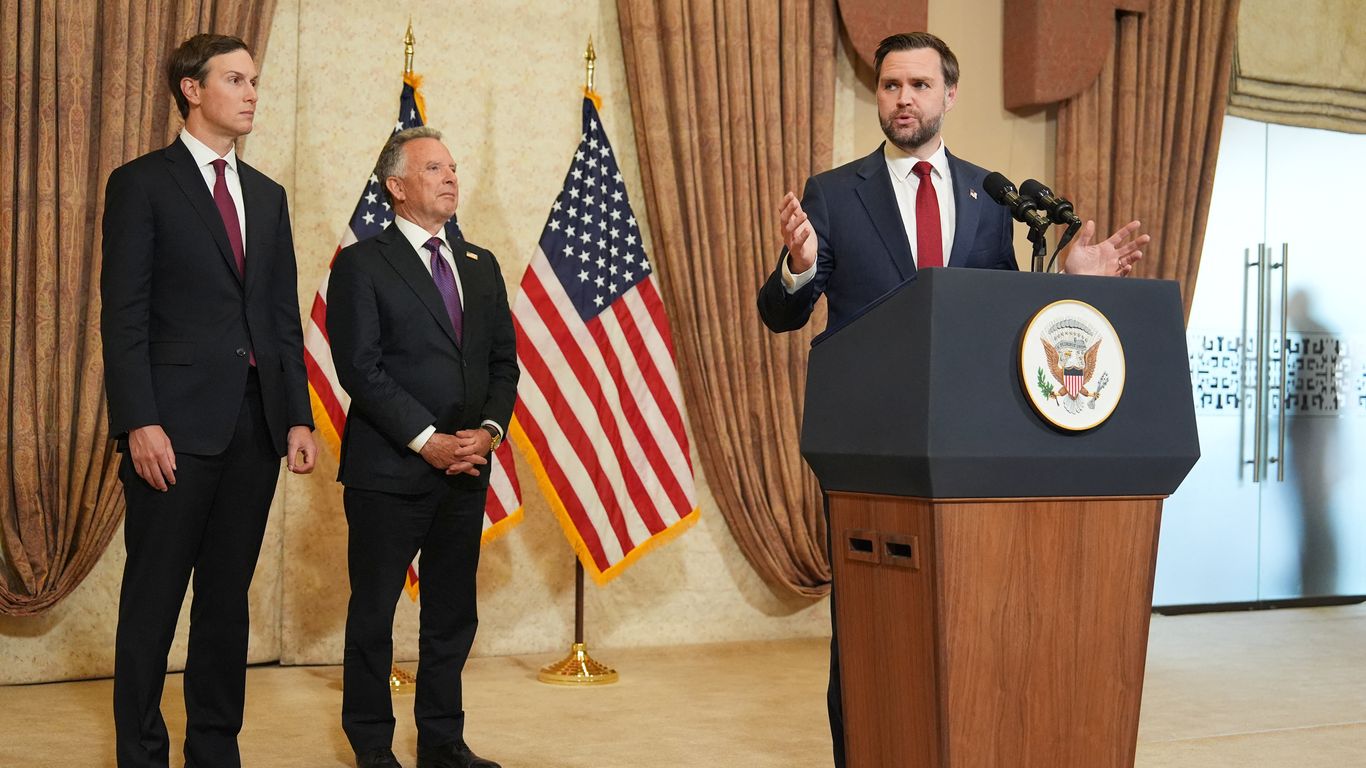
U.S.-Iran ceasefire talks are headed for eleventh-hour negotiations in Islamabad as Iran reclosed the Strait of Hormuz and attacked several commercial vessels, escalating geopolitical risk. Trump warned that if Iran rejects the deal, the U.S. could strike power plants and bridges, keeping the ceasefire and regional energy/shipping flows highly unstable. The situation is likely to pressure oil, shipping, and broader risk assets given the strategic importance of the Strait of Hormuz.
This is a classic tail-risk re-pricing event: the market has to move from a “contained ceasefire” regime back to a “probability-weighted escalation” regime in a single session. The key second-order effect is not just crude higher, but a broader input-cost shock into global freight, refining, and industrial inventories; even a short-lived Strait disruption can force shippers, insurers, and refiners to de-risk routes immediately, causing a larger near-term earnings hit than the oil move alone implies.
The asymmetry is time-sensitive. In the next 24-72 hours, anything tied to tanker throughput, insurance premiums, and Middle East exposure should trade as if a temporary blockade is the base case. Over a 2-6 week horizon, if talks extend the ceasefire, the unwind in the risk premium could be violent because positioning will likely be crowded on the geopolitical hedge side and energy supply fundamentals are not yet broken.
The most interesting loser set is not just airlines and transports; it is any company with just-in-time inventory, low gross margins, or heavy Asia-to-Europe shipping dependence, where a few days of disruption can compress quarterly guidance. Conversely, defense, cybersecurity, and select domestic infrastructure names may see a bid if the market starts pricing a higher probability of strikes on energy and transport assets, but that trade is more durable only if diplomatic failure becomes the base case.
The contrarian miss is that the market may overestimate the persistence of the shock if this is primarily a bargaining tactic rather than a sustained kinetic campaign. If the delegation produces even a narrow extension, the most crowded expression—long oil, short airlines/transports—can mean-revert sharply, especially if the strait reopens and there is no broader attack on regional production capacity.
AI-powered research, real-time alerts, and portfolio analytics for institutional investors.
Request DemoOverall Sentiment
strongly negative
Sentiment Score
-0.70
