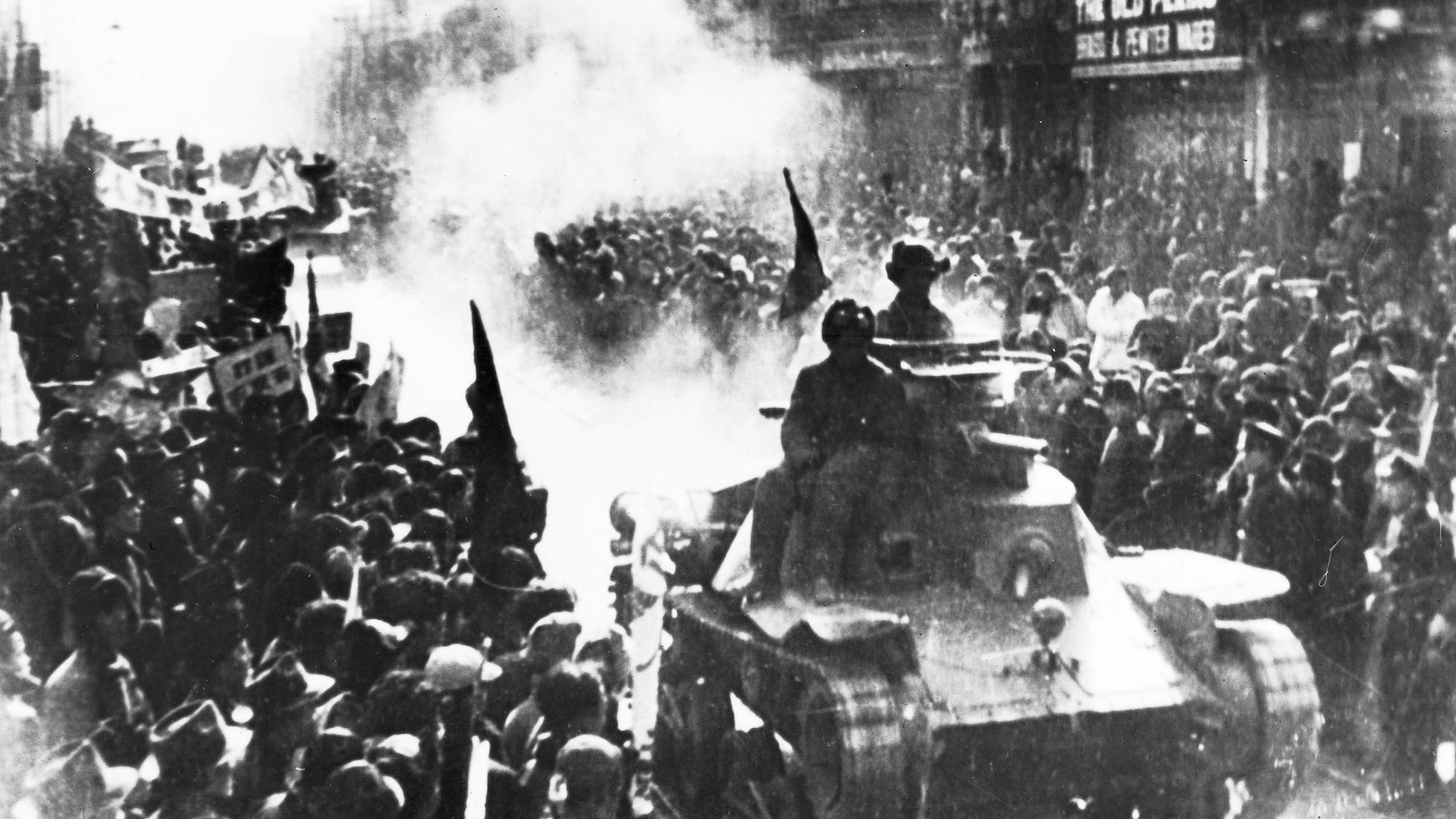
China has staged live-fire military drills around Taiwan—using aircraft, warships and rocket launches—while Beijing reiterated its aim of “complete reunification,” intensifying cross‑strait tensions and raising regional geopolitical risk. The article summarizes key historical milestones (Dutch/Spanish colonization, Koxinga 1662, Qing incorporation 1684, cession to Japan 1895, post‑WWII ROC control and KMT retreat in 1949, martial law to 1987, U.S. diplomatic shift and the Taiwan Relations Act, democratic elections in the 1990s, and recent missile tests and large-scale drills after high‑level U.S./Taiwan engagements), a context that underscores potential disruptions to Asian markets and Taiwan‑centric supply chains such as semiconductors.
Market structure: Acute cross‑Strait military activity raises near‑term risk premia for Taiwan‑centric equities and shipping/ports, while boosting pricing power for defense contractors and long‑cycle semiconductor equipment suppliers. Expect USD and JPY bid, gold up 2–5% and 10‑yr Treasury yields to compress by 10–30bp in a classic risk‑off rush over days; oil could spike 3–8% if chokepoints are threatened. Concentration risk is severe: TSMC (and fabs in Taiwan) account for ~50–70% of advanced (5nm/3nm) capacity, so even short interruptions materially affect global supply/demand curves for high‑end logic chips for months.
Risk assessment: Tail scenarios include a blockade or targeted strikes that take >20% of advanced wafer capacity offline for weeks — a low‑probability, high‑impact event that would lift chip prices and cause cascading inventory shocks for OEMs. Immediate horizon (0–30 days): volatility and outflows; short/mid (1–6 months): supply rerouting, accelerated capex outside China/Taiwan; long (1–3 years): sustained decoupling and elevated defense budgets. Hidden dependencies: global auto, cloud and AI stacks rely on a handful of fabs; financial linkages (ETFs, regional banks) can transmit stress through passive flows.
Trade implications: Tactical hedges for 0–90 days: buy Taiwan downside (EWT puts) and add VIX call exposure; rotate into US defense (LMT, RTX) and long semiconductor equipment (ASML, AMAT) on any >8–12% sector pullback. Use pair trades (long LMT vs short EWT) to express relative strength. Size hedges to cover 2–5% portfolio risk; scale core longs over 3–12 months if tensions persist beyond one election cycle or if Taiwan capacity outages exceed 10%.
Contrarian angles: Markets often overshoot — 1996 and 2005 cross‑strait spikes were mostly transient (weeks); if escalation remains below kinetic thresholds (no blockade/invasion) the Taiwan equity selloff could be overdone by >15–25%. Conversely, consensus underestimates multi‑year capex reallocation to non‑China fabs, which benefits ASML/AMAT and foundry expansion plays; buy TSM on >20% drawdown with 6–24 month horizon as a recovery/repricing play if physical damage is limited.
AI-powered research, real-time alerts, and portfolio analytics for institutional investors.
Request DemoOverall Sentiment
moderately negative
Sentiment Score
-0.45
