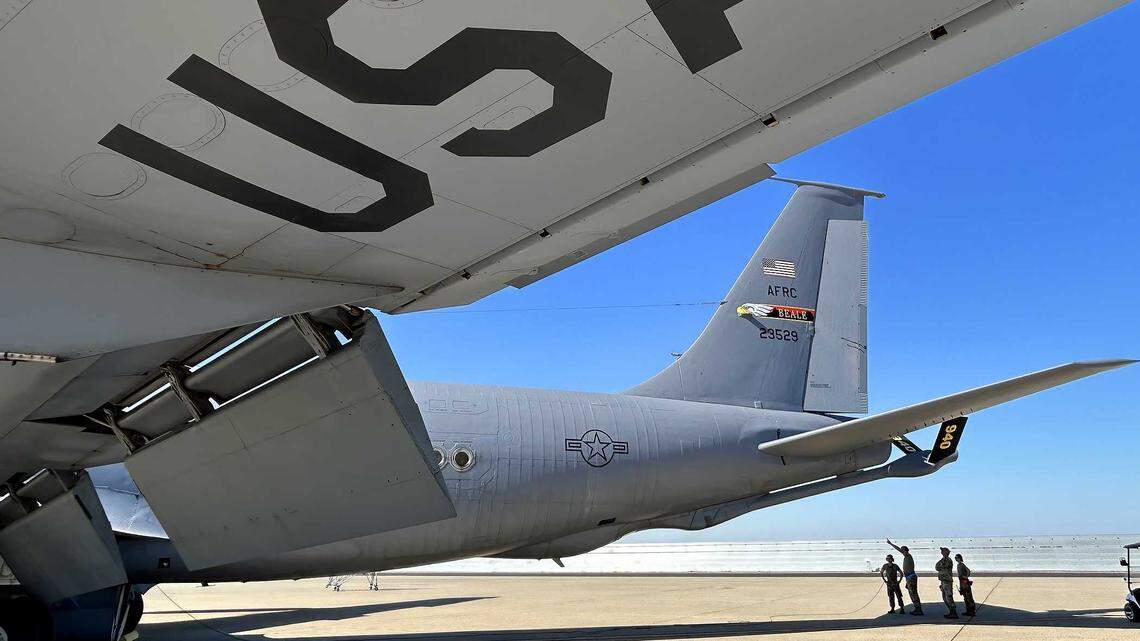
Six crew members were killed when a U.S. KC-135 Stratotanker crashed in western Iraq on March 12 during Operation Epic Fury; CENTCOM says the crash was not due to hostile or friendly fire and the cause is under investigation. A second KC-135 bearing 940th Air Refueling Wing (Beale AFB) markings made an emergency landing in Israel with tail-fin damage; the 940th operates eight KC-135s, so expect potential short-term operational disruption for that unit and modest defense-sector sentiment impact.
Expect a two-stage market/operational reaction. In the first 7–30 days the most likely outcome is targeted fleet inspections and temporary sortie/boom-hour capacity reductions in CENTCOM and adjacent AORs, creating localized refueling bottle‑necks that raise operational costs for expeditionary air wings and contractors providing fuel logistics. That pressure will show up as higher short‑term demand for MRO capacity and spares rather than immediate large new platform buys.
Over the next 3–18 months, procurement and sustainment budgets are the lever. DoD will face political pressure to accelerate recapitalization, increase depot-level maintenance funding, and fund contingency “bridge” contracts (leasing/MRO) to cover capability gaps; this benefits specialist MROs and avionics/engine suppliers faster than airframe primes. Conversely, primes with ongoing development headaches for next‑gen tankers could see schedule scrutiny, contract repricing, and margin pressure if the political response shifts funding into sustainment rather than new‑build programs.
Market pricing will overreact near-term and underprice medium-term sustainment winners. Watch three binary catalysts: (1) CENTCOM/USAFE airworthiness directives in 72 hours–2 weeks, (2) a DoD emergency sustainment contract announcement in 1–3 months, and (3) FY27 budget language or Congressional hearings within 3–12 months that reallocate O&M vs procurement dollars. A reversal can come quickly if inspections clear the fleet (days) or if DoD signals no change to readiness posture (weeks).
AI-powered research, real-time alerts, and portfolio analytics for institutional investors.
Request DemoOverall Sentiment
strongly negative
Sentiment Score
-0.75
