



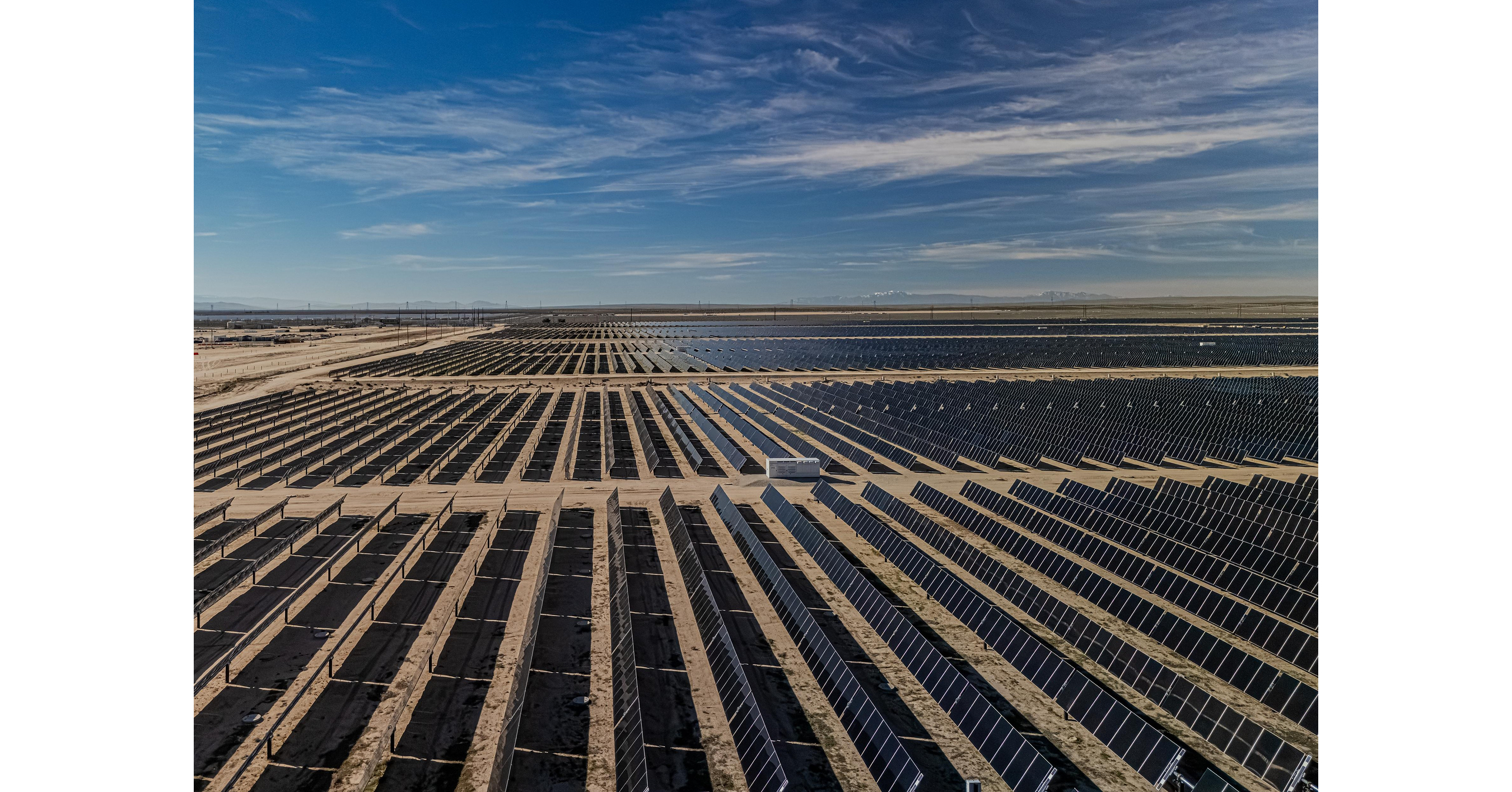
Terra-Gen’s Lockhart Solar PV IV reached commercial operations, adding 80 MW of solar capacity under a long-term power purchase agreement, enough for ~40,000 homes and businesses annually. The full Lockhart Solar and Storage facility now totals 365 MW of solar plus 173.7 MW of battery storage (enough for >350,000 homes/businesses). Construction generated 220+ peak jobs and 122,000+ work hours with no lost-time incidents, supporting Terra-Gen’s scale-up of utility-scale renewables.
The incremental signal is not the solar megawatts; it is that contracted solar-plus-storage in California is still financeable at scale. That favors regulated grid owners and transmission-heavy utilities more than project developers, because the economic value increasingly sits in interconnection, balancing, and rate-base recovery rather than in pure generation margins. For EIX, the earnings read-through is indirect and delayed unless regulators allow faster recovery of grid spend.
Second-order losers are gas peakers and any merchant fleet dependent on California evening volatility. Storage changes the trade from midday oversupply to evening peak compression, so the durable effect is lower capture prices and weaker ancillary-services upside over 6-18 months. That is structurally bearish for unhedged California generation exposure, but not enough by itself to justify an aggressive one-day equity reaction.
Consensus will likely overread this as a generic green-energy positive. The bigger missing variable is load growth: if data centers, EV adoption, and industrial demand do not accelerate faster than new interconnection, each added MW of solar cannibalizes more of its own value via curtailment and lower realized prices. Falsify the constructive utility thesis if CAISO peak prices stay elevated or if CPUC delays cost recovery; in that case EIX does not convert the buildout into earnings leverage.
AI-powered research, real-time alerts, and portfolio analytics for institutional investors.
Overall Sentiment
mildly positive
Sentiment Score
0.25
Ticker Sentiment
