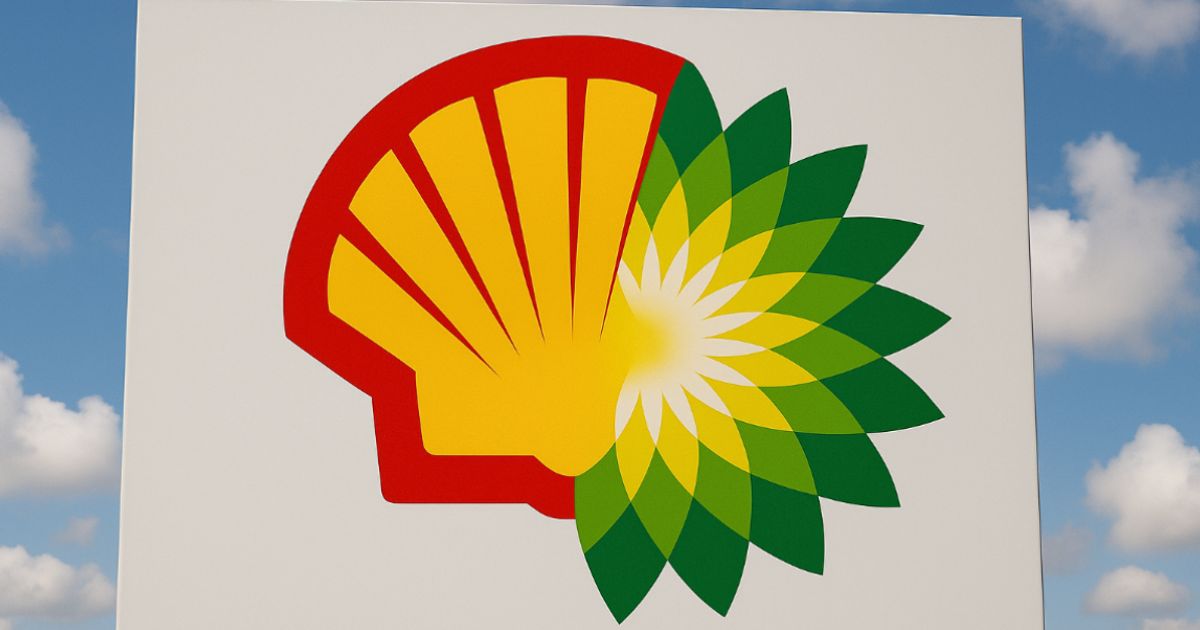
Rumors of a potential Shell-BP merger are circulating, driven by the strategic logic of combining resources for both fossil fuel upcycles and the energy transition; however, JP Morgan analysts suggest the financial case is less compelling for Shell. While BP offers complementary assets like a stronger renewables pipeline and discounted valuation, it also carries risks including a lower credit rating and aggressive emissions targets. For the deal to benefit Shell shareholders, it would require significant free cash flow per share gains, which may necessitate a deeper discount on BP's price, a larger cash component, or higher synergies, each presenting its own set of challenges and potentially conflicting with Shell's current strategy of capital discipline and high returns.
Market discussion regarding a potential merger between Shell PLC and BP PLC is intensifying, fueled by the strategic appeal of combining their capabilities to address both upcoming fossil fuel cycles and the long-term energy transition. However, a critical assessment, notably from JP Morgan, suggests the financial justification for Shell is considerably weaker. While BP offers complementary assets such as competitive upstream operations, a strong trading division, a more advanced renewables pipeline, and trades at a discounted valuation, it also introduces notable risks including a lower credit rating, more aggressive emissions reduction targets, and less convincing recent performance. For Shell shareholders to realize value, any transaction would need to generate clear accretion in free cash flow per share, ideally surpassing Shell's existing 10% compound annual growth target through 2030. JP Morgan's modeling indicates that even assuming a 20% premium for BP's shares and achieving $3.5 billion in annual post-tax synergies, a mixed cash-and-equity funded deal might only yield 13–14% annualized free cash flow growth for Shell, which is considered adequate but not transformative. A 100% equity-financed deal would offer no improvement over Shell's current trajectory. To significantly enhance returns, Shell would require a deeper discount on BP's acquisition price, a greater proportion of cash in the deal (thereby increasing leverage), or substantially higher synergies than estimated, each carrying its own set of trade-offs and potential conflicts with Shell's current strategy emphasizing capital discipline and high returns from its existing oil and gas assets.
AI-powered research, real-time alerts, and portfolio analytics for institutional investors.
Request DemoOverall Sentiment
moderately negative
Sentiment Score
-0.45
Ticker Sentiment
