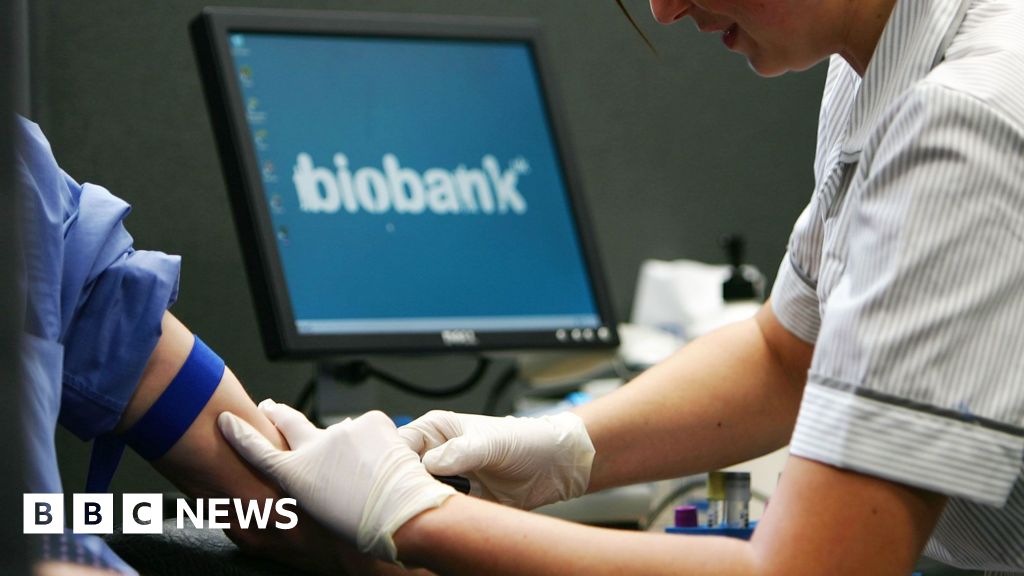
UK Biobank confirmed that data relating to 500,000 participants was listed for sale online in China, though the charity said the information was de-identified and did not include names, addresses or phone numbers. The incident triggered a board-led investigation, temporary suspension of access for some researchers, and scrutiny from the Information Commissioner's Office and UK lawmakers. While the breach is reputationally negative for data stewardship and public trust, it appears unlikely to have an immediate broad market impact.
This is not a classic cyber event; it is a governance failure with asymmetric reputational spillovers. The near-term market impact is likely muted for the named platforms, but the more important second-order effect is a tightening of research-data controls across universities, cloud-hosted datasets, and cross-border collaboration agreements. That raises compliance friction and may slow the pace of externalized analytics workflows, especially in health data and regulated AI model training, where access is valuable precisely because it is broad and reusable.
For BABA, the event is reputationally negative but operationally contained because the platform appears to have acted as a takedown venue rather than the source of the breach. The larger risk is policy drift: Western institutions may increasingly treat Chinese-hosted infrastructure as a jurisdictional leakage risk even when the incident is user-driven, which could reduce enterprise willingness to transact with the ecosystem over the next 3-12 months. That said, the absence of a purchase or platform compromise lowers the odds of a direct financial penalty large enough to move fundamentals.
CHKP is a weak indirect beneficiary only if the story broadens into higher demand for data-loss prevention, export monitoring, and granular access controls. The better read-through is not endpoint security but governance tooling: file-exfiltration limits, audit trails, and anomaly detection around legitimate users. Consensus may be overestimating immediate breach-related selling pressure on data-sharing platforms and underestimating the budget tailwind for compliance and monitoring software across life sciences and public-sector research.
The contrarian view is that this could actually reinforce the value proposition of curated, permissioned data networks. If the response is tighter controls rather than less collaboration, high-quality data custodians with strong auditability may become more attractive, not less. The real trade is to separate trust premium from jurisdictional risk, rather than extrapolating a one-off researcher misuse event into a broad data-platform selloff.
AI-powered research, real-time alerts, and portfolio analytics for institutional investors.
Request TrialOverall Sentiment
mildly negative
Sentiment Score
-0.35
Ticker Sentiment
