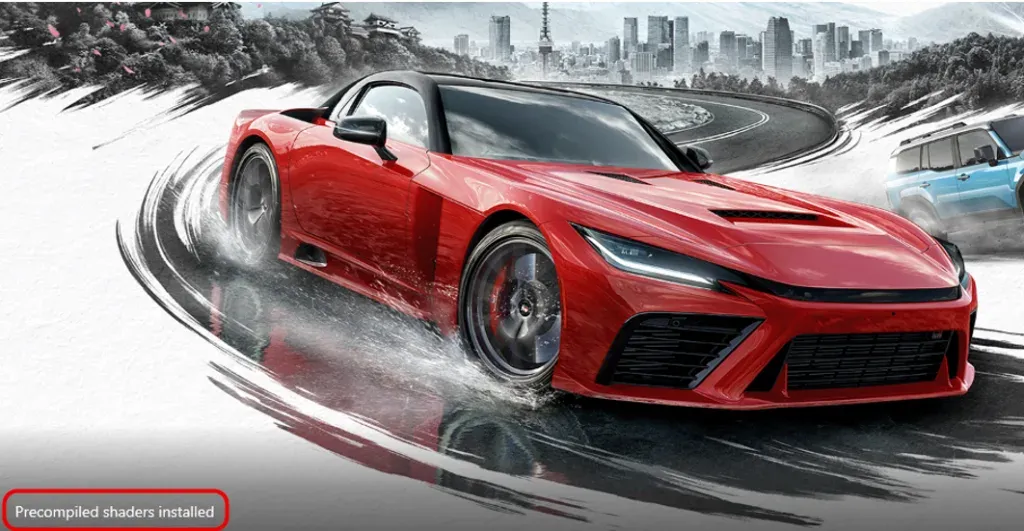
Microsoft's Advanced Shader Delivery cuts Forza Horizon 6 first-launch load time by 95%, from nearly 90 seconds to 4 seconds on an RX 7600/Ryzen 7 5800 test system. The feature is now expanding from handhelds to RDNA 3, RDNA 3.5, and RDNA 4 GPUs, but it remains limited to Xbox PC app/Microsoft Store downloads and Xbox Insiders preview access. The news is a meaningful usability improvement for PC gaming, but its broader market impact appears limited.
This is less a game-specific story than a distribution and platform-control story for Microsoft. Precompiled shader delivery reduces one of the last visible friction points in PC gaming, which should improve first-session retention and lower abandonment after installs/patches; that matters because launch-day conversion is where subscription, storefront, and engagement economics compound. The first-order winner is Microsoft’s own ecosystem: if the smoothest experience is gated behind the Xbox PC app / Store, Microsoft can incrementally increase share of PC game transactions without needing exclusive content.
AMD gets a near-term halo because the feature is currently strongest on RDNA 3+ and tied to a co-developed implementation. That creates a subtle attach-rate benefit for newer Radeon GPUs versus older installed-base cards, but the bigger second-order effect is standardization pressure on GPU vendors to make compilation latency a UX feature, not a driver problem. Over months, this is mildly supportive for AMD’s gaming narrative, though not enough by itself to move the stock unless paired with broader share gains in RDNA 4.
The market is probably underestimating how this compresses the advantage of having a larger legacy Windows base. If shader prep becomes invisible, the moat shifts from raw ecosystem breadth to how well each vendor controls cloud databases, driver cadence, and launcher integration. That’s a modest negative for Nvidia and Intel on the margin because they no longer get to frame performance as purely hardware-driven; instead, some of the experience delta migrates to software plumbing where Microsoft can dictate the standard.
Key risk: adoption. If this stays preview-gated, Windows Store-only, and narrowly limited to newer AMD hardware, the TAM is too small to matter beyond sentiment. The catalyst window is 1-3 months as other supported titles roll in; if rollout broadens to third-party storefronts or becomes default for major releases, the story becomes more material for MSFT platform monetization and AMD OEM sell-through. If uptake stalls, this fades into a nice demo rather than a durable earnings lever.
AI-powered research, real-time alerts, and portfolio analytics for institutional investors.
Request DemoOverall Sentiment
mildly positive
Sentiment Score
0.25
Ticker Sentiment
