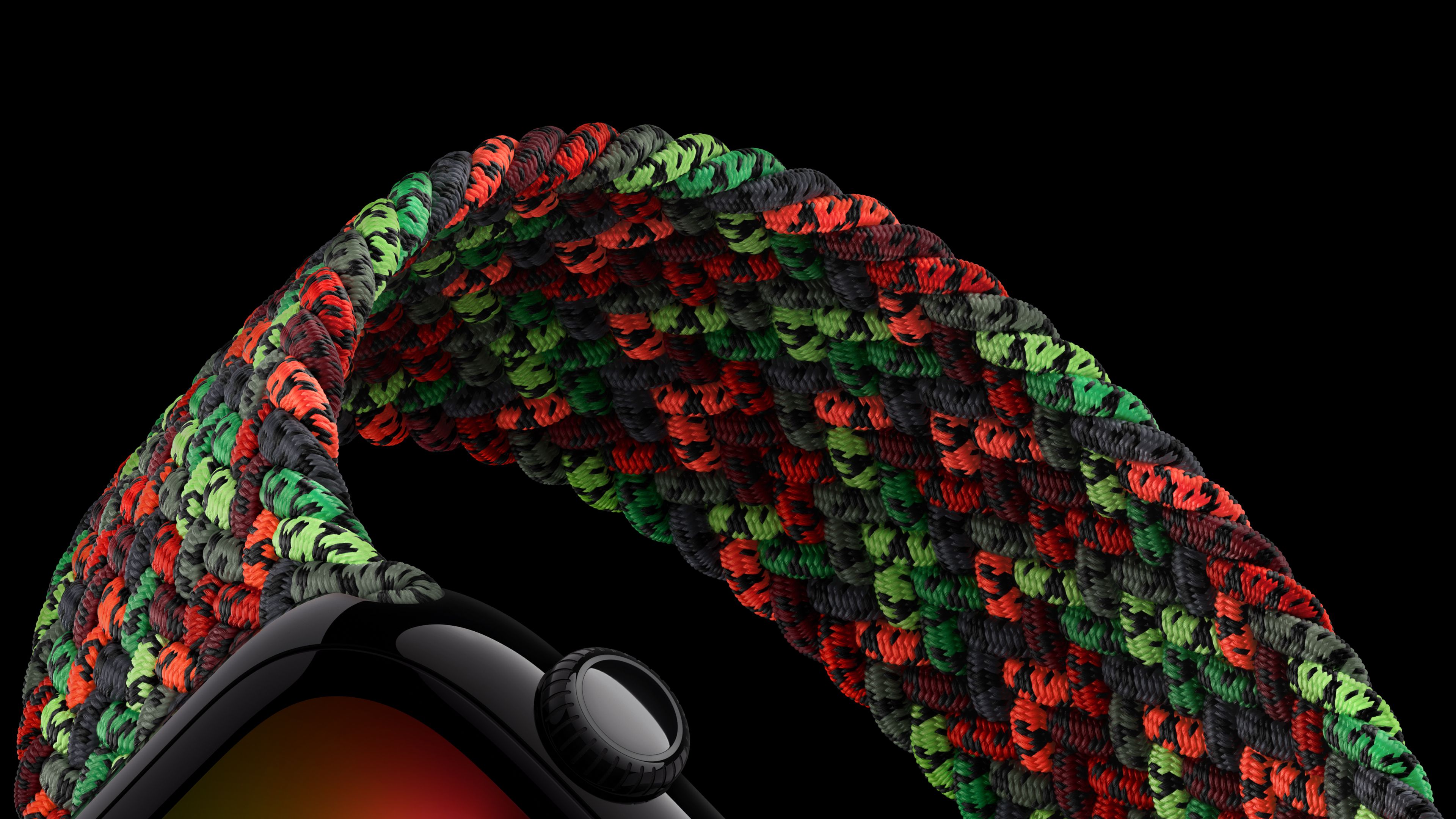
Apple launched the Unity Connection Braided Solo Loop, a Black Unity Apple Watch band featuring Pan‑African colors woven from recycled polyester yarn filaments around ultrathin silicone threads; it is available to order now in 42mm and 46mm case compatibilities and band sizes 0–12, arriving in stores later this week. The release, designed by Black creatives and allied Apple staff, accompanies grants to organizations including Boys & Girls Clubs of America, Urban Arts (NYC), Youth Music (London), the Art Gallery of New South Wales (Sydney) and Enactus México, reinforcing Apple’s ESG and community-engagement positioning; the product itself is unlikely to move Apple’s near-term financials materially but supports brand and consumer engagement.
Market Structure: This band release is a marginal revenue/branding event for AAPL that reinforces premium positioning and recurring accessory spend; expect a low-single-digit boost to Wearables & Accessories revenue over the next 1–3 quarters rather than a material uplift to EPS. Suppliers of recycled polyester, precision-braiding equipment, and silicone component makers may see incremental order flows; niche suppliers could realize +5–15% near-term volume bumps if Apple scales the SKU globally. Competitive dynamics favor Apple’s pricing power in premium wearables, increasing stickiness for Apple Watch attach rates and services monetization (payments, fitness) over 12–24 months.
Risk Assessment: Tail risks are reputational backlash or localized supply-chain disruption (factory incident, recycled-material shortage) that could dent PR and short-term sales; probability low but P&L impact asymmetric for brand-centric revenue. Immediate (days) market impact should be muted; watchables over weeks/months for accessory sell-through; medium-term (quarters) is where attach-rate lift and services revenue might show in guidance. Hidden dependencies include third-party recycling collection capacity and precision-braiding throughput limits that can cap scale if demand spikes.
Trade Implications: Tactical long AAPL exposure is supported into the broader product cycle (H1 device refreshes); options can efficiently express convexity into rumored MacBook/iPhone catalysts in H1–H2 2026. Relative-value: long AAPL vs short niche wearable maker Garmin (GRMN) to capture share shift; small-cap suppliers of polyester/technical textiles may benefit but carry execution risk. Expect modest compression in AAPL implied volatility after the immediate press window unless a broader product surprise emerges.
Contrarian Angles: Consensus understates cumulative lifetime value from accessory-driven ecosystem lock-in — assume even a 1–2% increase in Apple Watch attach rate could drive high-margin services revenue growth of +$0.5–$1BN ARR over 24 months. Conversely, don’t overstate the SKU: sustainability-driven manufacturing increases unit COGS by an estimated 1–3% and could modestly compress wearables margins if scaled rapidly. Historical parallels: Apple-led accessory pushes (watch bands, cases) rarely move stock materially but consistently enhance loyalty metrics; a mispriced trade is buying only on the PR day and selling before the bigger product cycle in H1–H2 2026.
AI-powered research, real-time alerts, and portfolio analytics for institutional investors.
Request DemoOverall Sentiment
mildly positive
Sentiment Score
0.30
Ticker Sentiment
