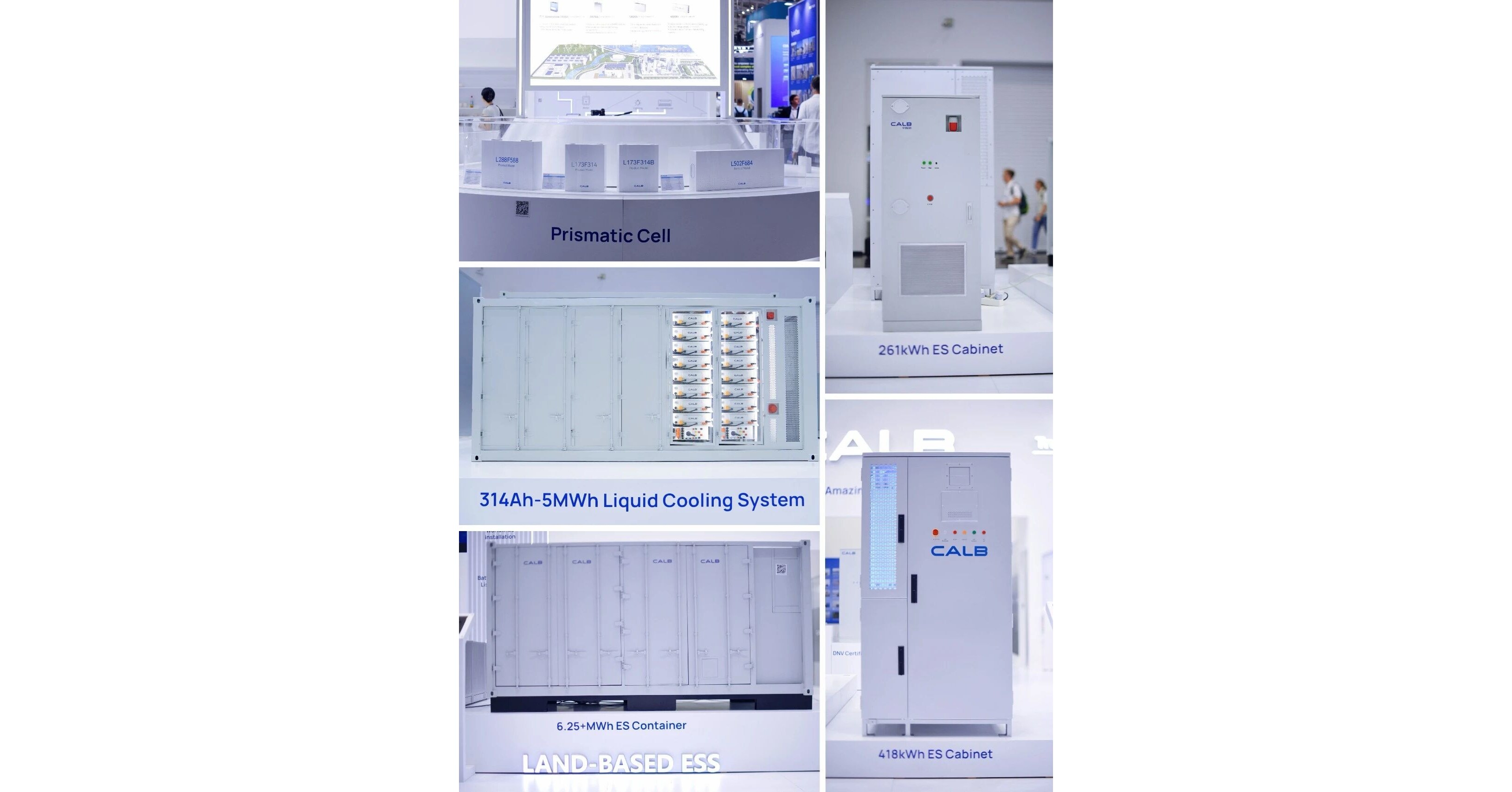
CALB presentó en Intersolar Europe 2026 una cartera de almacenamiento de energía de larga duración, destacando una celda apilada de 661 Ah con hasta 15.000 ciclos y una vida útil de hasta 25 años, y un contenedor con refrigeración líquida de 6,25 MWh. El sistema de segunda generación incrementa la capacidad energética ~25% y reduce componentes del sistema ~40% vs. la generación anterior. La nota también menciona soluciones modulares de 6,9 MWh (y >10 MWh), además de gabinetes de 261 kWh y 418 kWh para aplicaciones comerciales e industriales.
This reads more like a market-access signal than a fundamental inflection: the important takeaway is that Chinese OEMs are continuing to push lower-LCOS, higher-density BESS into Europe, which puts incremental pressure on pricing rather than on near-term demand. For Western integrators with thinner differentiation, that usually means margin compression shows up first in bid spreads and warranty terms before it shows up in reported revenue, with the first test likely in 1-3 month tender activity and 2H26 bookings.
The biggest beneficiaries are project developers and utilities that can monetize longer-duration storage against peak spreads and grid constraints, because cheaper batteries improve IRR even if merchant power prices soften at the margin. That is constructive for names with real pipeline and execution leverage, such as NEE and AES, while being more challenging for pure-play hardware vendors like FLNC where procurement is increasingly a price-and-balance-sheet contest. Second-order, lower system cost should accelerate storage adoption in Spain, Italy, and the UK, which can crowd out peakers and some gas-flex assets over 6-18 months.
The contrarian risk is that this kind of product showcase overstates near-term commercial traction: European buyers still face permitting, interconnection, and financing bottlenecks, and any tariff/local-content response could blunt Chinese share gains. The thesis is falsified if EU policy tightens or if Western suppliers hold gross margins despite aggressive Chinese pricing; it is confirmed if 2026 European BESS RFPs start clearing at materially lower $/kWh and FLNC/peer commentary turns defensive on pricing or backlog quality.
AI-powered research, real-time alerts, and portfolio analytics for institutional investors.
Request DemoOverall Sentiment
mildly positive
Sentiment Score
0.18
Ticker Sentiment
