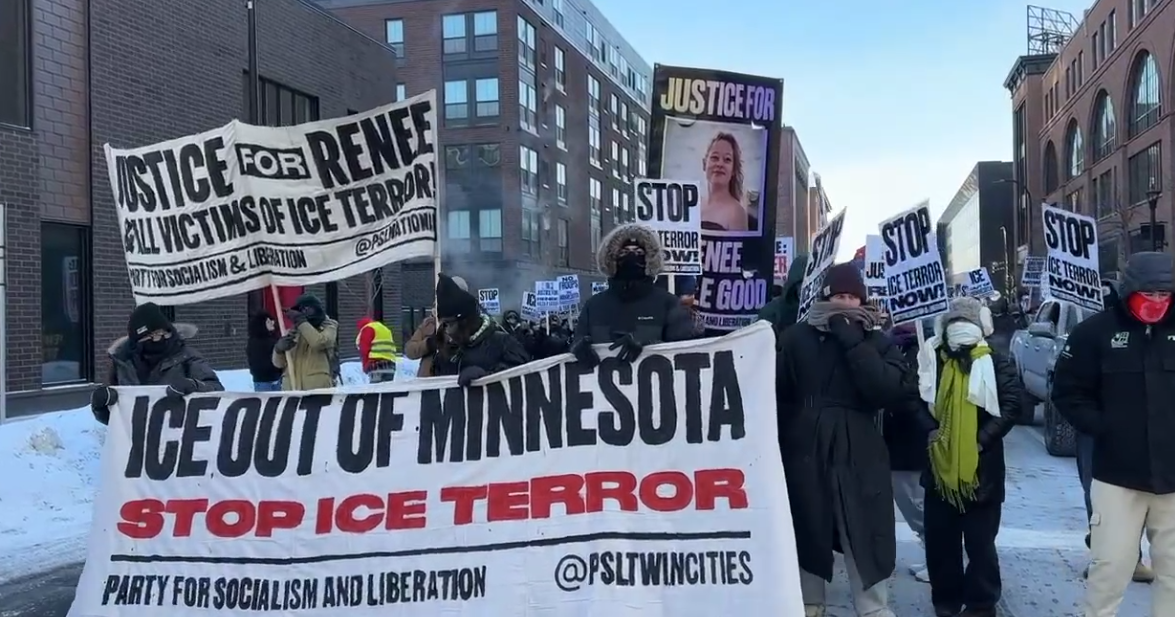
Mass protests and a coordinated 'Day of Truth and Freedom' in the Twin Cities accompanied an Operation Metro Surge by ICE, with thousands marching, hundreds of businesses closed and multiple high-profile arrests and demonstrations including clergy arrests at MSP airport. The news highlights escalating legal and political conflicts — pending immigration court cases for children detained, an independent autopsy and homicide ruling in the Renee Good shooting, state investigations into ICE conduct, and public calls for limits on federal enforcement — creating localized disruption to commerce and travel and elevating reputational and regulatory risk for government agencies and affected private-sector entities.
Market Structure: Localized consumer-facing sectors (downtown retail, restaurants, small hospitality, and airport-dependent services) are near-term losers — expect 10–30% foot-traffic declines in impacted Minneapolis nodes for 1–4 weeks and selective revenue losses for airlines with heavy MSP (Minneapolis–St. Paul) exposure. Potential winners are government/security tech contractors (data/analytics, surveillance hardware) if federal enforcement funding or contract activity ramps up; expect a modest re-rating window over 3–12 months if contracts materialize.
Risk Assessment: Tail risks include escalation into multi-week citywide shutdowns (5–15% probability) that widen Hennepin County muni spreads by 10–50bps and produce material litigation/settlement costs for DHS/contractors (0–2% hit to revenues for targeted vendors). Hidden dependencies: reputational contagion to national carriers (Delta, DAL) and insurers; political outcomes (state legislation limiting ICE activity) are 2–6 month catalysts that could reverse vendor revenue paths.
Trade Implications: Tactical plays favor small, time-bound hedges on airlines + selective 6–12 month longs in security/data vendors. Relative value: long defense/security software (Palantir PLTR) vs short regional travel exposure (Delta DAL) captures policy-driven demand shift; size trades small (1–3% NAV) and use options to manage tail volatility. Expect most P&L to resolve within 30–180 days.
Contrarian Angles: Consensus focuses on protests as only short-term demand shock; misses potential upside for contractors if federal budgets or enforcement tech procurement increases (histor parallel: post-9/11 procurement spikes took 6–18 months to show up as revenue). Conversely, risk of state-level curbs could leave contractors empty-handed — therefore prefer option-defined exposure and strict time gates.
AI-powered research, real-time alerts, and portfolio analytics for institutional investors.
Request DemoOverall Sentiment
moderately negative
Sentiment Score
-0.50
