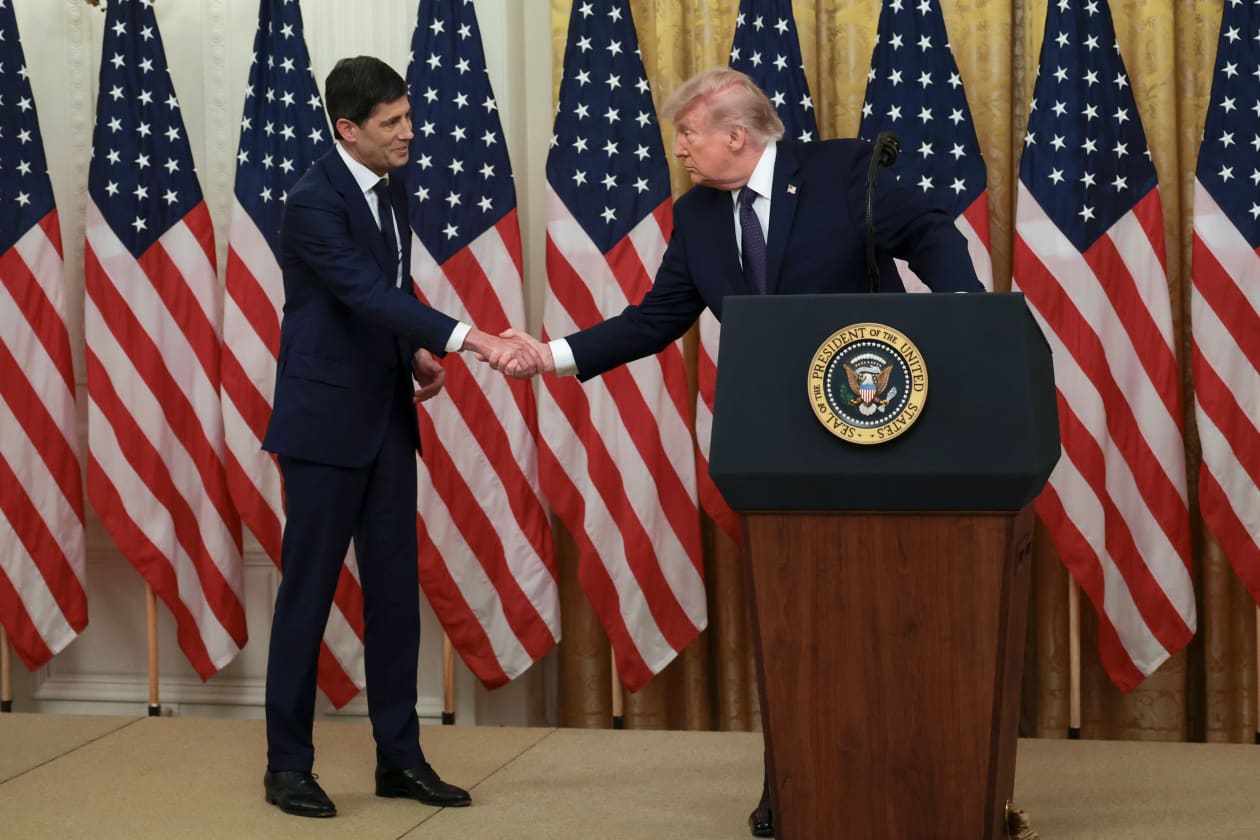
President Trump publicly said he wants Fed Chair Kevin Warsh to be "totally independent" and to "do a great job" without taking cues from him. The remarks are directionally supportive of Fed independence, but the article contains no policy decisions, rate guidance, or economic data. Market impact is likely limited absent any change in actual Fed messaging or actions.
The market implication is not the personnel headline, but the probability distribution on the policy path. A Fed chair publicly insulated from White House pressure reduces the chance of a near-term politicized easing shock, which tends to support the front end less than the market may want and keeps real rates higher for longer. That is mildly bearish for duration-sensitive assets and levered balance sheets, while financials may benefit if the curve stays less aggressively bullish than a political Fed would imply.
Second-order effects likely show up first in rate volatility rather than direction. If investors had been positioning for a faster, administratively-driven cut cycle, the unwind should favor short-duration cash-like instruments and banks over long-duration growth and speculative credit. The more interesting setup is that “independence theater” can coexist with a more dovish or more hawkish actual reaction function; the market may overreact to rhetoric and underprice the lag before the data force the Fed’s hand.
The contrarian view is that this reduces tail risk of a credibility event, which is actually bullish for risk assets over a 6-12 month horizon. A less politicized Fed lowers the odds of a disorderly inflation reacceleration or a bond-market revolt, so the knee-jerk duration short may be too crowded. The best expression is not a macro directional bet, but owning volatility compression in rates while keeping some convexity in case labor data soften faster than consensus expects.
AI-powered research, real-time alerts, and portfolio analytics for institutional investors.
Overall Sentiment
neutral
Sentiment Score
0.05
