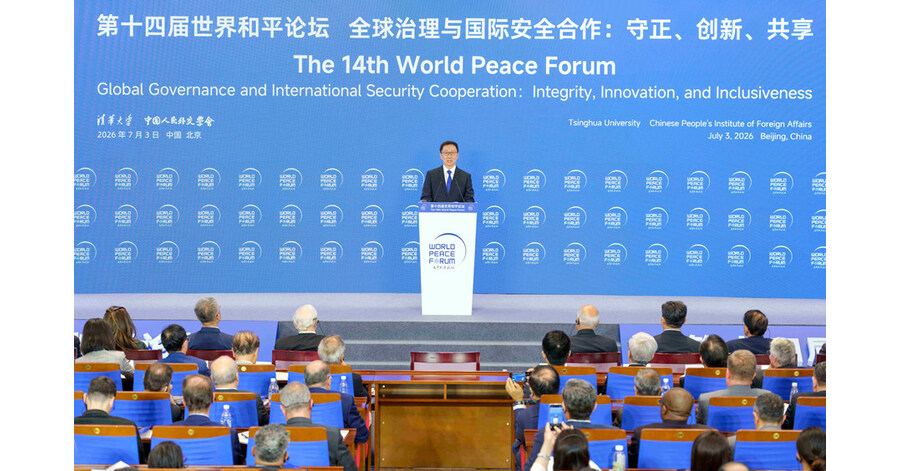
El XIV Foro Mundial por la Paz reunió a diplomáticos, académicos y responsables políticos de más de 80 países en Pekín para pedir mayor cooperación internacional ante crecientes tensiones geopolíticas y nuevos desafíos de seguridad. El programa incluyó el impacto de tecnologías emergentes, como la inteligencia artificial, en conflictos armados y debates sobre la reforma de la gobernanza global. Con más de 400 participantes y 200 periodistas de más de 70 medios, el evento refuerza el enfoque en multilateralismo, aunque no contiene medidas financieras o regulatorias cuantificables.
This reads as signaling, not a policy inflection, so the first-order market impact should be negligible. Any lower geopolitical risk premium in defense, energy, or rates is likely to fade unless the forum is followed by concrete bilateral steps; absent that, the event does not change earnings, procurement, or budget trajectories.
The real second-order read-through is narrative competition over AI and security governance. If Beijing can convert these forums into working groups or standards language, the medium-term pressure point is export controls and model-access rules, which would matter more for semis and cloud than for broad equities. But that is a 3-12 month catalyst path, not a same-day trade.
Contrarian view: the market often mistakes multilateral rhetoric for de-escalation when it is usually just a venue for positioning. Consensus may underweight how little actual policy capacity these gatherings have; without a joint communique, enforcement change, or sanctions relief, the move is likely overdone if risk assets bid on the headline alone.
AI-powered research, real-time alerts, and portfolio analytics for institutional investors.
Request DemoOverall Sentiment
neutral
Sentiment Score
-0.05
