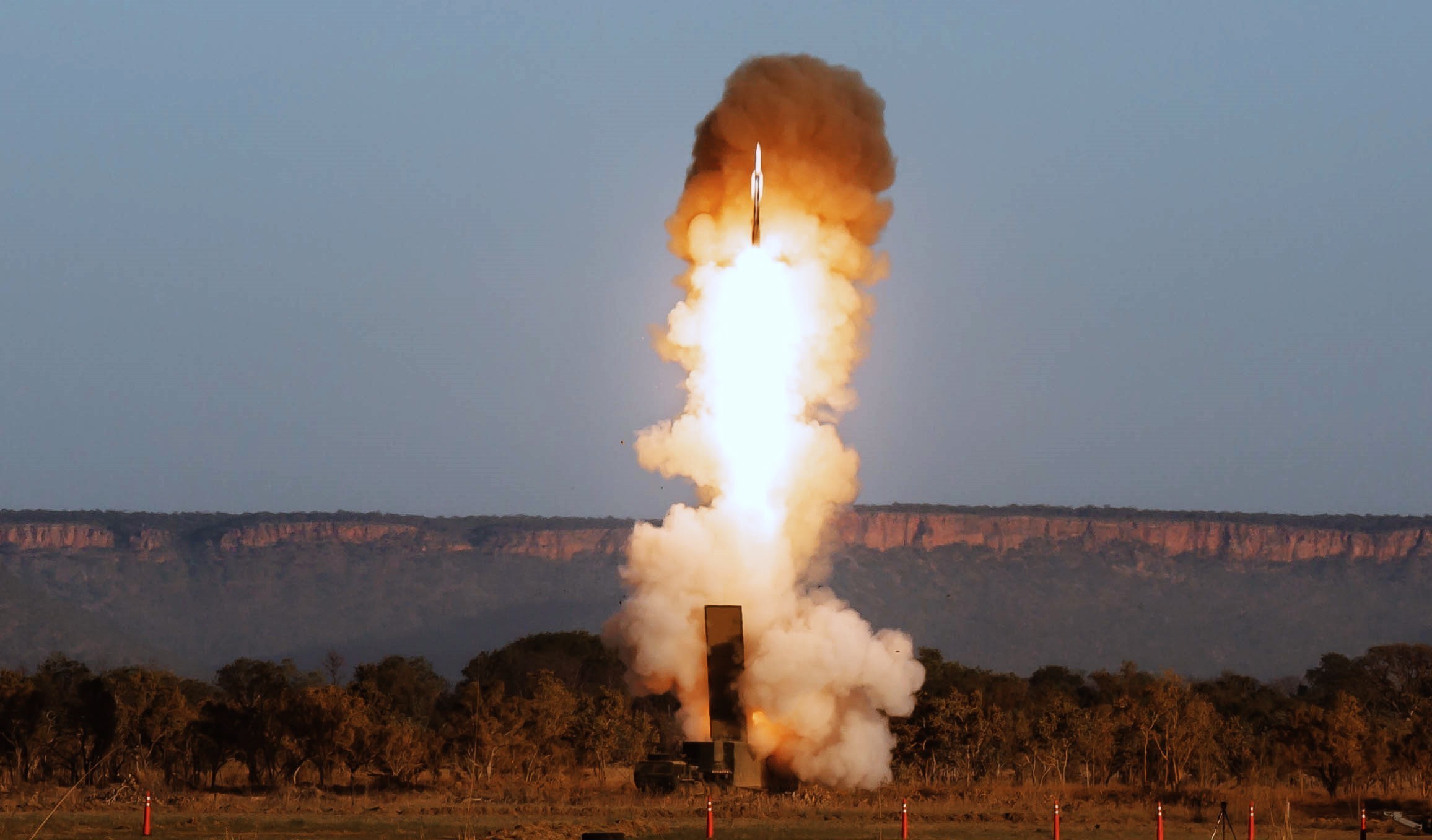
The U.S. Army has revealed its mid-range Typhon missile system in Japan for the first time, deploying it to the U.S. Marine Corps Base in Iwakuni as part of a joint exercise. This move, following previous deployments in the Philippines and Australia, significantly enhances U.S. and allied deterrence capabilities against China's regional assertiveness, with the Typhon system capable of striking targets on China's eastern coasts, signaling increased geopolitical tensions and potential implications for regional stability and defense sector investments.
The U.S. Army's first-time deployment of the mid-range Typhon missile system in Japan marks a significant escalation in its strategy to deter China and reassure regional allies. The system's capability to fire Tomahawk cruise missiles, placing targets on China's eastern coast within range, sends a direct strategic signal of U.S. force projection. This deployment is not an isolated event but part of a broader, deliberate pattern, following similar placements of advanced missile systems in the Philippines and Australia, and occurring alongside the large-scale 'Resolute Dragon' bilateral exercise. This military posturing is complemented by tangible investments in defense infrastructure, evidenced by the U.S. Coast Guard exercising a $507 million contract option with Bollinger Shipyards for 10 Sentinel-class cutters and Japan's Mitsubishi Heavy Industries launching a new 3,500-ton patrol vessel for delivery in FY2026. While the Typhon deployment in Japan is temporary for the exercise, it underscores a sustained trend of increased military spending and collaboration between the U.S. and its allies to counter China's assertiveness in the Indo-Pacific.
AI-powered research, real-time alerts, and portfolio analytics for institutional investors.
Request DemoOverall Sentiment
neutral
Sentiment Score
0.00
