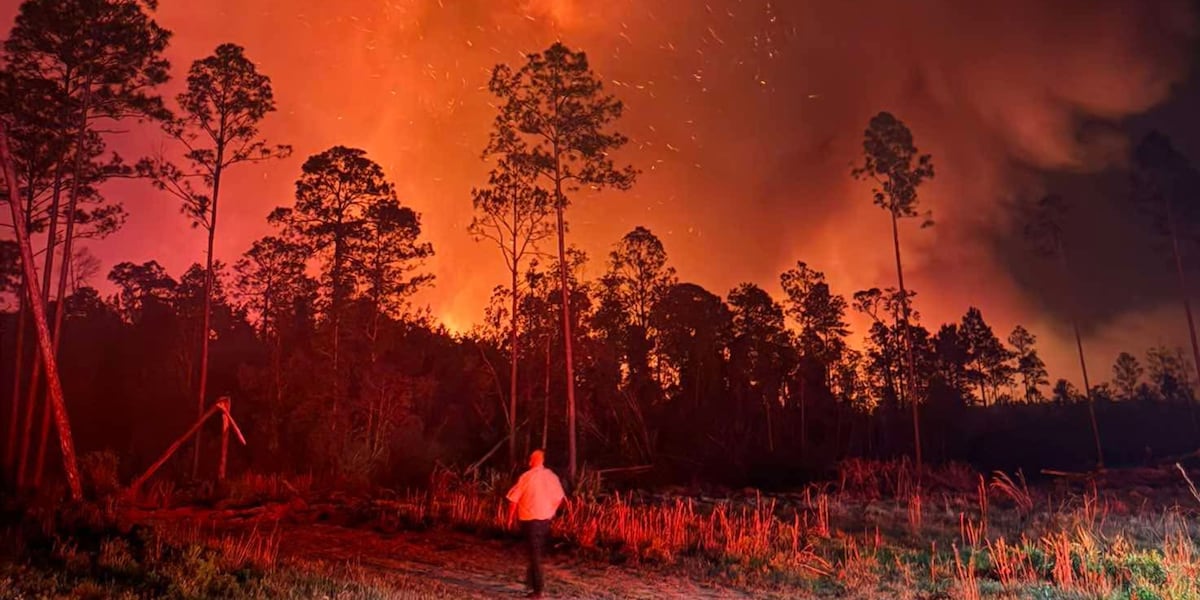
The Pineland Road Fire has grown to 32,003 acres and is only 10% contained, with 187 single residences and 123 minor structures threatened. One residence and 35 minor structures have already been destroyed, 140 civilians have been evacuated, and the incident has caused road closures plus threats to utilities, rail lines, and timber operations. Estimated costs are $3 million, with smoke impacts likely across surrounding South Georgia communities.
This is not just a local catastrophe; it is a short-duration shock to a tightly linked cluster of rural economic activity: timber, land transport, utilities, and niche agricultural services. The first-order market effect is on hard-to-quantify physical loss, but the second-order effect is on operating continuity for nearby mills, log haulers, and transmission/rail maintenance crews whose routes and work windows are now constrained. In the next 1-3 weeks, the highest-probability market reaction is a localized squeeze in trucking flexibility and fire-related overtime costs rather than a broad commodity price move.
The underappreciated winner is the incident-response ecosystem: equipment rental, aerial suppression support, and contractors with wet-line / clearing capability should see immediate demand pull-forward across the Southeast. On the loser side, timber REITs and private timber owners in the burn perimeter face not only direct acreage loss but also a lagged hit from salvage logging, depressed stumpage pricing in the affected corridor, and temporary mill feedstock disruption; that can ripple into nearby sawmills if inbound log volumes are rerouted or delayed. Utilities and railroads are more exposed to tail risk than current headlines imply because even without a direct asset loss, line patrols, access restrictions, and smoke-related operating conservatism can create service degradation and incremental inspection spend.
The contrarian angle is that the equity market may over-focus on the visible acreage and underprice the duration of smoke, cleanup, and access constraints. A contained fire does not quickly normalize operations when the land base is drought-stressed; the more durable impact is the elevated probability of renewed flare-ups if wind shifts or spot fires jump control lines over the next 2-4 weeks. That argues for trading this as an operational disruption with a short tail, not as a one-off headline event.
From a portfolio perspective, this is best expressed through relative-value and optionality rather than outright disaster hedges. The opportunity set is concentrated in names with Southeast utility, rail, timber, or catastrophe-response exposure; the risk is that the event remains too localized to move large-cap multiples, so position sizing should favor catalyst-dense, event-driven expressions over thematic baskets.
AI-powered research, real-time alerts, and portfolio analytics for institutional investors.
Request DemoOverall Sentiment
strongly negative
Sentiment Score
-0.72
