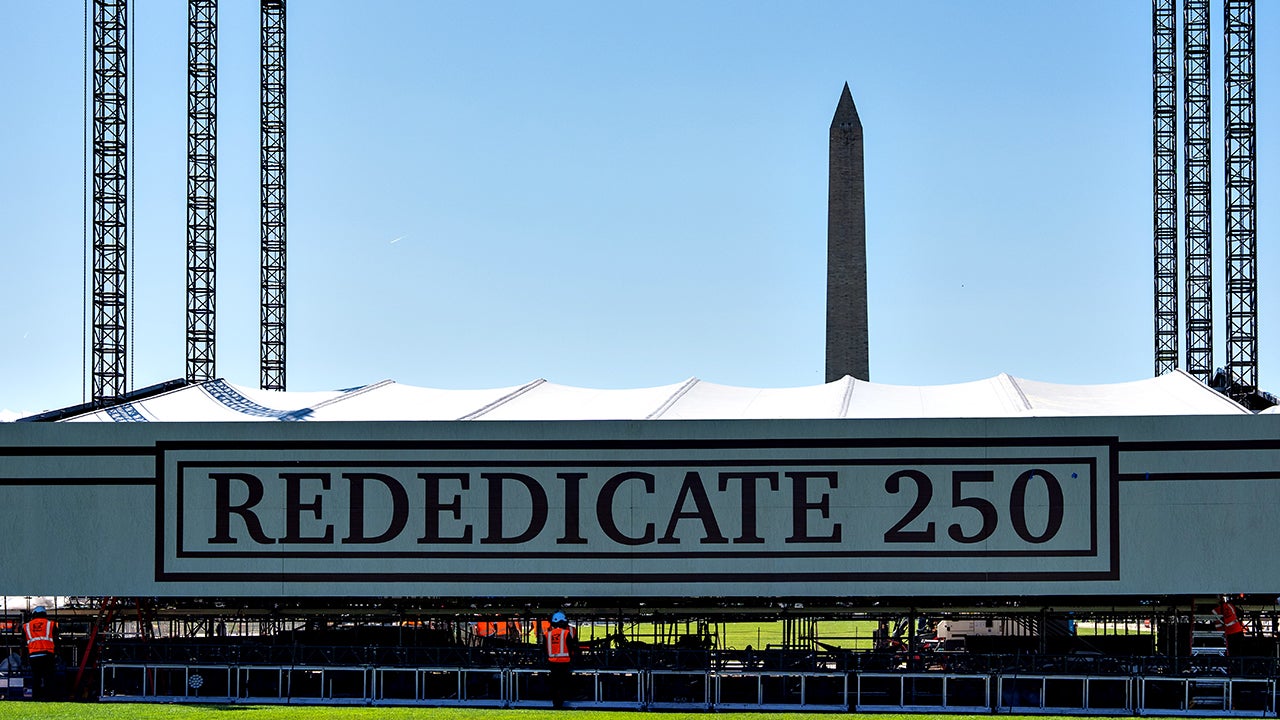
A high-profile 'Rededicate 250' prayer rally on the National Mall featured President Trump, Vice President JD Vance, House Speaker Mike Johnson, Marco Rubio, Pete Hegseth and several faith leaders ahead of America’s 250th anniversary. The event was largely symbolic, centered on prayer, worship and remarks about America’s religious heritage rather than policy or market-moving developments. Market impact is minimal, with no direct economic, corporate or legislative action reported.
This is less a policy event than a durable coalition-management signal: the administration is trying to fuse religious identity, civic ritual, and populist branding into a single narrative ahead of the semiquincentennial. That creates a medium-term tailwind for organizations that can monetize patriotic-faith adjacency without looking overtly partisan — especially broadcasters, event marketers, live entertainment venues, and Christian media/app ecosystems that benefit from higher engagement and lower customer acquisition costs during politically charged cultural moments.
The second-order winner is the attention economy. When the state elevates a faith-coded mass event, it expands the reachable audience for adjacent creators and platforms with low marginal distribution cost: Christian music catalogs, devotional apps, family-friendly streaming, and live-tour ecosystems can see a spike in usage and conversion for weeks, not days. The more interesting implication is that this may accelerate a segmented media market where conservative-leaning and faith-based content becomes more resilient in ad downturns because it is embedded in identity rather than pure entertainment.
Politically, the risk is that this over-indexes the coalition on culturally conservative voters while doing little to broaden appeal among suburban moderates and younger independents. If the event is perceived as blending worship with state power too explicitly, backlash could show up first in nonprofit fundraising, university partnerships, and corporate sponsorship decisions rather than in election polling. The catalyst to watch is whether the semiquincentennial program expands into a year-long campaign; if yes, the theme becomes recurring, and that is when media monetization and political polarization effects compound.
Contrarian read: consensus may treat this as a one-off symbolic rally, but the more important part is infrastructure creation — recurring events, speaker circuits, content libraries, and digital funnels. That favors operators with reusable IP and direct-to-consumer distribution over legacy institutions. The flip side is reputational concentration: any misstep, financial scrutiny, or evidence of donor fatigue would reverse enthusiasm quickly because the thesis depends on sustained authenticity, not just airtime.
AI-powered research, real-time alerts, and portfolio analytics for institutional investors.
Request DemoOverall Sentiment
neutral
Sentiment Score
0.05
