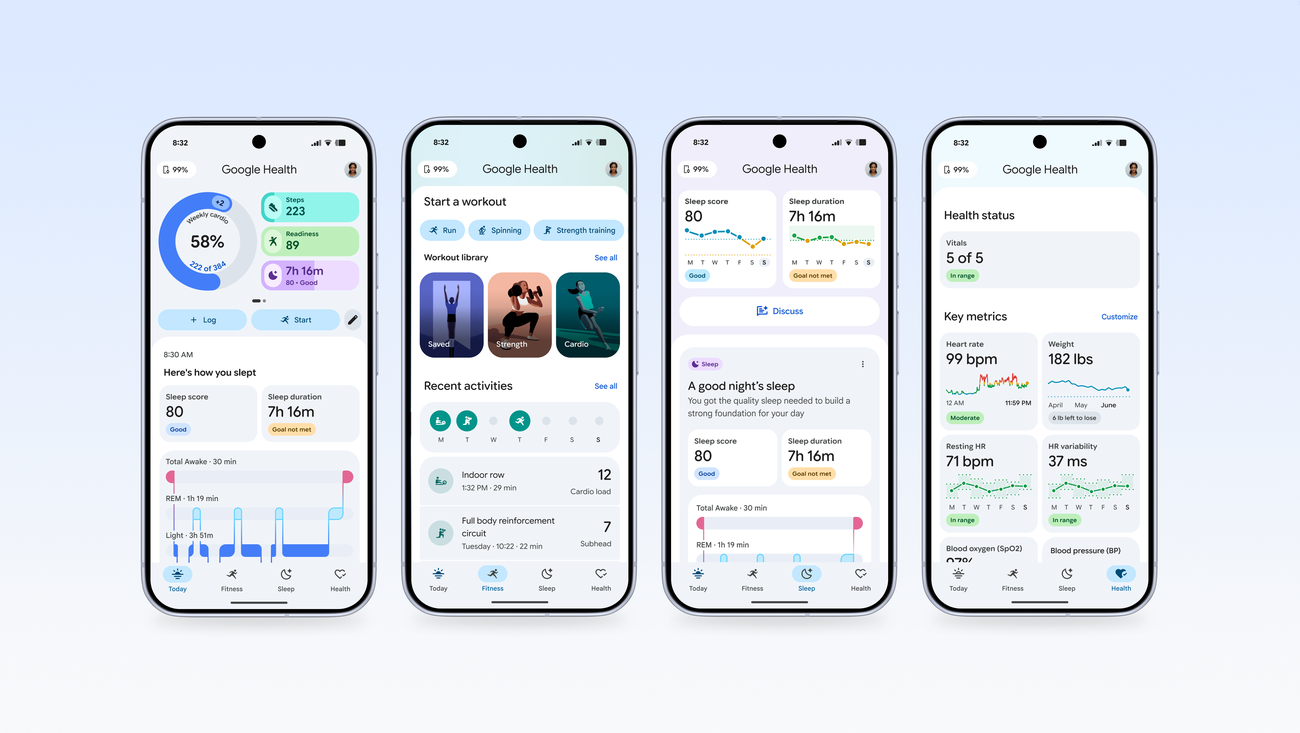
Google introduced the Google Health app, Google Health Coach, and Fitbit Air, positioning the products as a centralized hub for health data, recommendations, and cross-device integration. The company also highlighted expanded sharing, export, and medical-record syncing features, with support for more data types and countries planned over time. The announcement is constructive for Google’s health ecosystem, but it appears to be a product roadmap update rather than a near-term revenue catalyst.
This is less a product launch than a bid to control the health-data layer that sits between consumer hardware, software, and provider systems. If Google can become the default aggregation point, it raises switching costs for wearable users and shifts bargaining power away from single-device ecosystems toward the platform that normalizes and interprets data. The strategic prize is not the app itself but the distribution and identity graph that comes from becoming the place where longitudinal health behavior is stored.
The second-order winner is Google’s AI stack: once the company owns a richer, permissioned health dataset, it can train more personalized recommendation models and potentially create a durable loop between engagement, retention, and monetization. That is especially relevant because healthcare data is sticky and high-frequency wellness data can improve model quality quickly, even if regulatory constraints prevent ad use. The likely losers are closed wearable ecosystems and point solutions that rely on data siloing; if interoperability becomes the expectation, hardware differentiation compresses and the value migrates to software orchestration.
The main risk is execution and trust, not concept. Consumer willingness to consolidate sensitive records into a single ecosystem will likely take quarters to prove, and any privacy misstep would slow adoption materially; the product needs near-perfect security hygiene to avoid a brand-damaging reset. Another overhang is provider integration friction: if medical-record ingestion remains U.S.-centric or patchy across insurers and hospital systems, the platform may remain a wellness dashboard rather than a true health operating system.
Consensus may be underestimating the optionality on adjacent revenue rather than direct monetization. Even without ad targeting, a deeper health graph can support device sales, subscriptions, cloud/AI usage, and higher ecosystem retention across Android and wearables over a 12-24 month horizon. The tradeable angle is that this is incremental for Google’s multiple, but potentially strategically important if it strengthens the moat around consumer AI and wearables before Apple can fully harden its own stack.
AI-powered research, real-time alerts, and portfolio analytics for institutional investors.
Request DemoOverall Sentiment
mildly positive
Sentiment Score
0.35
Ticker Sentiment
