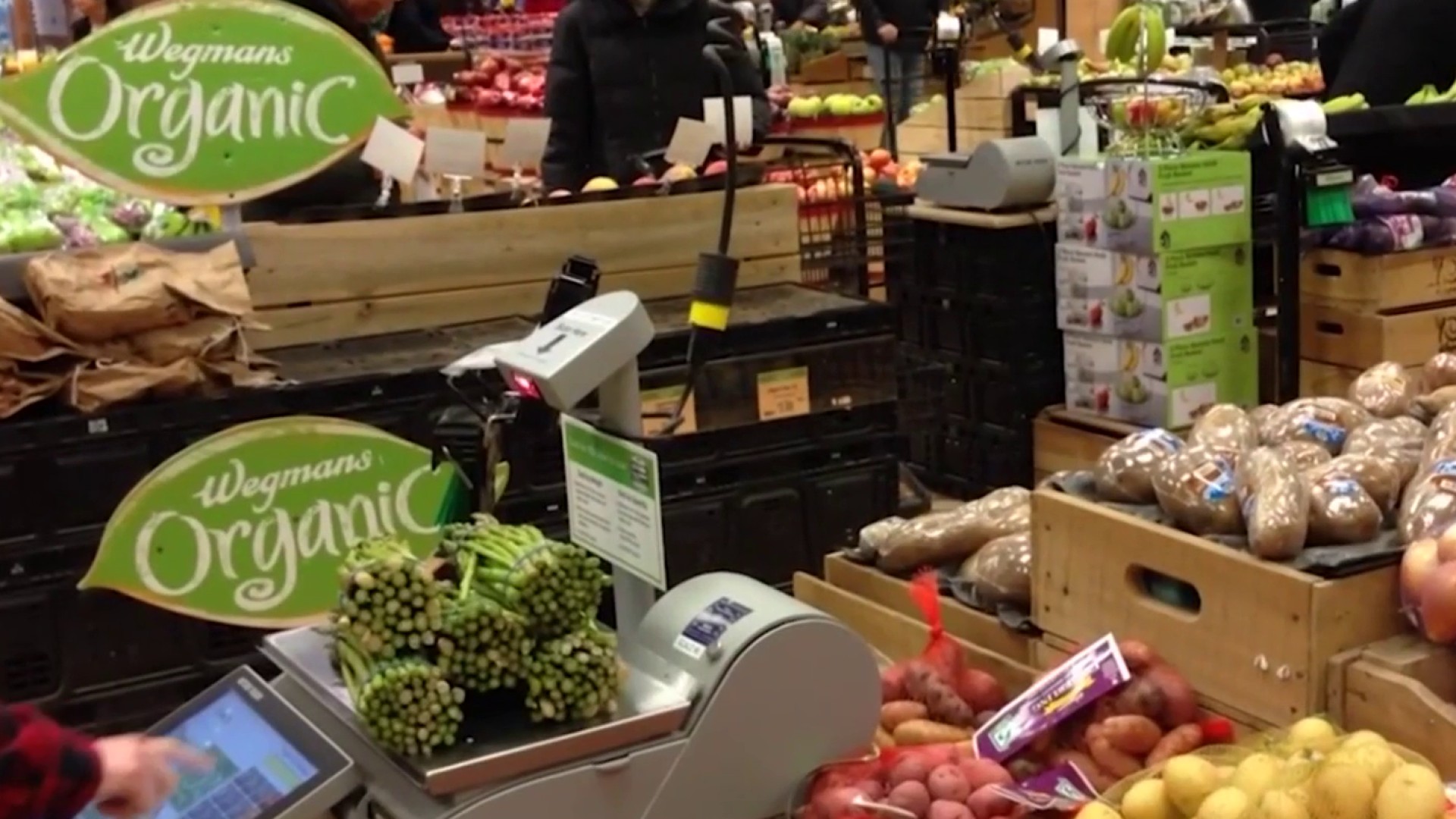
Consumer Reports found grocery basket price gaps exceeding 33% across major chains in the same city, with warehouse clubs like Costco and BJ’s often about 20% cheaper than Walmart. Discount grocers Aldi and Lidl ranked among the most affordable, while Whole Foods and sometimes Trader Joe’s ran 25% to nearly 40% above Walmart for the same groceries. The piece is consumer-focused and does not indicate a direct market-moving event, though it highlights persistent food-price sensitivity.
The immediate takeaway is not that grocery pricing is “competitive,” but that the market is bifurcating into traffic-attraction models versus margin-protection models. For WMT, the risk is less about basket inflation and more about mix dilution: if consumers become more intentional and multi-home their shopping, Walmart can retain trips but lose high-margin impulse and premium basket share to discounters and clubs. That matters because the easiest way to win share in a pressured consumer environment is through price transparency, which tends to compress gross margin before it shows up in unit growth.
COST is better positioned than the headline suggests because the club model benefits from consumers actively optimizing spend, not just passively trading down. The second-order effect is that warehouse clubs can take share from both grocery and general merchandise channels when households consolidate bulk staples and use specialty stores only for edge cases. That creates a longer-duration traffic tailwind for COST even if food inflation moderates, because the value proposition shifts from “cheap groceries” to “household budget management.”
The contrarian point is that the competitive threat to WMT is not necessarily Amazon or premium grocers; it’s the combination of clubs, hard discounters, and digital couponing that makes price dispersion more visible and harder to defend. If consumers become more disciplined about trip planning, the winners are the retailers with either membership economics or structurally low-cost sourcing, while everyone else absorbs lower basket size. Over 3-12 months, this is more of a share shuffle than a demand destruction story, but it can still pressure same-store sales mix and promotional intensity.
The key reversal catalyst would be a meaningful easing in food-at-home inflation or a pickup in disposable income, which reduces the need to optimize across stores and dilutes the benefit of discount positioning. Until then, the setup favors value retailers, with the main risk to COST being valuation rather than fundamentals, and the main risk to WMT being margin pressure if it has to match the low end too aggressively while losing premium basket mix. That makes this a relative-value trade, not an absolute consumer bullishness call.
AI-powered research, real-time alerts, and portfolio analytics for institutional investors.
Request DemoOverall Sentiment
neutral
Sentiment Score
-0.05
Ticker Sentiment
