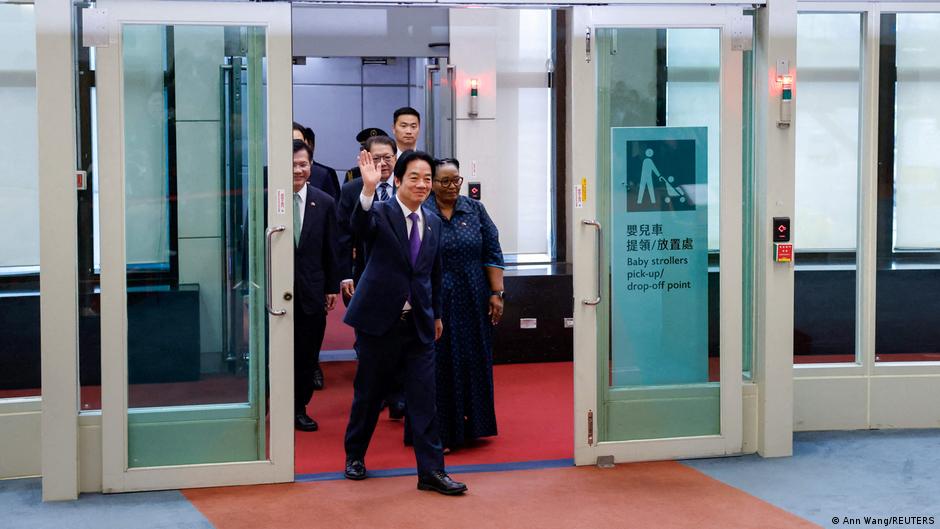
Taiwan President Lai Ching-te returned from an Eswatini trip after three China-aligned countries denied overflight permission, forcing a longer route home. Lai framed the episode as proof that Taiwan has the right to engage globally and said Taiwan will not retreat under pressure. The article is primarily geopolitical and diplomatic, with limited direct market implications.
The market signal here is less about Taiwan itself and more about Beijing’s willingness to export political pressure into civil aviation and small-state diplomacy. That tends to create a short-lived but real risk premium around regional air routes, especially for carriers and logistics operators that rely on overflight permissions through the western Indian Ocean corridor and Southeast Asia. The second-order effect is that even when no sanctions are announced, airspace uncertainty can raise routing costs, add fuel burn, and increase schedule variance for Asia-linked business travel and cargo.
The larger strategic takeaway is that China is testing the elasticity of Taiwan’s external ties without needing a kinetic escalation. If this pattern broadens, the damage is likely to show up first in marginal allies and in international organizations where Taipei’s participation can be delayed, not eliminated. That matters because the economic impact is asymmetric: Taiwan does not need many allies to preserve functional commercial access, but each additional administrative obstruction reinforces the perception of political isolation, which can weigh on sentiment-sensitive sectors and FDI decisions over a months-long horizon.
Contrarian read: the obstruction may ultimately be counterproductive for Beijing because it validates Taiwan’s “under pressure” narrative and hardens support among like-minded governments that dislike coercive diplomacy. For markets, that means the headline risk is probably overdone for Taiwan assets unless it spills into trade or shipping channels. The better trade is not a blanket Taiwan bearish view, but a relative-value posture that fades near-term noise while staying alert for a broader pattern of aviation friction across the region.
AI-powered research, real-time alerts, and portfolio analytics for institutional investors.
Request DemoOverall Sentiment
neutral
Sentiment Score
-0.10
