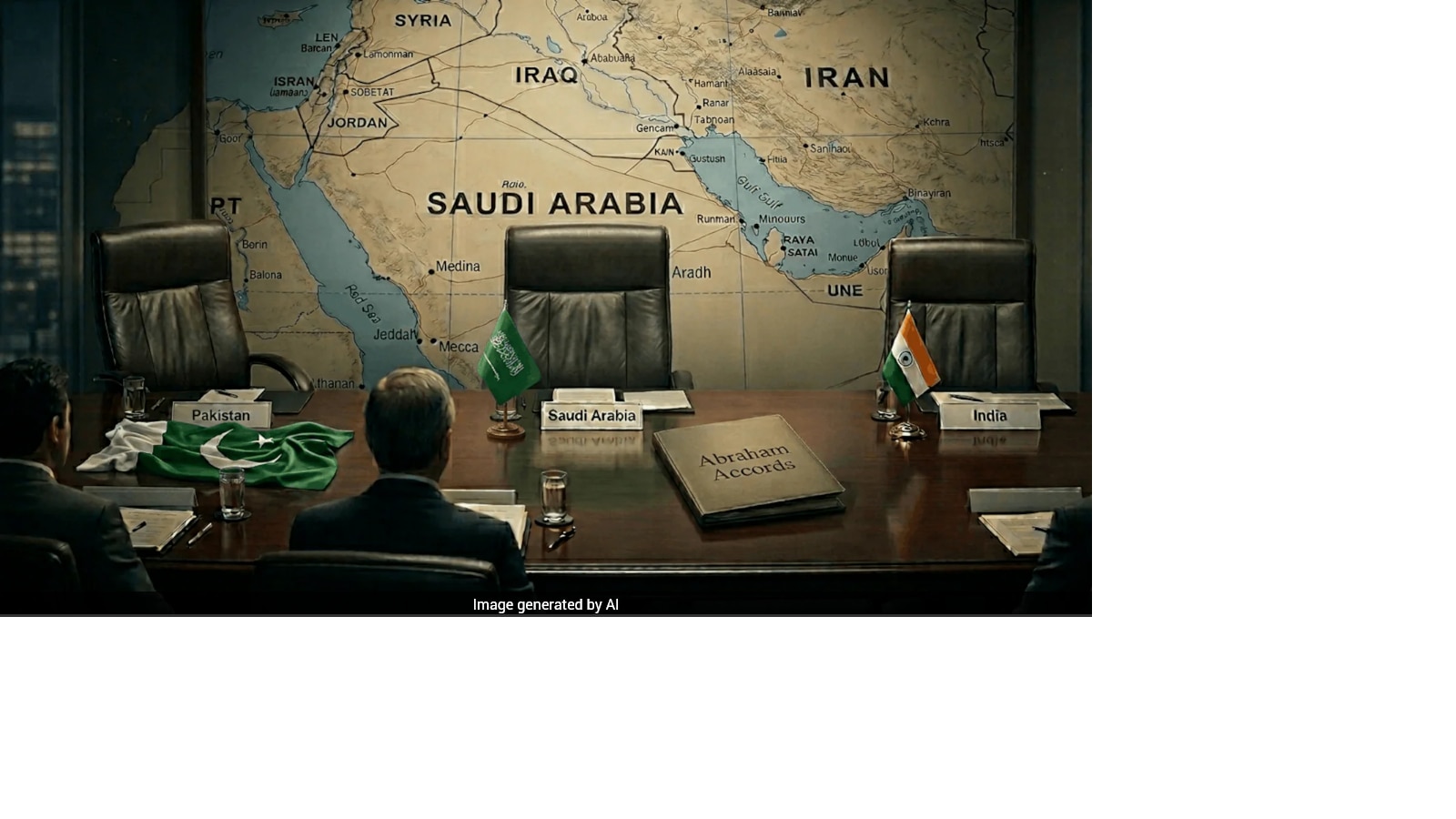
The article says Trump's push to revive the Abraham Accords could force Pakistan to choose between recognising Israel for economic and strategic gains or sticking to its pro-Palestinian stance. Saudi Arabia is presented as the key swing factor: if Riyadh normalises ties, Pakistan may face diplomatic and economic isolation, while a Saudi holdout would weaken the US plan for a new regional security architecture. The piece also flags implications for India, energy security, and Middle East alignment, but it is primarily a geopolitical analysis rather than a direct market event.
The marketable edge here is not the diplomacy itself but the probability of a new, more explicit Gulf alignment process that would force capital, trade, and security flows to re-route. If Saudi Arabia even partially normalizes, the biggest second-order beneficiary is not Israel per se, but US-aligned logistics, defense, cyber, and infrastructure names tied to Gulf procurement cycles; the biggest loser is any investment thesis built on Pakistan as a neutral intermediary or on a unified Sunni bloc resisting US-led architecture. The larger point is that the region is moving from symbolic positioning to transactional alignment, which tends to compress decision timelines and create asymmetric repricing in defense, shipping, and energy security proxies.
Pakistan’s dilemma matters for markets because it raises the odds of domestic political friction just as it needs external financing and stable relations with the Gulf. That is a bad mix for sovereign risk: even a modest rise in political noise can widen Pakistan spreads and pressure FX reserves if remittance expectations or bilateral support are questioned. The immediate catalyst window is days to weeks around Saudi signaling; the deeper risk is months-long exclusion from a Gulf order that would gradually reduce Pakistan’s leverage and increase funding dependence on China at a time when China may be unwilling to underwrite a geopolitical liability at full size.
The contrarian miss is that Saudi delay may be more powerful than Saudi accession. A drawn-out wait preserves optionality, keeps US pressure elevated, and prevents a clean re-rating of the region into a stable bloc, which means the market may be overpricing near-term certainty and underpricing prolonged ambiguity. For energy markets, any durable move toward Gulf-Israel security integration lowers Strait-of-Hormuz tail risk at the margin, which is mildly bearish for crude risk premium but bullish for LNG, shipping insurers, and defense procurement outside the US; the reverse is true if talks stall and the Iran conflict re-escalates.
AI-powered research, real-time alerts, and portfolio analytics for institutional investors.
Request DemoOverall Sentiment
neutral
Sentiment Score
-0.05
