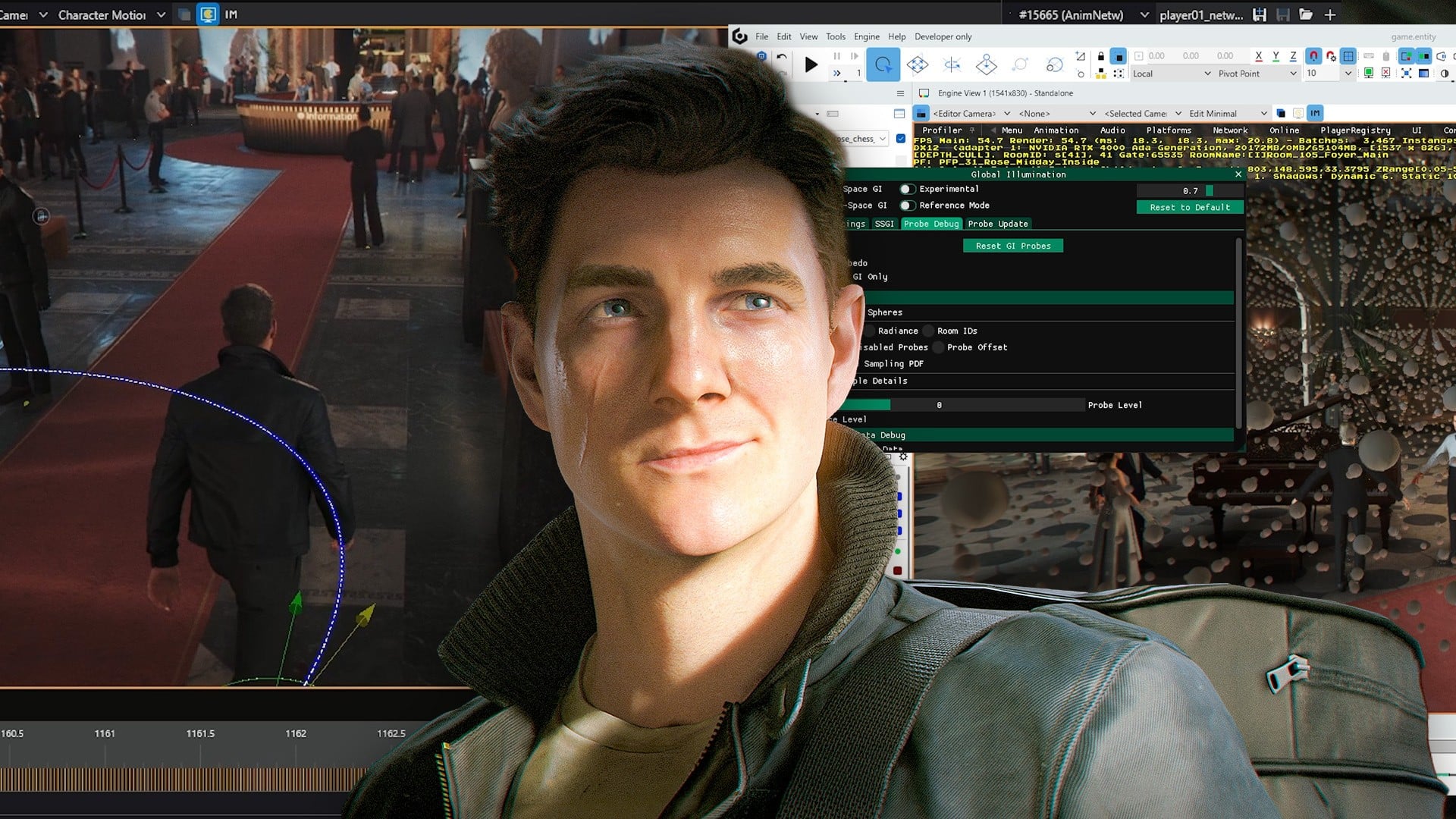
IO Interactive detailed major technical upgrades for 007 First Light, including 60fps targets on PS5 and Xbox Series X, 30fps on Xbox Series S, software-based ray tracing, unified volumetrics, motion matching, clustered lighting, and aggressive async compute optimization. The article suggests the Glacier engine has been significantly modernized to support seamless streaming and denser visuals across platforms. Overall, the piece is a positive product and technology update, but it is unlikely to materially move markets.
The bigger signal here is not a single game launch, but proof that high-end, cross-platform game engines are converging toward a software-defined stack where visual quality increasingly depends on compiler-level efficiency, engine architecture, and content pipelines rather than bespoke hardware features. That favors studios and middleware vendors with deep engine IP and disciplined technical leadership, while raising the bar for competitors still dependent on brute-force GPU scaling or expensive outsourced optimization. In practice, this is a margin story: if a studio can preserve parity across premium and lower-tier hardware without reauthoring content, it reduces SKU-specific development overhead and lowers the probability of post-launch support surprises.
The second-order beneficiary is likely the broader semiconductor ecosystem only indirectly. This kind of engine design is a reminder that adoption of new console cycles can be delayed when software can extract more life from current hardware; that tempers near-term unit upside for console OEMs and may postpone some “must-upgrade” demand at the margin. The flip side is that the game becomes a showcase for software techniques that also improve PC scalability, which could support a wider addressable audience and extend monetization windows if execution is clean.
The main risk is delivery: the more the engine depends on aggressive scheduling, async compute, and dynamic streaming, the more brittle the launch profile becomes under real player workloads versus controlled demos. Over the next 1-3 months, the key catalyst is whether preview coverage shifts from engine praise to frame-time complaints, because these systems typically fail first under dense AI, smoke-heavy combat, and traversal spikes. If performance holds, the market may start to reward “engine quality” as a durable moat; if it slips, the narrative flips quickly from technical showcase to overpromised ambition.
Contrarian view: consensus will likely underweight how much of this is a platform-flexibility story rather than a one-off game story. The real optionality is that a scalable engine can compound across future titles, DLC, and multi-platform releases, making the studio less hit-dependent and more infrastructure-like over time. That makes any early launch weakness potentially a buying opportunity in the underlying developer if the broader IP and engine roadmap remain intact.
AI-powered research, real-time alerts, and portfolio analytics for institutional investors.
Request DemoOverall Sentiment
mildly positive
Sentiment Score
0.25
