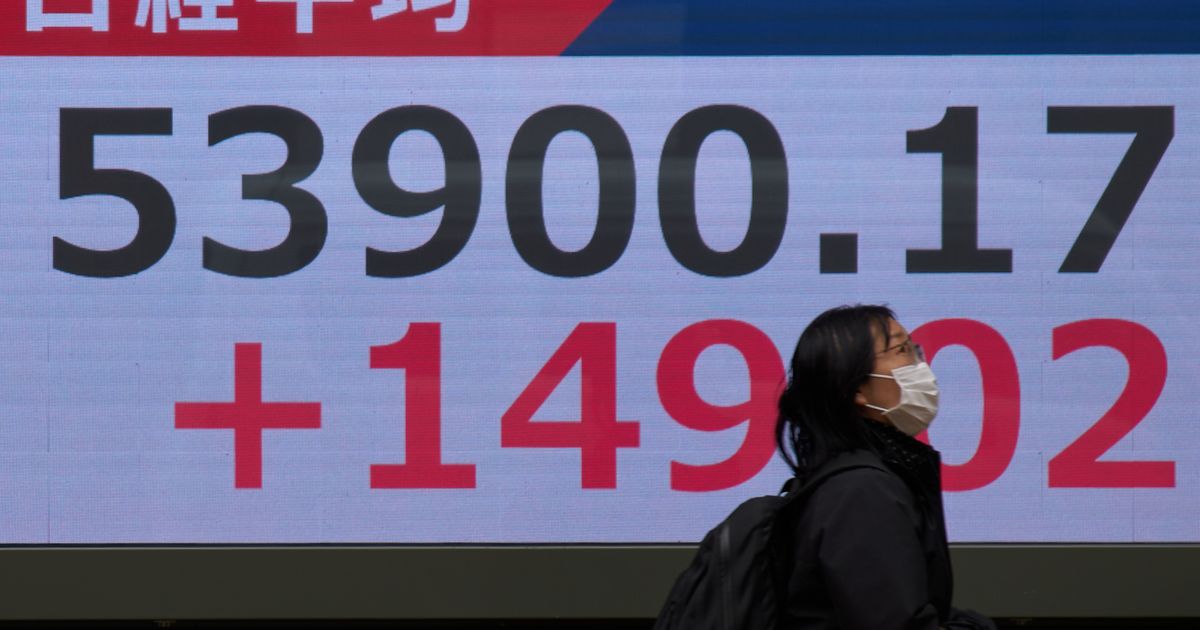
Brent crude rose nearly 4% to $104.13/bbl (U.S. crude $97.53 after dipping to ~$93) as Iranian-related disruptions have nearly halted traffic through the Strait of Hormuz (≈20% of global oil flows). Global equities were mixed with S&P and Dow futures down ~0.3%, Tokyo -0.1% (53,700.39), Kospi +1.6% (5,640.48), Hang Seng +0.1% (25,668.54) and ASX 200 +0.4% to 8,614.30 after the RBA hiked its cash rate 25 bps to 4.1%. Elevated oil and geopolitical risk are increasing inflation concerns and complicating central bank policy (Fed cuts not expected), keeping markets volatile and oil-driven.
Oil-driven geopolitical shocks have become the market’s toggle between “risk-off” and episodic risk-seeking; that toggle now amplifies cross-asset flows rather than primary fundamentals. A chokepoint-driven export disruption creates regionally uneven storage and logistics stress: producers with exports stuck short-term cut output, lifting cash differentials and sharpening curve structures that favor midstream/restructuring plays over spot-focused traders.
Higher and more volatile energy costs raise the floor on core inflation persistence, compressing central banks’ optionality to cut and keeping real rates elevated versus investor expectations—this is a multi-quarter headwind for long-duration multiple expansion even if growth remains intact. FX and carry trades will amplify PV impacts: safe-haven currency bid/offer swings can materially change hedged equity returns for global names with concentrated revenue footprints.
NVDA’s secular demand profile for AI hardware is intact but rate-sensitive in the near term; the most durable upside is on sustained margin expansion and secular replacement cycles rather than short-term sentiment spikes. Meanwhile, energy-induced input-cost inflation creates second-order margin pressure for power-intensive parts of the semiconductor supply chain (fabs, OSAT) and for logistics-dependent OEMs, creating dispersion you can harvest.
The dominant binary is geopolitical duration: a de-escalation within weeks should revert spot dislocations and compress risk premia quickly; a protracted closure for multiple months would force structural supply reallocation, favoring assets with spare capacity and physical optionality. Tradeable volatility will be the primary short-term P&L driver—position sizing and option structures that monetize convexity, not direction, should outperform straight directional exposure.
AI-powered research, real-time alerts, and portfolio analytics for institutional investors.
Request DemoOverall Sentiment
mildly negative
Sentiment Score
-0.25
Ticker Sentiment
