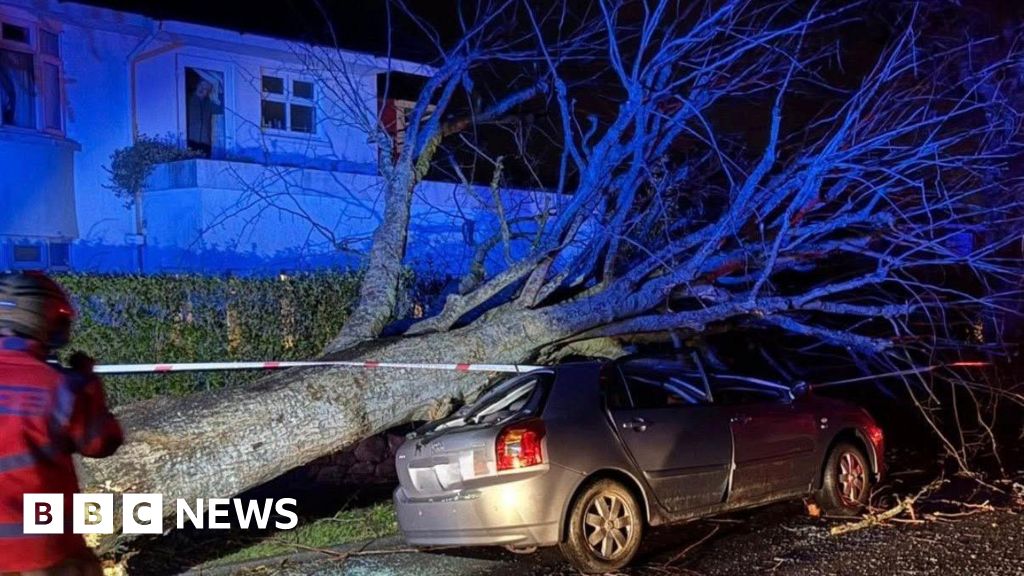
Storm Goretti brought sustained winds of about 95mph to the Channel Islands, producing significant local disruption: Jersey Electricity crews responded to 80 faults affecting roughly 400 customers, Guernsey Fire & Rescue handled 50 incidents and evacuated 48 people, and roughly 100 trees fell in Guernsey and over 80 in Jersey. Jersey's infrastructure teams reported 47 remaining incidents with 20 sites requiring safety checks and four significant tree-related incidents (Howard Davis Park closed after five large trees fell); the Lihou Charity's retreat sustained major roof and water damage. The event implies localized repair and insurance costs and short-term disruption to transport and utilities, but is unlikely to have material macro or market impact beyond regional recovery and contractor demand.
Market structure: Immediate winners are local infrastructure and remediation providers (tree-clearing, roofing, local contractors) and timber suppliers where a short, measurable demand spike (2-6 weeks) can lift activity by an estimated 5-15% regionally; medium winners include utilities (grid repair revenues, emergency call-outs) over 1-3 months. Direct losers are small-property owners, local tourism/charity operators and, if losses aggregate, property insurers’ short-tail P&C lines, though Channel Islands losses here are likely <USD 10–30m and immaterial to large insurers.
Risk assessment: Tail risks include a cluster of follow-on storms within 30–90 days that could push cumulative insured losses into the low hundreds of millions and force regulatory scrutiny of maintenance practices; operational risk includes supply-chain constraints (roofing tiles, timber) that can blow out repair timelines from weeks to 2–3 months. Hidden dependencies: contractor capacity and seasonal labour availability will cap how quickly repair demand converts to revenue; catalysts are Met Office/NOAA storm alerts and any UK/Islands emergency funding announced in the next 7–30 days.
Trade implications: Tactical plays favor small, concentrated exposure to UK infrastructure/contractor equities and timber/forestry ETFs for 1–3 month windows, paired with optional protection against insurer sentiment if markets over-react. Options trades (buy call spreads) can monetize short-term spikes in contractor vol; avoid large directional positions in national insurers absent evidence of broader storm clusters.
Contrarian angles: Consensus will either ignore this as local noise or overreact to headline “storm losses”; the mispricing opportunity is in small-cap contractors and timber where revenue is front-loaded and under-anticipated—historical UK storms generated 1–2 quarter revenue bumps for on-the-ground repair firms. Unintended consequence: persistent storming could accelerate municipal spending on tree management, creating a 12–36 month structural tailwind for arboreal services.
AI-powered research, real-time alerts, and portfolio analytics for institutional investors.
Request DemoOverall Sentiment
mildly negative
Sentiment Score
-0.25
