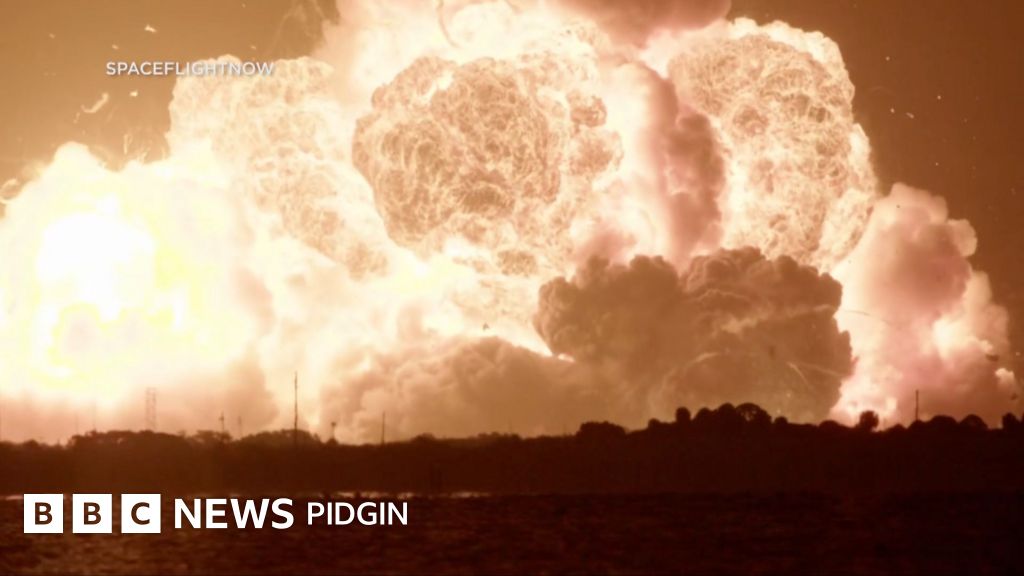
Blue Origin’s rocket exploded during a Florida hotfire test ahead of an upcoming launch, creating a large fireball at Cape Canaveral. The company said all personnel were accounted for, and officials including the FAA and U.S. Space Force are reviewing the incident to determine the cause. The setback adds another delay risk after last month’s New Glenn mishap and could pressure near-term launch timing.
This is a credibility event more than a single-engineering event. For launch providers, the market usually underprices how quickly a pad-side failure propagates into schedule slippage, insurance repricing, and customer churn; the first-order cost is the vehicle, but the second-order cost is lost manifest confidence for the next 1-2 quarters. For AMZN, the issue is not direct earnings sensitivity but optionality: Blue Origin is increasingly part of the long-duration narrative around Amazon-adjacent infrastructure and defense-adjacent launch capacity, so repeated mishaps compress the probability-weighted value of that option.
The near-term winner is incumbent reliability, not necessarily any one competitor. Customers that need assured launch cadence will preferentially migrate toward the most flight-proven alternative, which supports pricing power for established providers over the next several months if Blue Origin faces an investigation-driven stand-down. That can also spill into suppliers and adjacent contractors: any hardening of qualification standards raises working-capital needs, lengthens cash conversion, and favors larger primes with balance sheet capacity.
ASTS is the most exposed ticker in the pair because any failure tied to a previous launch attempt keeps the market focused on execution risk in its launch dependencies. Even if the underlying payload issue is not directly causal, investors will likely widen the launch-risk discount until there is a clean replacement launch or restored manifest confidence, which can pressure valuation for 4-12 weeks. The contrarian angle is that the market may be overstating the long-term damage to Blue Origin: repeated incidents often trigger a temporary halt, but they can also accelerate process fixes and create a sharper operational reset than a slow-burn quality decline.
AI-powered research, real-time alerts, and portfolio analytics for institutional investors.
Request DemoOverall Sentiment
mildly negative
Sentiment Score
-0.35
Ticker Sentiment
