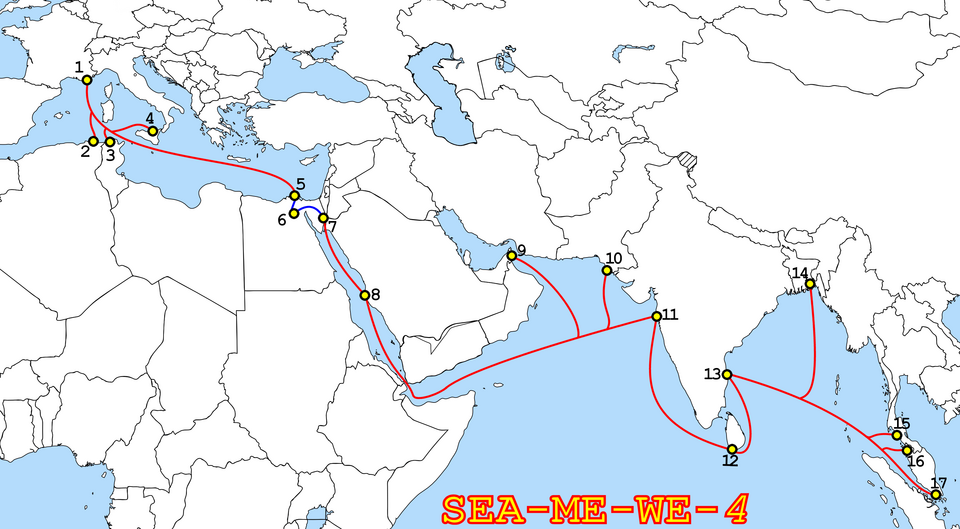
The Strait of Hormuz impasse is constraining nearly 1 billion barrels of petroleum from the world market, pushing US gasoline to about $4.50/gal, roughly $1.50 higher since the war began. The article warns that shortages are already affecting Asia, Africa, and Europe, with strategic reserves likely depleted by June and a further oil price shock possible if the route stays closed. It also highlights escalation risks around Gulf oil terminals, tanker attacks, and potential disruption to undersea telecom cables, implying broad market and global trade fallout.
This is no longer an oil-beta story; it is a liquidity, inflation, and confidence shock with a geopolitical supply put embedded in it. The market should be treating the Strait as a rolling knock-on risk to global trade finance, shipping insurance, and inventory cycles: even if physical barrels eventually move, the widening in risk premia can outlast the actual shortage by months. The second-order winner is not just upstream energy but anyone with hard-asset pricing power and balance sheet duration; the obvious losers are downstream refiners, airlines, chemicals, and consumer discretionary names exposed to a fuel-tax effect that functions like an exogenous rate hike.
The more interesting near-term setup is that the marginal barrel of relief is likely to come from policy theater before policy action. Strategic stock releases, rerouting, and escort operations can suppress panic for a few weeks, but they do not restore lost Gulf grade supply into Asian complexes, so product cracks may stay elevated even if headline Brent mean-reverts. That creates a flatter, stickier inflation impulse than a simple spot oil spike, which is more dangerous for rate-sensitive assets because it keeps real yields and breakevens unstable while also pressuring consumer sentiment into the summer driving season.
The underappreciated tail risk is digital infrastructure disruption. A cable event would not just hit communications; it would impair settlement, routing, and operational resilience for Gulf financial hubs and logistics nodes, making the economic damage non-linear relative to the physical act. That means the market is underpricing a volatility regime shift: one escalation step could reprice energy, shipping, cyber, and EM FX simultaneously, with the UAE and regional banks especially exposed through sentiment rather than direct asset destruction.
Consensus may be overconfident that this can be ring-fenced as a Gulf issue. If the blockage persists another 2-6 weeks, the larger story becomes demand destruction outside the region and political stress inside the US, which increases the odds of abrupt de-escalation via backchannel concessions or a forced ceasefire. In that sense, the trade is not simply long energy; it is long volatility with a catalyst path that can snap back violently on any credible diplomatic breakthrough.
AI-powered research, real-time alerts, and portfolio analytics for institutional investors.
Request DemoOverall Sentiment
strongly negative
Sentiment Score
-0.78
