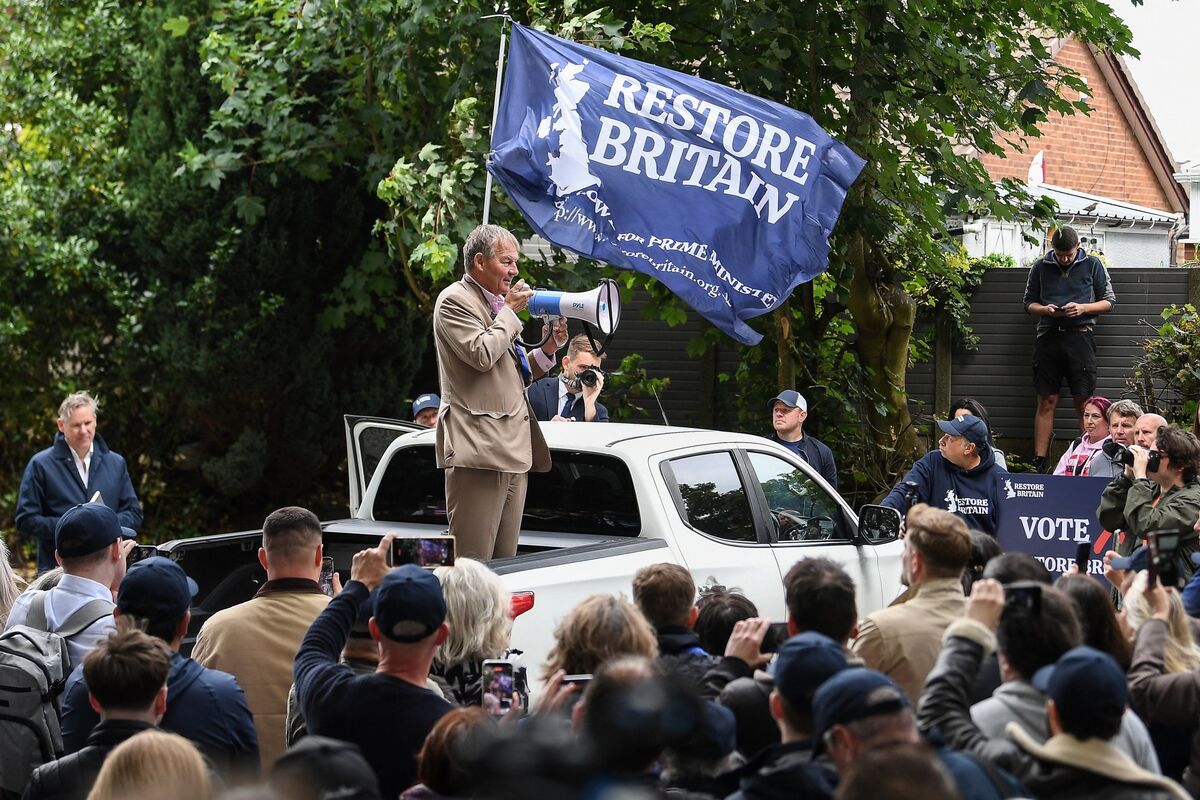
Rupert Lowe, after being ejected from Reform UK in early 2025 over alleged bullying and threatening behavior, has launched the fringe Restore party and is fielding its first Westminster candidate in a by-election. The article highlights Elon Musk’s attention and Lowe’s social media recognition as political assets, but it is primarily a domestic politics story with limited direct market implications. The main significance is further fragmentation of the right-wing electorate in the UK.
The investable signal here is not the by-election itself; it is the evidence that right-wing fragmentation is becoming self-reinforcing and algorithmically amplified. In first-past-the-post systems, even a small protest vote can create outsized seat-level volatility, which means the main risk for incumbents is not a clean ideological shift but a low-turnout, multi-way split that distorts polling and narrows the margin for error over the next 6-18 months.
The second-order effect is on forecasting quality. If a fringe vehicle can monetize attention faster than it can build organization, then online engagement becomes a poor proxy for durable vote share, increasing the odds of headline-driven positioning errors in U.K.-exposed names. That raises the chance of sharp, localized moves in sterling, domestically oriented equities, and U.K. regional media around election windows, even if the national policy path barely changes.
The contrarian read is that this may be more noise than regime shift. Fragmentation on the right can actually improve the odds of a centrist or status-quo outcome by splitting the anti-incumbent vote, which is mildly constructive for UK asset stability if investors were already discounting a populist-policy premium. But if the new faction keeps converting attention into candidates, the real risk is not near-term governance change; it is a longer-duration erosion of party discipline and a higher probability of hung-parliament pricing in the next general election cycle.
From a market perspective, the opportunity is in volatility, not direction. The cleanest expression is to buy short-dated optionality into election dates and sell it after the event if the result is less disruptive than the narrative implied. The event also argues for relative-value over outright beta in U.K.-sensitive assets, because seat-level surprises can create temporary mispricings that revert once coalition math is reassessed.
AI-powered research, real-time alerts, and portfolio analytics for institutional investors.
Request DemoOverall Sentiment
neutral
Sentiment Score
-0.05
