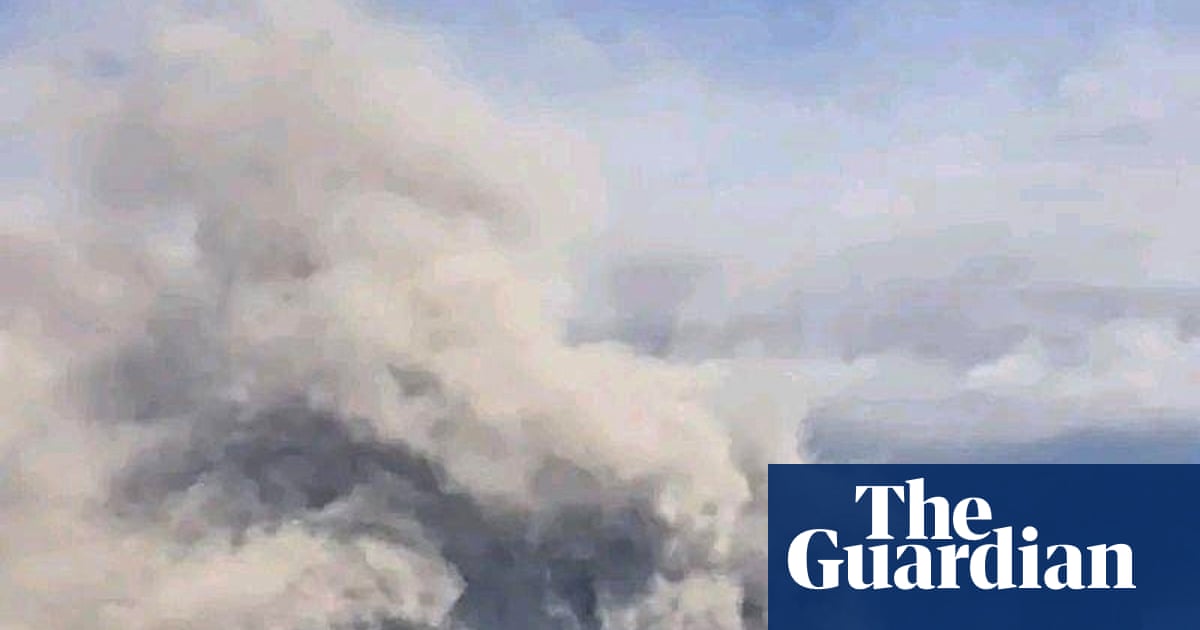
Hayli Gubbi, a volcano in Ethiopia’s Afar region near the Eritrean border, erupted for the first time in roughly 12,000 years, sending ash plumes up to about 14 km that drifted across the Red Sea toward Yemen and Oman. Local officials report no casualties but widespread ash has covered villages and reduced grazing for livestock, posing immediate economic stress for pastoral communities and potential regional disruptions to aviation and logistics; the Smithsonian’s Global Volcanism Program notes no prior Holocene eruptions on record.
Market structure: The immediate winners are container and tanker owners who can levy premium transits if Red Sea routes are slowed; expect upward pressure on spot freight rates of 15–40% in a stress scenario lasting 2–12 weeks. Losers include perishable cargo shippers, regional airlines serving Red Sea corridors, and local Ethiopian pastoral income (real local demand shock, 1–3 quarters). Pricing power will transiently shift to assets with flexible voyage routing and low idle capacity.
Risk assessment: Tail risks include a prolonged eruption or regional security incidents that close Bab el‑Mandeb, forcing Cape reroutes and adding ~7–10 days per voyage with knock‑on container rate spikes and tanker TCE gains; such an event could widen EM Africa sovereign spreads +100–300bps over 1–3 months. Hidden dependencies: bunker fuel, insurance premium spikes, and port labor constraints amplify costs nonlinearly. Catalysts to watch are ash plume persistence, NOTAM airspace closures, and weekly World Container Index (WCI) moves.
Trade implications: Tactical trades favor transport equities and volatility on freight: long select container names and tanker operators for 1–3 month windows, paired with short exposure to airline travel (JETS). Use call spreads to cap capital and delta; target mean reversion after freight peaks. Rebalance as WCI and Suez transit time signals normalize.
Contrarian view: The market will likely overshoot on persistent premium pricing — historical Suez shocks (short closures) resolved in 6–12 weeks — so be ready to trim winners at +30–50% and sell freight volatility. Mispricing risk: if eruption is short‑lived, shipping equities will snap back faster than broader market, creating mean‑reversion shorts. Unintended consequence: elevated shipping costs could accelerate regional near‑sourcing, hurting long‑term globalized logistics players more than short technical disruption implies.
AI-powered research, real-time alerts, and portfolio analytics for institutional investors.
Request DemoOverall Sentiment
moderately negative
Sentiment Score
-0.30
