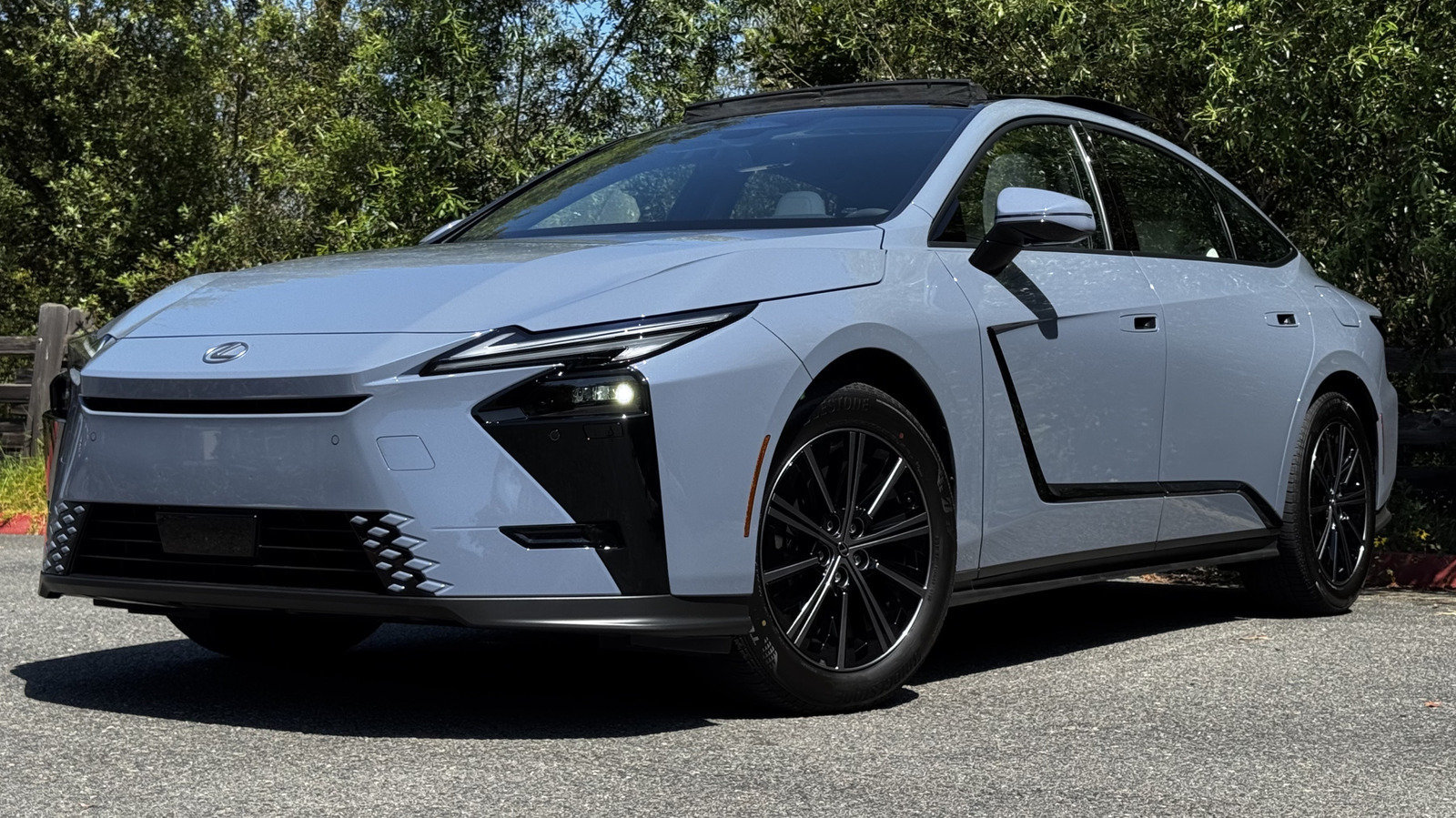
Lexus unveiled a heavily redesigned 2026 ES that moves to hybrid-only and EV-only powertrains, with starting prices of $48,895 for the ES 350e Premium, $51,095 for the ES 350h Premium, and $51,895 for the ES 500e Premium. The new model is larger, adds up to 40.7 inches of rear legroom, and offers up to 307 miles of EPA-estimated range on the base EV, alongside a new infotainment system and upgraded luxury features. The review was broadly favorable on comfort, space, efficiency, and value, though it noted awkward styling and no one-pedal driving.
This is less a single-model refresh than a repositioning of Lexus’s core volume sedan into a pseudo-crossover utility product. The second-order implication is that Lexus is trying to defend share against two threats at once: premium EV newcomers on one side and luxury crossovers on the other, by monetizing rear-seat space and comfort rather than driving dynamics. That should broaden the buyer pool and support mix, but it also risks cannibalizing some RX/Crown demand if customers decide the ES now does the practical job at a lower price point.
The EV variants matter more strategically than the article suggests. Lexus is effectively fixing the brand’s earlier EV credibility gap by giving the ES better route planning, more usable range tools, and a conventional luxury experience; that should improve conversion among affluent Toyota loyalists who were waiting for a lower-friction EV than the RZ. The key competitive pressure is not from Tesla-style performance, but from BMW/Audi/Benz on perceived tech polish and from mainstream EVs on value — if Lexus executes well, it can win on total cost of ownership and comfort without needing class-leading charging speed.
The main risk is that this becomes a “good enough” EV in a segment where enough may not be enough over a 12-24 month horizon. A 150 kW peak charge rate and no one-pedal driving leave the car vulnerable if rivals push faster charging and more refined regen UX, especially as luxury EV customers become more expectation-heavy on software and charging convenience. Near term, the hybrid is likely to carry volume and margin; longer term, the EV mix depends on whether Lexus can sustain product freshness without sacrificing the brand’s traditional smoothness.
Contrarian take: the market may be underestimating how much this helps Toyota’s electrification narrative in the U.S. because it is not a halo performance EV. If the ES becomes the default luxury commuter/ride-share pick, it creates a high-frequency visibility loop that the brand can monetize through fleet, executive transport, and repeat retail buyers. The bigger risk to competitors is not a headline-grabbing conquest of enthusiasts, but a slow erosion of premium-sedan relevance in favor of a more spacious, cheaper, and less stressful alternative.
AI-powered research, real-time alerts, and portfolio analytics for institutional investors.
Request DemoOverall Sentiment
mildly positive
Sentiment Score
0.35
