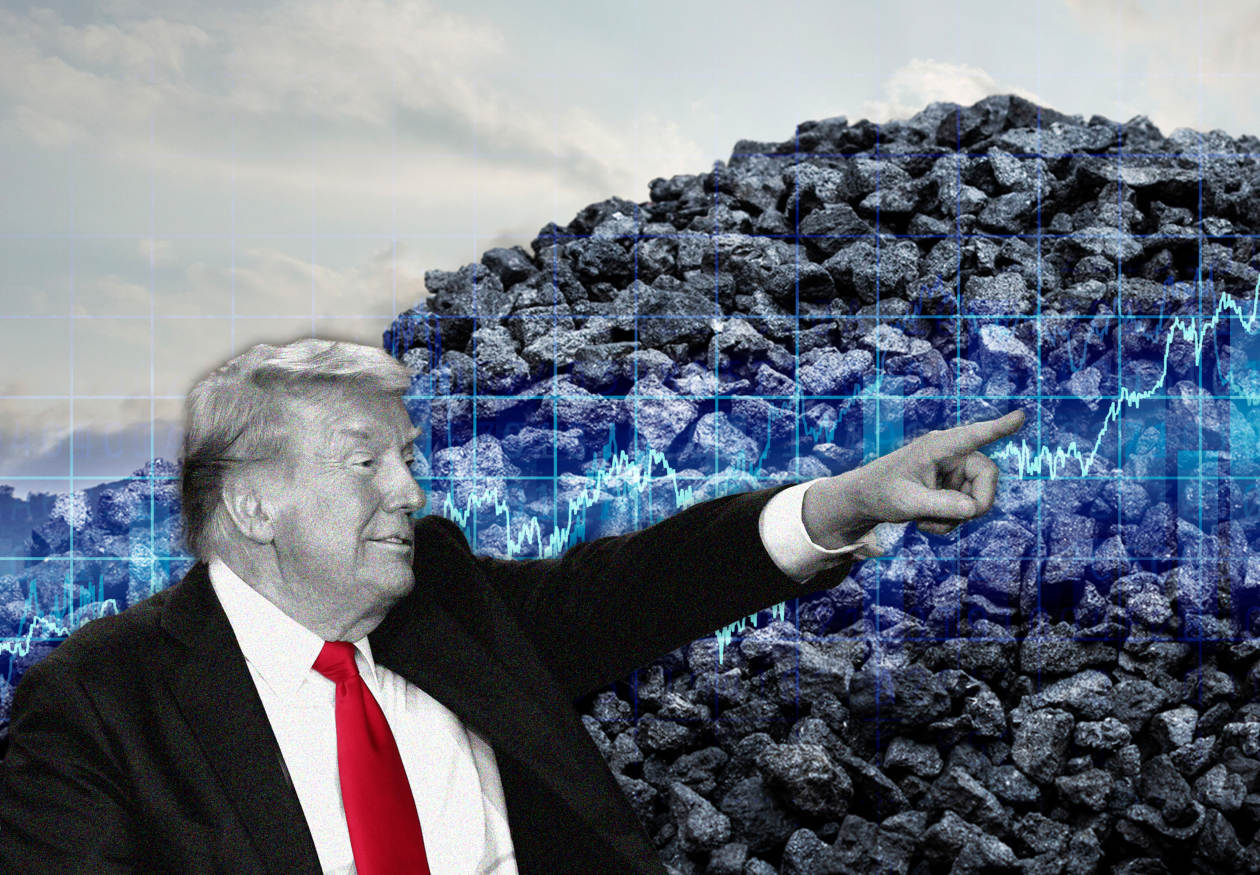
President Trump is expected to direct about $700 million toward coal-related support, including $425 million in Defense Production Act funds for 13 existing coal-fired plants, $75 million for a coal export terminal in Oakland, and $185 million in Energy Department grants for coal plants in Alaska, West Virginia, and Maryland. The move is supportive for coal equities and the broader coal industry, signaling direct federal backing for both domestic generation and export capacity. The news is likely sector-moving rather than market-wide.
This is less a fundamental reset for coal than a policy volatility event that steepens the left tail for short sellers. The near-term beneficiaries are not just the obvious coal miners, but railroads, barge operators, and coal-handling services that gain incremental volume optionality if plants are forced to run longer and export bottlenecks are eased. The more interesting second-order effect is on utilities: higher realized coal utilization can reduce near-term gas burn, but it also raises compliance and maintenance costs, which tends to pressure coal-heavy generators and merchant power assets before it helps the broader grid.
The policy tool matters more than the headline dollar amount. Funding routed through national-security authorities is easier to announce than to execute, and it invites rapid legal challenge from states, environmental groups, and potentially even procurement auditors if the spend appears to be a disguised industrial subsidy. That means the trade is probably strongest over days to weeks, not years, unless the administration layers on tariff or permitting changes that alter fuel economics rather than just plant economics.
The contrarian read is that this may be a short squeeze disguised as policy. Coal equities have low liquidity and crowded ownership; a small amount of headline-driven buying can produce outsized price moves, but those moves can fade once investors realize the cash-flow impact is modest versus the structural decline in U.S. coal demand. The real medium-term signal is for natural gas and power spreads: if coal units stay online longer, gas demand in power generation is capped, which is mildly bearish for gas-weighted producers and bullish for power price volatility.
The cleanest expression is to fade the policy beneficiaries only after the first leg higher exhausts, while keeping a hedge against legal/political delay. If the administration is serious, the upside shows up first in thermal coal and export infrastructure, but the downside in a reversal is asymmetric because the market has to reprice execution risk back to near zero very quickly.
AI-powered research, real-time alerts, and portfolio analytics for institutional investors.
Request DemoOverall Sentiment
mildly positive
Sentiment Score
0.35
