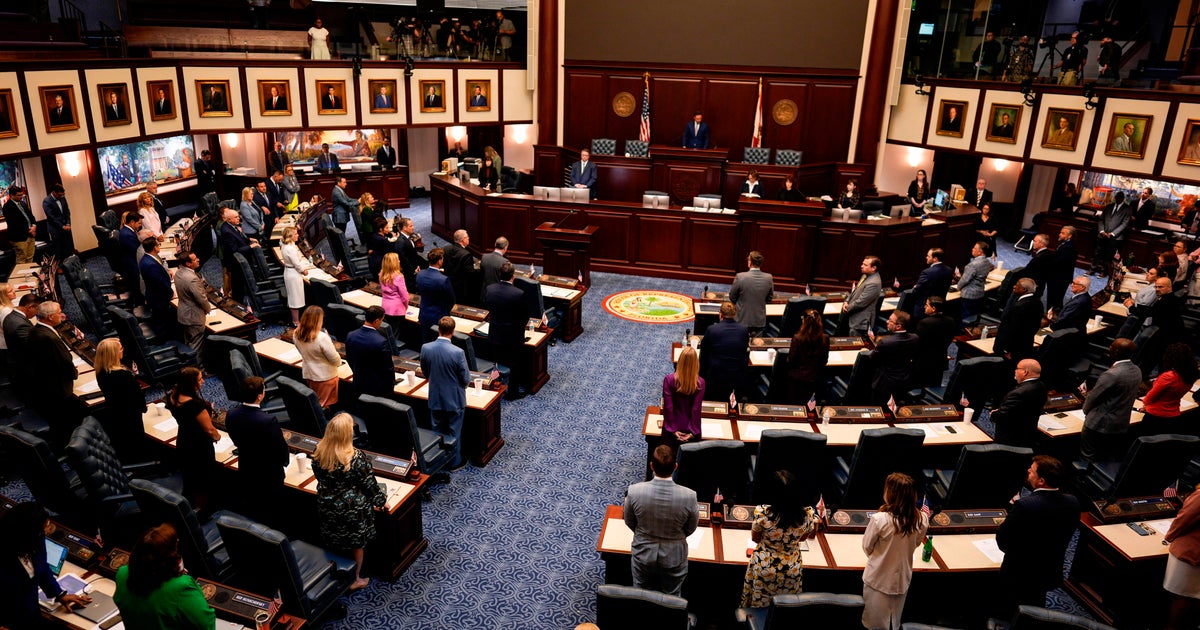
Florida lawmakers approved a new congressional map that could give Republicans up to 4 additional U.S. House seats, and the bill now awaits Gov. Ron DeSantis' final signature. The move follows a Supreme Court ruling that narrowed part of the Voting Rights Act and could spur redistricting challenges nationwide, especially around majority-Black and majority-Latino districts. While politically significant, the article implies limited direct market impact beyond legal and governance implications.
The near-term market impact is less about Florida itself and more about the signaling effect for a broader redistricting wave that could harden the House map in GOP favor ahead of 2026. That matters for sectors exposed to federal policy volatility: a more secure Republican chamber raises the odds of continuity on tax, energy, defense, and deregulation, while reducing the probability of large clean-energy, healthcare, and antitrust expansions. In other words, this is a small direct event with an outsized option value on the post-2026 policy regime.
The second-order trade is not just ideological control, but legislative cadence. If more states follow Florida, Democrats may be forced to defend additional terrain in a low-turnout midterm, which tends to increase incumbency protection and lower the probability of abrupt regulatory shocks. That is modestly bullish for large-cap industrials, defense, banks, and fossil-linked names that benefit from a lower risk of aggressive federal rulemaking, but it also raises headline risk for hospitals, managed care, utilities tied to transition policy, and ESG-sensitive sleeves.
The main tail risk is legal and procedural: a court challenge could delay implementation, and any perception of overreach may energize turnout and fund-raising on the Democratic side. Over a multi-month horizon, the bigger reversal catalyst is not the map itself but whether this becomes a national backlash narrative that improves Democratic enthusiasm in battleground districts. The market should view this as a slow-burn political optionality event rather than an immediate catalyst for factor rotation.
Consensus may be underestimating the asymmetry: if even a few seats are effectively locked in, it materially lowers the odds of a divided Congress flipping on a single adverse macro tape in 2026, which suppresses the left-tail of policy risk premia across domestically regulated sectors. The best expression is not to chase broad beta, but to own policy beneficiaries with clean balance sheets and short-dated optionality around the legal process.
AI-powered research, real-time alerts, and portfolio analytics for institutional investors.
Request DemoOverall Sentiment
neutral
Sentiment Score
-0.05
