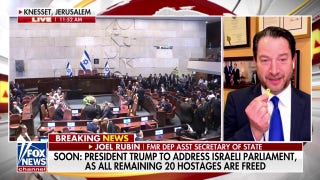
President Trump is being credited for brokering an end to the Hamas-Israel war, acknowledging Turkey, Qatar, and Egypt for their roles while publicly criticizing traditional Western allies, including the UK, France, Canada, and Australia, for actions such as recognizing a Palestinian state. German Chancellor Friedrich Merz also faced significant criticism for imposing a weapons embargo on Israel and allegedly increasing financial support for UNRWA, which critics link to Hamas. This narrative underscores a notable geopolitical realignment and diplomatic friction among key international players regarding Middle East policy, potentially influencing future regional stability and alliance structures.
President Trump is credited with brokering an end to the Hamas-Israel war, acknowledging Turkey, Qatar, and Egypt for their significant contributions. This diplomatic success was juxtaposed with public criticism of traditional Western allies, including the UK, France, Canada, and Australia, for their perceived counter-productive roles. The narrative highlights a notable geopolitical realignment in Middle East policy.
Specific criticisms included US Ambassador Huckabee's rebuke of the UK's Bridget Phillipson and Trump's dismissal of French President Macron's efforts to recognize a Palestinian state. Secretary of State Marco Rubio further lambasted these Western allies, asserting that their recognition of a Palestinian state "emboldens" Hamas and complicates peace efforts. German Chancellor Friedrich Merz also faced intense criticism for imposing a weapons embargo on Israel, impacting critical tank parts, and allegedly increasing financial support for UNRWA, which critics linked to Hamas.
However, a subsequent statement from Special Envoy Steve Witkoff acknowledged the "vital role" of the United Kingdom's National Security Advisor Jonathan Powell in assisting and coordinating efforts. This suggests a more complex, behind-the-scenes diplomatic engagement despite the public rebukes. The overall sentiment, while "moderately positive" regarding the peace outcome, underscores significant diplomatic friction and potential shifts in alliance structures.
This geopolitical friction, particularly concerning sanctions and export controls, could influence defense sector supply chains and emerging market stability. The explicit criticism of countries imposing weapons embargoes on Israel, such as Germany, indicates potential risks for defense contractors reliant on such markets or facing political pressure. Investors should monitor these evolving diplomatic relationships for their impact on regional stability and specific industry sectors.
AI-powered research, real-time alerts, and portfolio analytics for institutional investors.
Request DemoOverall Sentiment
moderately positive
Sentiment Score
0.60
Ticker Sentiment
