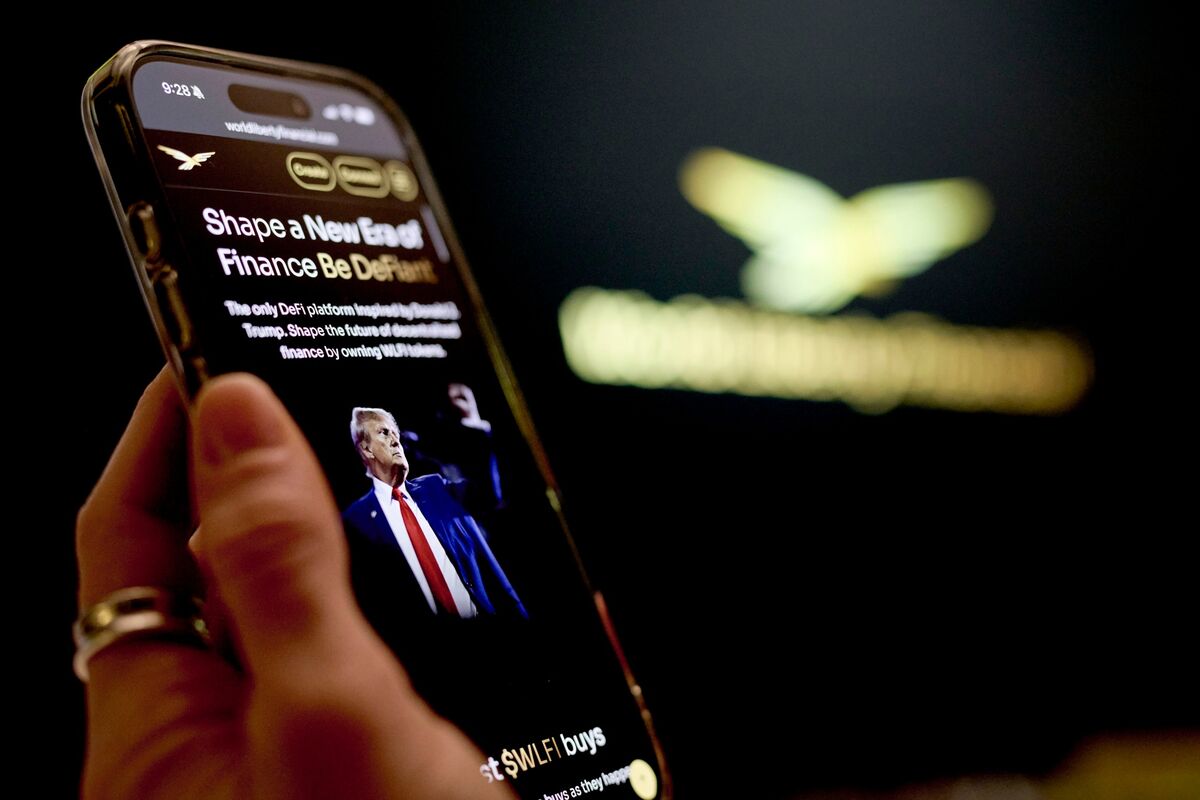
World Liberty Financial, a Trump family-linked crypto venture, is facing an investor revolt after billionaire backer Justin Sun accused the project of secretly building controls that could let insiders freeze token holders’ funds. Sun said he poured tens of millions of dollars into the project and called it "a trap masquerading as a door." The dispute raises governance and trust concerns around the token, but the broader market impact is likely limited.
The immediate market impact is not about this one token set-up; it is about the implied governance discount bleeding into the broader crypto fundraising ecosystem. When a high-profile backer publicly alleges asymmetric control rights, the second-order effect is a higher required return for any token sale that mixes celebrity branding, opaque vesting, and off-chain discretion. That raises the cost of capital for frontier crypto projects and pushes marginal flows toward assets with cleaner settlement, clearer custody, and exchange-traded wrappers. The key winner is not a specific coin but incumbents with institutional-grade rails: BTC, ETH, and listed crypto infrastructure names should see relative inflows if retail/venture capital rotates away from governance-risk stories. The loser set extends beyond the project itself to adjacent “influencer-token” launches and small-cap presales, which can face a delayed but material redemption problem over the next 1-3 months as investors reprice legal and custodial risk. Expect a spillover widening in token listing spreads and lower participation in private rounds where lockups are enforceable only in theory. Catalyst-wise, the near-term risk is a cascading disclosure cycle: additional holders may come forward, exchanges may reassess listing standards, and any legal action could freeze secondary liquidity for weeks rather than days. If the dispute is resolved with transparent on-chain controls and third-party custody, some damage can reverse, but reputational repair is measured in quarters. The bearish setup is strongest if this becomes a template for “management control over investor liquidity,” because that directly attacks the premium paid for speculative private allocations. The contrarian view is that the market may over-penalize the entire crypto complex if this remains a governance-specific scandal rather than a broad regulatory inflection. In that case, the best trade is not outright short crypto beta, but long quality versus short governance risk: established assets with decentralized or institutionally mediated ownership should outperform the next 4-8 weeks while high-name-recognition private projects de-rate faster than the sector. If the headline fades without formal legal action, the move in speculative tokens could mean-revert sharply, so timing matters more than thesis here.
AI-powered research, real-time alerts, and portfolio analytics for institutional investors.
Request DemoOverall Sentiment
strongly negative
Sentiment Score
-0.65
