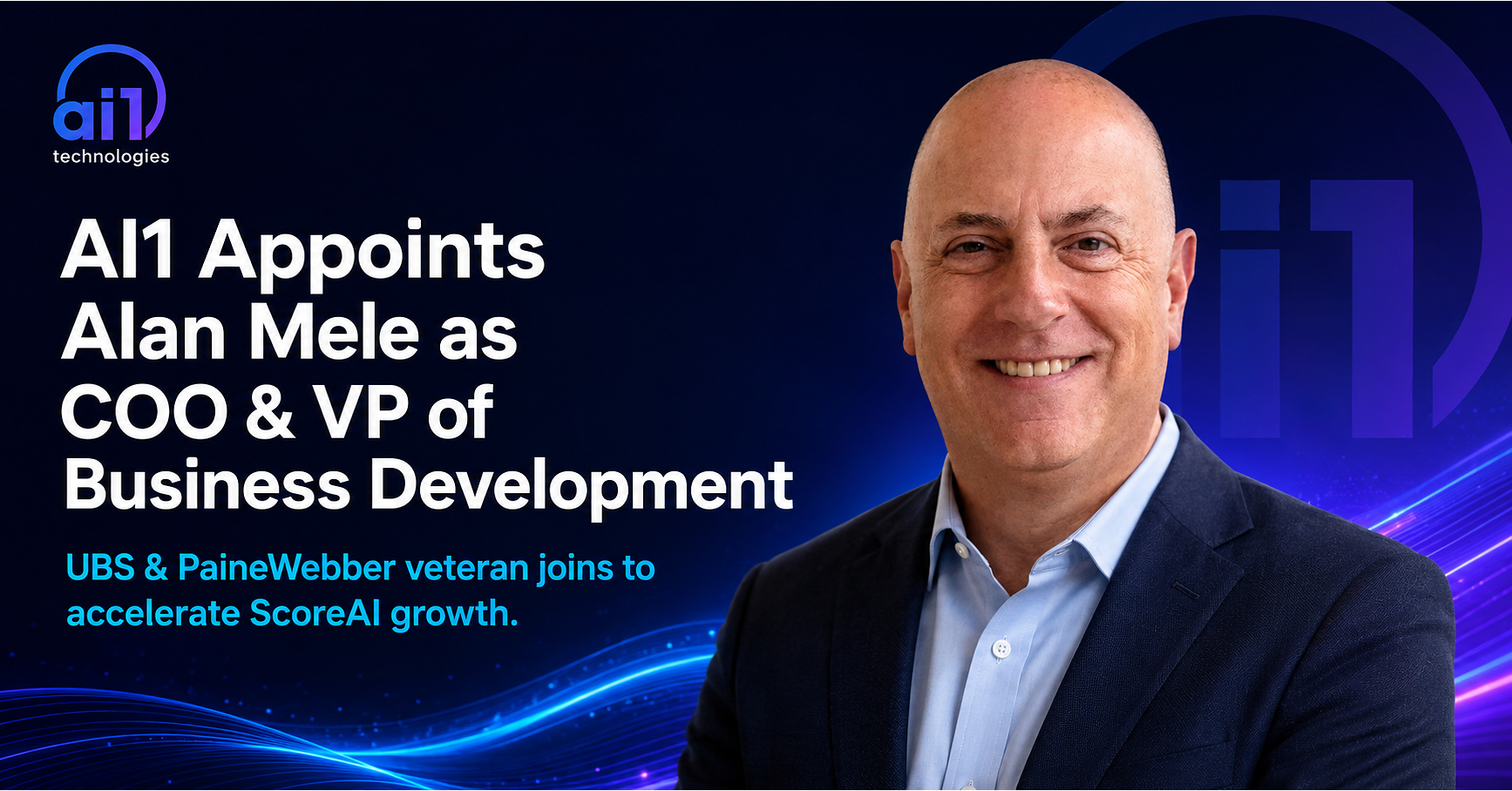
AI1 Technologies appointed Alan Mele as COO and VP Business Development to accelerate ScoreAI MBS repayment scoring and optimization, and expand relationships for its ai1 AI Lending Marketplace. The initiative targets earlier detection of loan-pool risk drivers (default drift, early prepayment/refinance runoff, irregular/extension behavior, fraud/anomaly signals) using loan-tape data and macro-aware machine-learning models. The announcement is positive for business momentum, but it’s unlikely to move public markets meaningfully given there are no financial results or guidance updates.
This reads more like a commercialization signal than a fundamental inflection. A senior capital-markets hire can improve distribution, but it does not create product-market fit; the real question is whether the platform can convert model claims into repeatable workflow spend inside MBS desks, servicers, and aggregators. Until there are disclosed pilots, recurring revenue, or integration into a recognized dealer/servicer stack, the market should treat this as optionality, not evidence of durable traction.
If the product works, the first beneficiaries are not the obvious front-end AI vendors but the institutions that already own loan-level distribution and compliance trust: independent data/analytics providers, mortgage servicing infrastructure, and buy-side firms that can actually operationalize the signal. The second-order effect is tighter pool discrimination, which can widen spreads for poorly disclosed collateral and reduce the edge of manual tape review; that pressure falls on smaller due-diligence shops and legacy workflow tools before it reaches larger incumbents. The larger structural winner is any shop that can embed behavior scoring into daily surveillance rather than one-off underwriting.
The contrarian risk is model governance. MBS is one of the least forgiving markets for black-box signals because prepay and default regimes shift with rates, HPA, and servicer behavior; a model that looks strong in one tape can fail quickly in a refi shock. Consensus may be overestimating how fast institutional adoption happens: unless the company can show audited backtests across multiple rate cycles and explainability that passes desk and compliance review, the revenue path is likely quarters to years, not days. Falsifiers: no named clients by next earnings cycle, no evidence of recurring subscription revenue, or a sharp downshift in mortgage rates that materially changes prepayment dynamics and breaks the model's edge.
AI-powered research, real-time alerts, and portfolio analytics for institutional investors.
Request DemoOverall Sentiment
mildly positive
Sentiment Score
0.15
