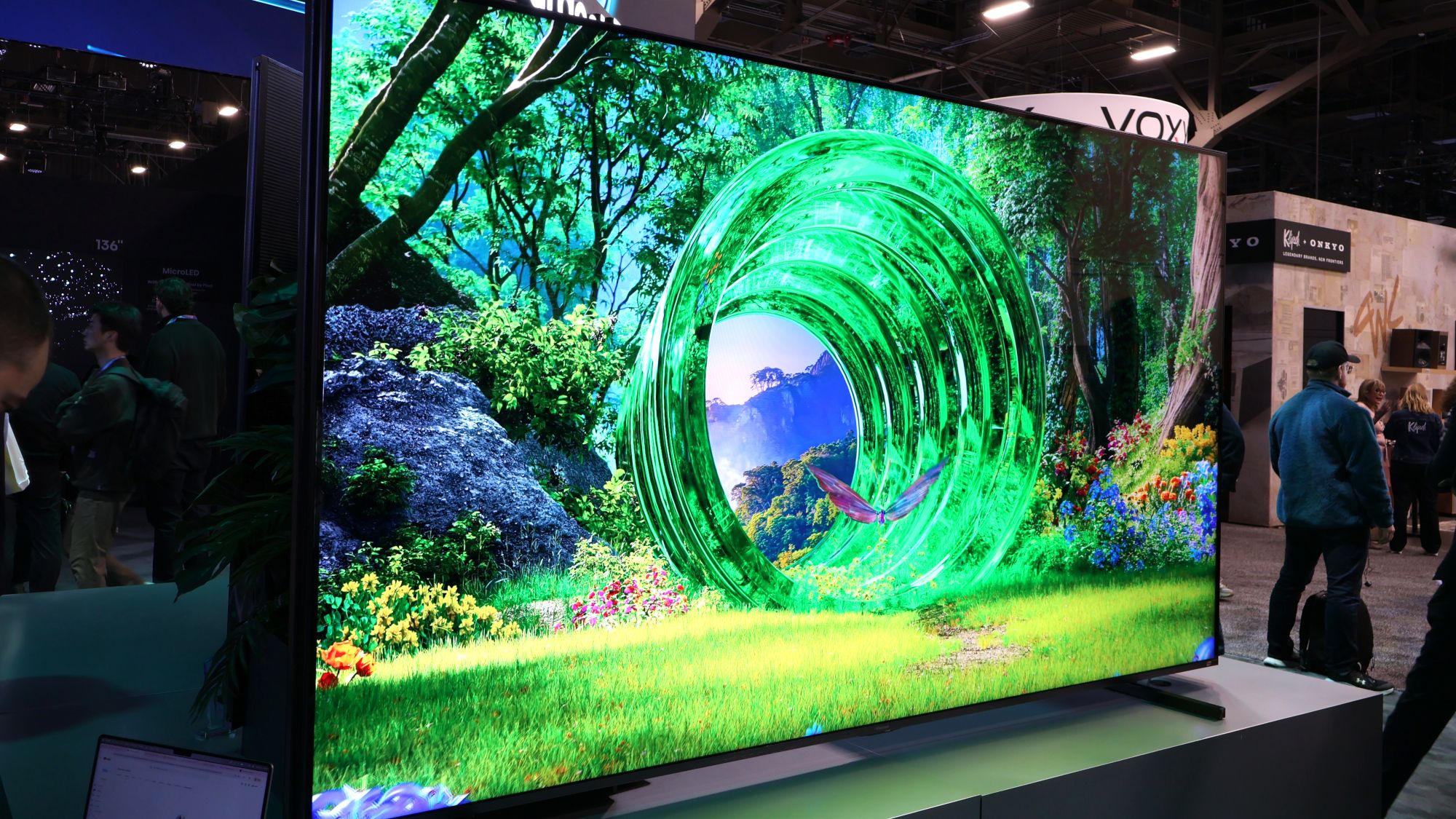
Hisense debuted the 116-inch 116UXS at CES 2026, a second-generation RGB Mini-LED TV that adds a cyan subpixel and RGB backlighting to deliver what the company cites as 110% of BT.2020 color coverage, alongside a built-in 6.2.2 audio system and its Hi-View AI Engine RGB processor for refined contrast and reduced color crosstalk. In limited demos the display showed strong color, contrast and motion performance, though glare handling is intentionally modest and the model is currently offered only in a single large 116" SKU; pricing and release timing are not yet disclosed, with Hisense indicating the technology may trickle down to smaller, mid-range models in 2026.
Market structure: RGB Mini‑LED at CES is a technology inflection that benefits Mini‑LED/backlight component suppliers, TV OEMs that can scale (Hisense/TCL), and LED chipmakers while applying marginal pressure to premium OLED ASPs if LCD narrows the quality gap. Expect adoption to be staged — flagship 116" now, 55–75" within 12–24 months if yields and cost per panel fall ~30–50% vs flagship levels — implying a potential 5–15% reallocation of premium TV demand from OLED to advanced LCD over 2 years.
Risk assessment: Near‑term upside is product‑announcement driven (weeks/months) but two tail risks loom: (1) supply‑chain constraints or China export controls on critical materials (gallium/indium) that could spike LED chip costs >20% in 3–6 months; (2) scaling quality issues (color fringing, returns) that could delay mainstreaming by 12+ months. Monitor IP disputes and Hisense OEM licensing — a single supplier failure could compress margins across the chain.
Trade implications: Direct opportunities lie in component suppliers (LED chips, backlight module makers) and OEMs able to scale; defensive losers are pure‑play high‑end OLED suppliers if pricing converges. Cross‑asset: modest upward pressure on industrial metals used in LED production, limited macro bond impact; watch implied vols in TV‑OEM options around earnings/releases for tactical entries.
Contrarian angle: The market may overstate instant displacement of OLED — manufacturing complexity, anti‑glare tradeoffs and software/upscaling are material bottlenecks, so a multi‑quarter adoption runway is likeliest. That creates mispricings: small/medium cap suppliers with capacity to scale are underowned today and can re-rate on two to three confirmed material supply contracts.
AI-powered research, real-time alerts, and portfolio analytics for institutional investors.
Request DemoOverall Sentiment
mildly positive
Sentiment Score
0.35
