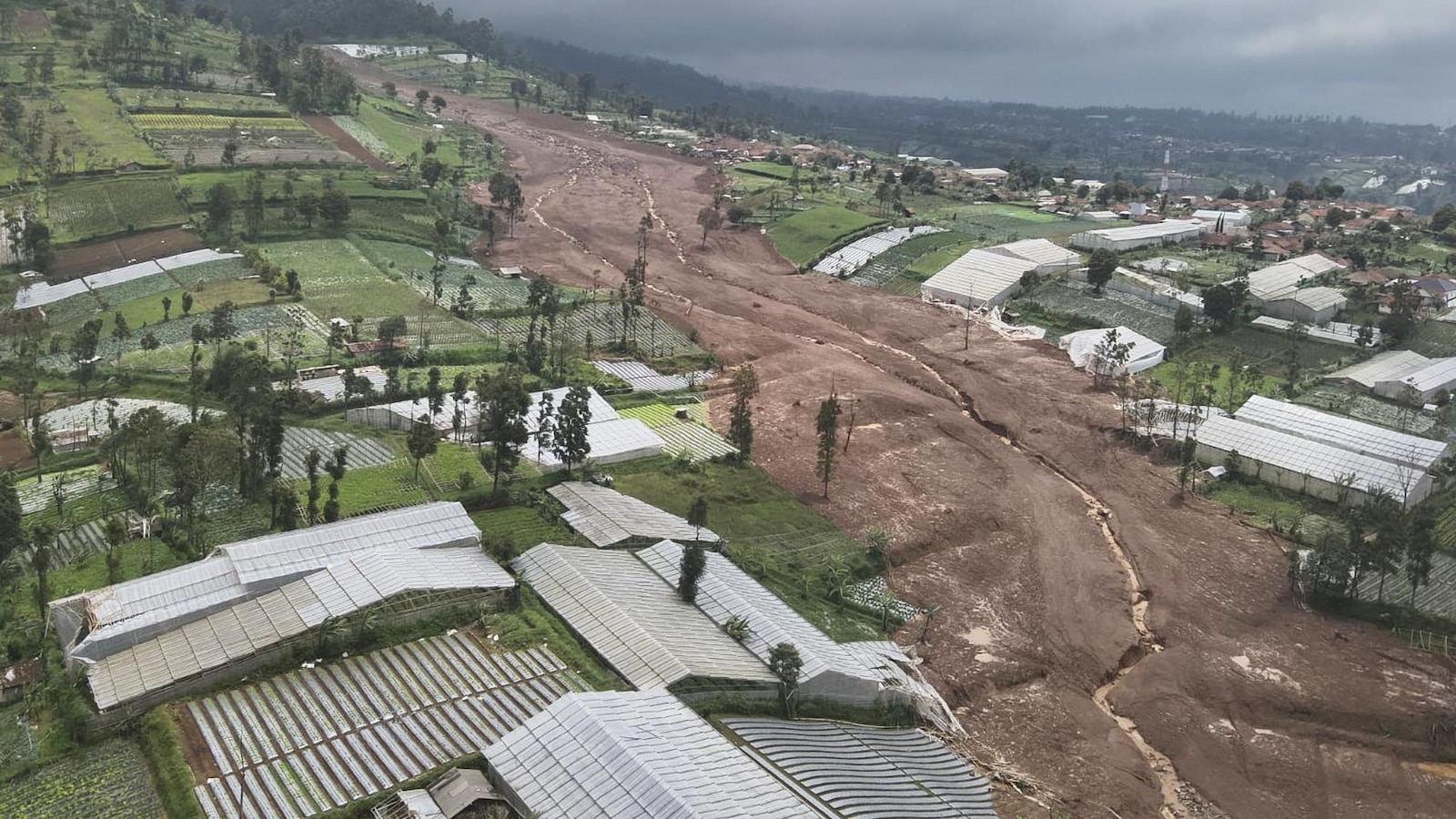
A predawn landslide on Mount Burangrang in West Java buried roughly 34 houses in Pasir Langu village, killing 11 people and leaving about 79 missing, with roughly 230 residents evacuated to temporary shelters; rescue operations are hampered by unstable, waterlogged terrain that prevents use of heavy equipment. Indonesian officials, including the vice president, pledged measures to address land conversion in disaster‑prone areas, highlighting potential regulatory scrutiny of local land use and reconstruction needs that could drive localized construction demand and insurance claims but are unlikely to move broader markets.
Market structure: Immediate winners are construction-materials producers and geotech/engineering services capable of slope stabilization, with near-term demand for cement/aggregate and temporary housing rising materially for 4–12 weeks; losers are local small-cap developers and recently converted agricultural plots where regulatory scrutiny will compress land-conversion economics. Pricing power shifts to local cement/contracting firms (possible 5–15% price lift regionally for urgent work) and to drone/survey firms for damage assessment, while heavy-equipment utilization may lag because of unsafe terrain limiting immediate revenue recognition. Risk assessment: Tail risks include a rapid regulatory moratorium on hillside development or forced buybacks that could write down developer NAVs by 10–30% over quarters, and a sustained uptick in insurance/reinsurance pricing that pressures underwriting profit for 1–2 years. Near term (days–weeks) operational disruption and humanitarian costs dominate; medium term (3–12 months) policy and permitting reprisals matter most; long term (1–3 years) is structural—land-use reform and higher capex for mitigation increase sector costs and shift returns. Trade implications: Tactical longs should favor Indonesia-listed cement/construction contractors with balance-sheet capacity to capture reconstruction (3–9 month horizon), while shorts should target leveraged, on‑paper landplay developers exposed to hillside conversion. FX and bonds: expect mild IDR stress (1–3% move) and potential front-loading of sovereign/state-level capex issuance—shorten duration and hedge USD/IDR for 1–3 months if claims/escalation occur. Contrarian angles: Consensus will over-index to insurance losses; market may underprice regulatory risk that permanently reduces developable supply, creating a long-term structural scarcity trade for onshore resilient infrastructure names. A mispriced opportunity is long high-quality materials/engineering (cheap earnings upgrade potential) versus short speculative land- conversion developers that face policy, financing and reputational paralysis over 3–9 months.
AI-powered research, real-time alerts, and portfolio analytics for institutional investors.
Request DemoOverall Sentiment
moderately negative
Sentiment Score
-0.45
