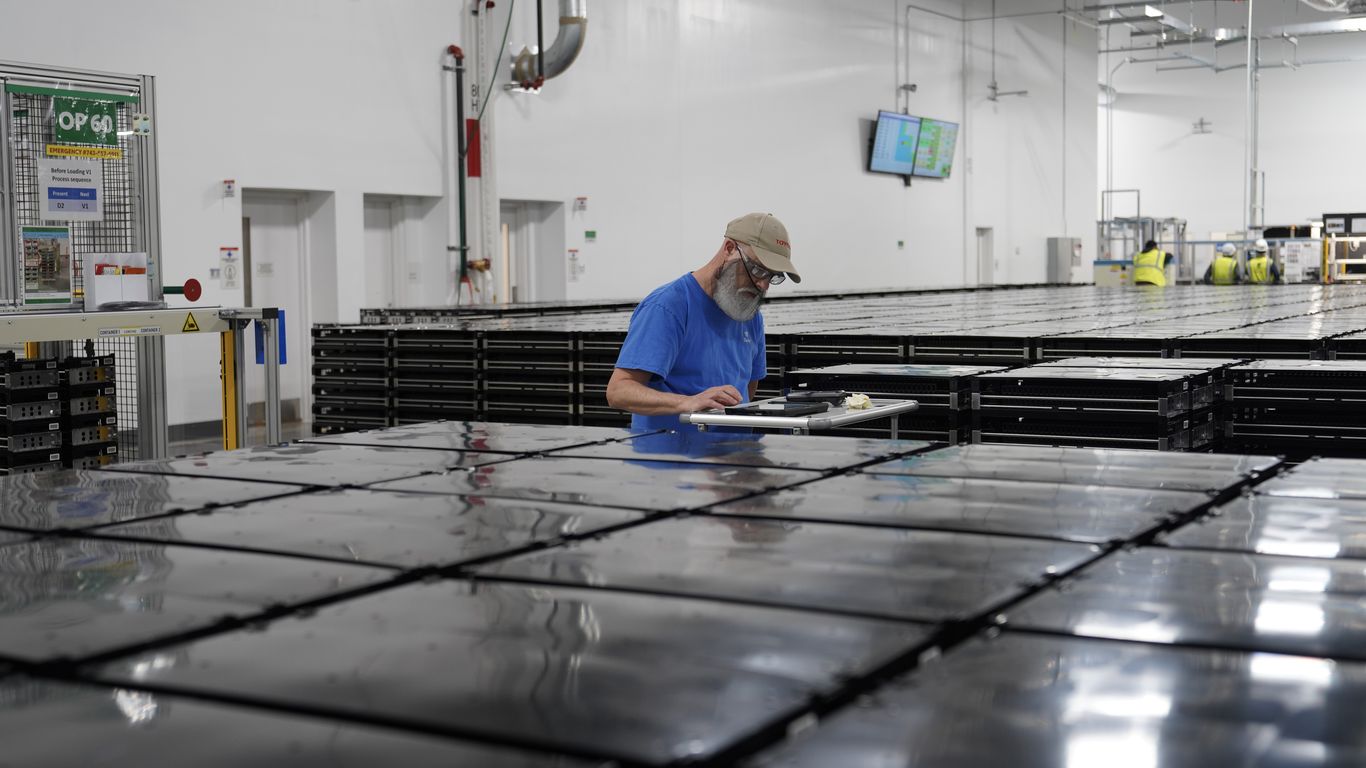
Toyota has begun battery assembly at its new $13.9 billion facility in Liberty, North Carolina, marking its first and only battery plant outside Japan and creating 5,100 jobs. This strategic investment, part of an additional $10 billion pledged for U.S. operations over five years, underscores Toyota's commitment to localizing its supply chain and its EV strategy, which prioritizes hybrid battery production for models like Camry and RAV4. The plant, which received approximately $664 million in state and county incentives, reflects the company's 'build where we sell' philosophy and its response to market demand for hybrids.
Toyota has initiated battery assembly at its new $13.9 billion facility in Liberty, North Carolina, marking its first and only battery production plant outside Japan. This substantial investment is projected to create 5,100 jobs and is part of an additional $10 billion pledged for American investments over the next five years, reinforcing Toyota's strategic commitment to localize its supply chain and adhere to a "build where we sell" philosophy. The plant has already begun shipping battery modules to assembly lines in Kentucky and Alabama.
The Liberty plant is pivotal to Toyota's electrification strategy, which notably prioritizes hybrid vehicle battery production for models such as the Camry, Corolla, and RAV4, alongside a future all-electric 3-row SUV. This hybrid-centric approach, supported by U.S. Transportation Secretary Sean Duffy's observation of American consumer preference for hybrids, differentiates Toyota's market positioning. The facility, which will eventually accommodate 14 battery production lines, is designed to run 24/7 to meet demand.
This strategic expansion is bolstered by approximately $664 million in state and county incentives, contingent on specific hiring and investment targets. The investment also aligns with a broader geopolitical context, following an earlier agreement in 2025 between Japan and the Trump administration concerning manufacturing investments in exchange for lower tariffs. Construction at the site is expected to continue until 2030, indicating a long-term commitment despite production already being underway.
AI-powered research, real-time alerts, and portfolio analytics for institutional investors.
Overall Sentiment
extremely positive
Sentiment Score
0.85
Ticker Sentiment
