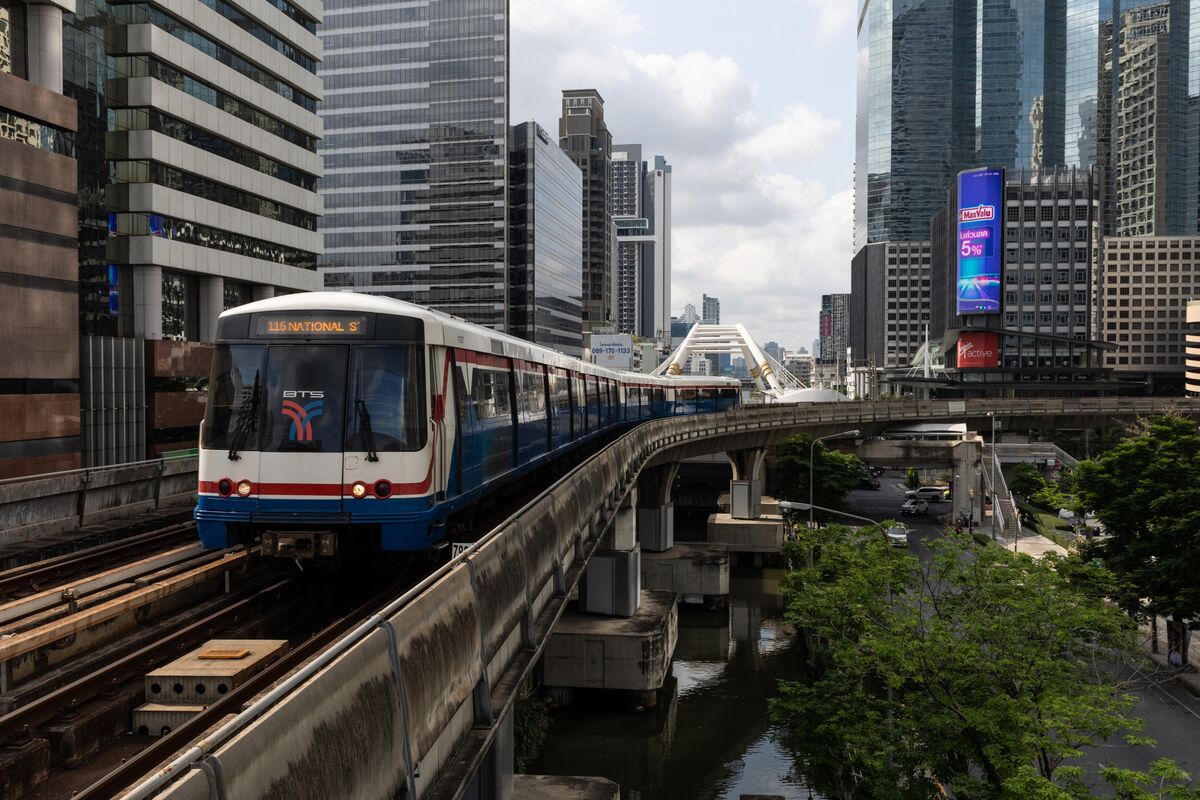
Thailand's cabinet approved a plan to unify Bangkok's fragmented metro and commuter rail fare and ticketing systems, replacing multiple payment methods with flat fares of 17 baht to 45 baht ($0.5-$1.3) across lines. The reform should improve commuter convenience and reduce friction for transfers, but the article does not indicate any direct near-term financial impact on listed companies.
This is less a transport headline than a microeconomic subsidy shift: a flat-fare cap effectively transfers surplus from long-distance commuters to operators unless the government explicitly reimburses the gap. The first-order winner is ridership elasticity, but the second-order winner is landlords and developers along peripheral stations if commuting friction falls enough to re-rate suburban land values over 6-18 months. The biggest loser is the fare-box economics of the least efficient operators, particularly legacy lines with higher transfer density and weaker ancillary revenue, because unified pricing compresses their ability to monetize network complexity.
The key risk is implementation drift. A uniform fare sounds simple, but the real P&L variable is clearinghouse design: who settles interline revenue, how concession contracts are amended, and whether the state uses compensation formulas that preserve operator IRRs. If reimbursement is delayed, operators could respond by cutting maintenance cadence or deferring capex, creating a 12-24 month service-quality lag that ultimately undermines the policy's political appeal.
From a broader market lens, this is mildly disinflationary for urban mobility and potentially pro-consumption if it lowers effective commuting costs for a large daily workforce. The contrarian view is that the policy may be overestimated as a demand catalyst: Bangkok rail usage is likely capacity-constrained at peak hours, so cheaper fares may shift mix more than total trips in the near term. The real upside only emerges if the reform is paired with better network integration and station-area development, which would take years rather than weeks.
For positioning, the cleanest trade is to look for Thai retail and suburban property beneficiaries versus any operator or concession structure exposed to fare compression, but only after reimbursement terms are clarified. If the market treats this as pure demand expansion, fade that move: the better read is margin redistribution first, volume growth second.
AI-powered research, real-time alerts, and portfolio analytics for institutional investors.
Request DemoOverall Sentiment
neutral
Sentiment Score
0.15
