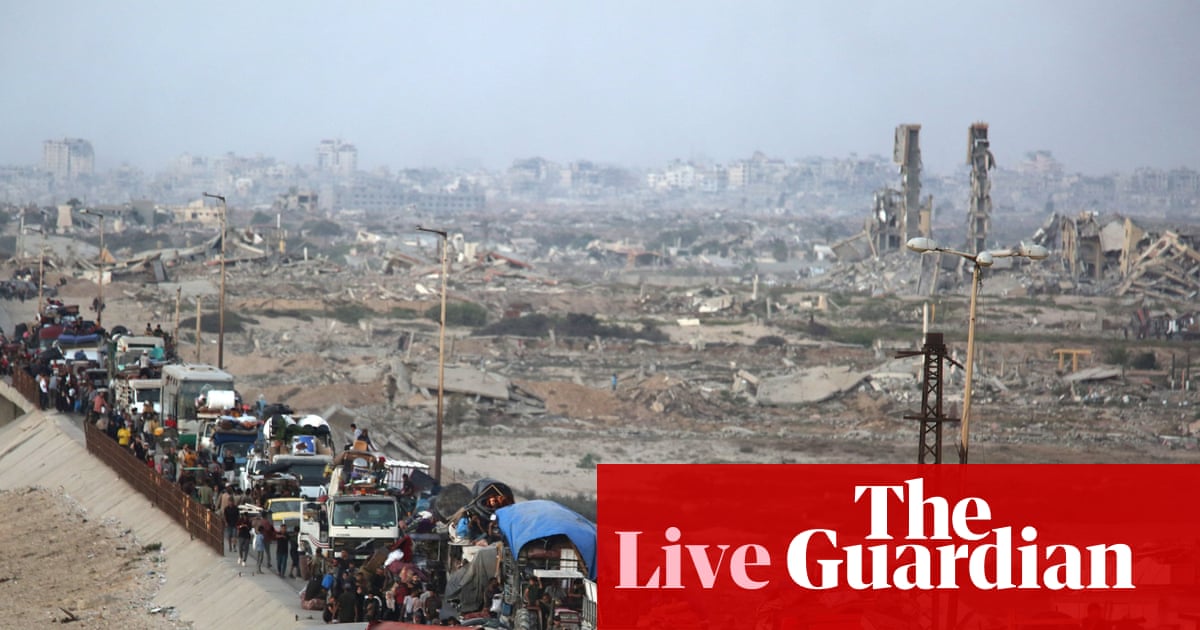
Israel has escalated military operations in Gaza City with "unprecedented force," causing widespread displacement and casualties, while the U.S. vetoed a UN Security Council ceasefire resolution, highlighting ongoing regional instability. Amidst these developments, several European nations are advancing plans to recognize a Palestinian state, signaling a potential shift in international diplomatic pressure, though Germany's proposed aid to the Palestinian Authority faces legislative scrutiny. Concurrently, Pakistan's defense minister confirmed its nuclear program would be available to Saudi Arabia under a new defense pact, marking a significant geopolitical realignment in the broader Middle East.
The geopolitical landscape in the Middle East is experiencing a significant increase in volatility, driven by three concurrent developments. First, Israel's military is escalating its offensive in Gaza City with what it terms "unprecedented force," resulting in mass displacement of approximately 480,000 people and ongoing casualties. This military intensification starkly contrasts with diplomatic gridlock at the United Nations, where the United States vetoed a Security Council resolution for a ceasefire that was supported by all 14 other members. Second, a notable diplomatic shift is underway as key Western powers, including the UK, France, and Canada, prepare to recognize a Palestinian state, creating a policy divergence with the US. This emerging consensus is not seamless, as evidenced by a €30 million German aid payment to the Palestinian Authority being delayed by legislative scrutiny. Third, and perhaps most significantly for regional stability, Pakistan's defense minister has confirmed its new defense pact makes its nuclear program "available" to Saudi Arabia, effectively placing the kingdom under a nuclear umbrella. This development, combined with the failure of a UN resolution to halt the re-imposition of sanctions on Iran, signals a hardening of geopolitical blocs and raises the stakes of regional rivalries.
AI-powered research, real-time alerts, and portfolio analytics for institutional investors.
Request DemoOverall Sentiment
extremely negative
Sentiment Score
-0.85
