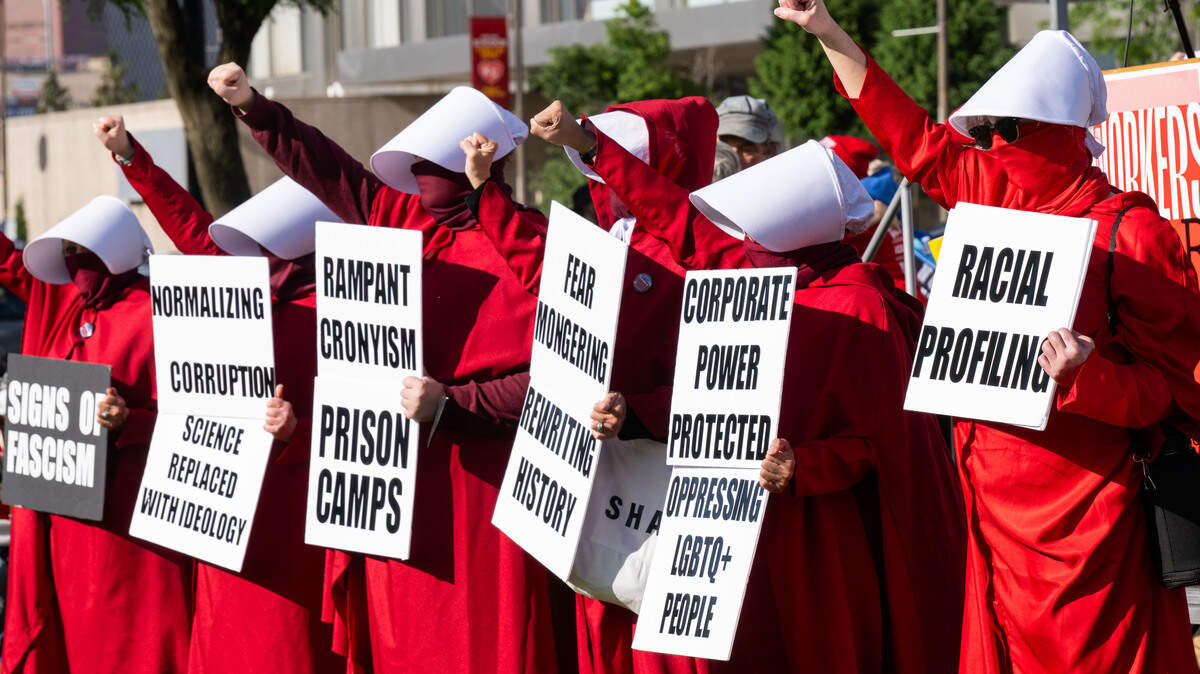
Hundreds of protesters in Kansas City joined a May Day labor demonstration organized by more than 40 groups, calling for boycotts of work, school and spending and criticizing wealth concentration. Speakers focused on workers’ rights, union solidarity, and local policy concerns including a proposed jail and immigration enforcement fears. The article is a report on activism and political messaging, with no direct company- or market-specific financial impact.
This is not a direct market event for ICE, but it matters as a signal of rising anti-ICE/anti-enforcement activism layered onto broader labor and immigration politics. The immediate equity read is that any election-year escalation around detention, deportation, or local contracting can extend the discount already embedded in the stock: the business is less exposed to earnings volatility than to headline-driven multiple compression. The second-order effect is on procurement and local permitting ecosystems, where municipalities facing organized resistance can slow facility timelines, increase legal costs, or force operational concessions.
The market is likely underestimating how protests like this can create a slow-burn regulatory overhang rather than a one-day sentiment hit. The key risk window is 3-12 months: if the issue becomes a ballot-box mobilizer, ICE and related private detention/service names can face a higher probability of contract reviews, tougher state-level oversight, and adverse media cycles that keep the name perpetually “uninvestable” for some funds. Conversely, if immigration policy becomes more visible and enforcement-oriented at the federal level, the stock can re-rate quickly because the crowding on the short side is often politically motivated rather than fundamentally anchored.
The contrarian view is that this kind of activism may actually improve pricing power for incumbents with scale and compliance infrastructure. Smaller regional operators are more vulnerable to delays, litigation, and staffing constraints; larger platforms can absorb the friction and consolidate share if new capacity gets harder to permit. In other words, the loudest anti-ICE headlines can ultimately widen the moat for the few operators that remain in the system, even while depressing sentiment in the near term.
AI-powered research, real-time alerts, and portfolio analytics for institutional investors.
Request DemoOverall Sentiment
neutral
Sentiment Score
0.00
Ticker Sentiment
