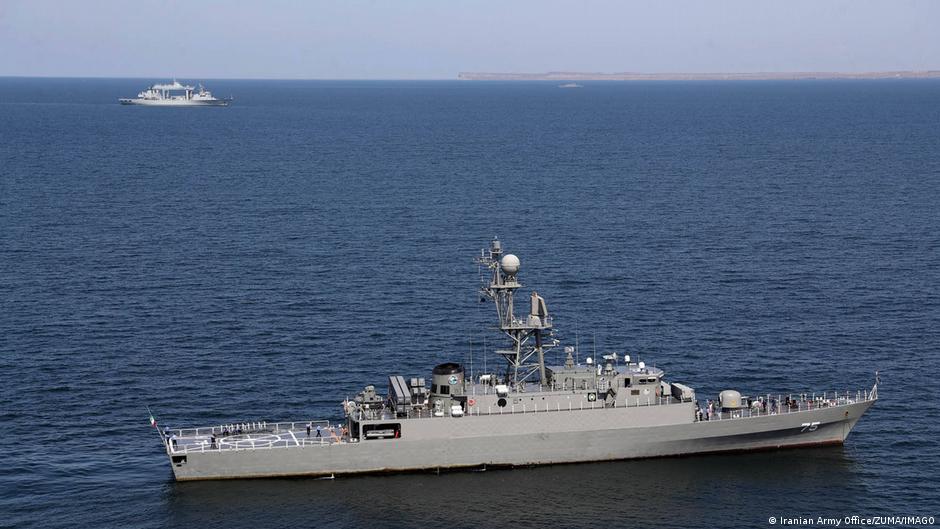
A US Navy submarine sank the Iranian frigate IRIS Dena on March 4 about 20 nautical miles off southern Sri Lanka, killing at least 87 sailors — a major escalation outside the Persian Gulf. The strike, after MILAN 2026, strains India's neutrality, provokes domestic political backlash, and raises regional security risk that could increase oil price and shipping-cost volatility and widen risk premia for insurers and trade flows through the Indian Ocean and Strait of Malacca.
The operational demonstration of extended undersea strike capability reshuffles regional bargaining power rather than just the immediate security calculus: expect New Delhi to accelerate asymmetric countermeasures (ASW sensors, EW, maritime domain awareness satellites) and diversify suppliers away from visible US platforms to less politically entangling vendors. That reorientation has a 12–36 month procurement cycle, creating a multi-year revenue tail for non-US and select US defense suppliers who can offer non-operationally intrusive systems (naval sensors, torpedoes, ASW helicopters).
Commercial chokepoints and insurance economics will react before formal policy shifts. A persistent perception of elevated risk in the southern Indian Ocean should lift marine war-risk and hull premiums by a discrete percentage (we model a 10–25% re-rating in near-term tanker/petrol-route premia), supporting spot tanker rates and owners’ EBITDA for 1–6 months while freight and rerouting frictions transiently raise input costs for Asian manufacturing.
Politically, New Delhi’s calibrated public posture increases tail risk for bilateral trade talks and high-sensitivity defense logistics cooperation: expect delays to deep logistics interoperability (LEMOA-like missions) and a window where diplomatic friction reduces US leverage on India for 6–18 months. Domestically, opposition pressure elevates the probability of short-term political noise that can amplify capital outflows from Indian assets ahead of next-year election cycles, compressing local market multiples.
Market micro-opportunities therefore split into two corridors: (1) tactical commodity/shipping plays as risk premia spike over weeks–months, and (2) thematic defense and industrial suppliers capturing multi-year procurement re-sourcing. The reversal catalysts are rapid diplomatic arrangements (behind-the-scenes quid pro quos) or a visible de-escalation which would snap premiums back within 2–8 weeks; absent that, expect a gradual structural reallocation of Indian procurement over 1–3 years.
AI-powered research, real-time alerts, and portfolio analytics for institutional investors.
Request DemoOverall Sentiment
strongly negative
Sentiment Score
-0.62
